 flip
flipCotognata — quince paste from the pantry
Cotognata — quince paste from the pantry
Why this dish? In a well-off household in Raphael's Rome, the pantry kept firm preserves to last the year. *Cotognata* — quince paste set into tablets — was cut into perfumed diamonds offered with ipocrasso at the end of the meal, or taken along as provisions. A sweetness that lasts, as one hoped the frescoes would last.
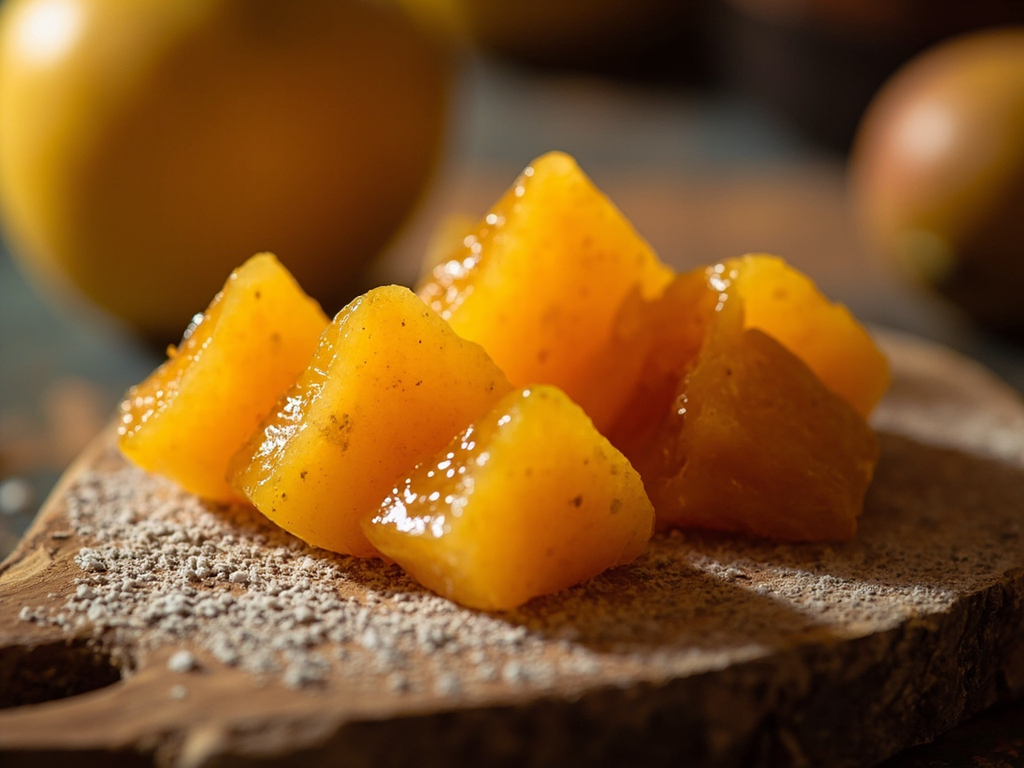
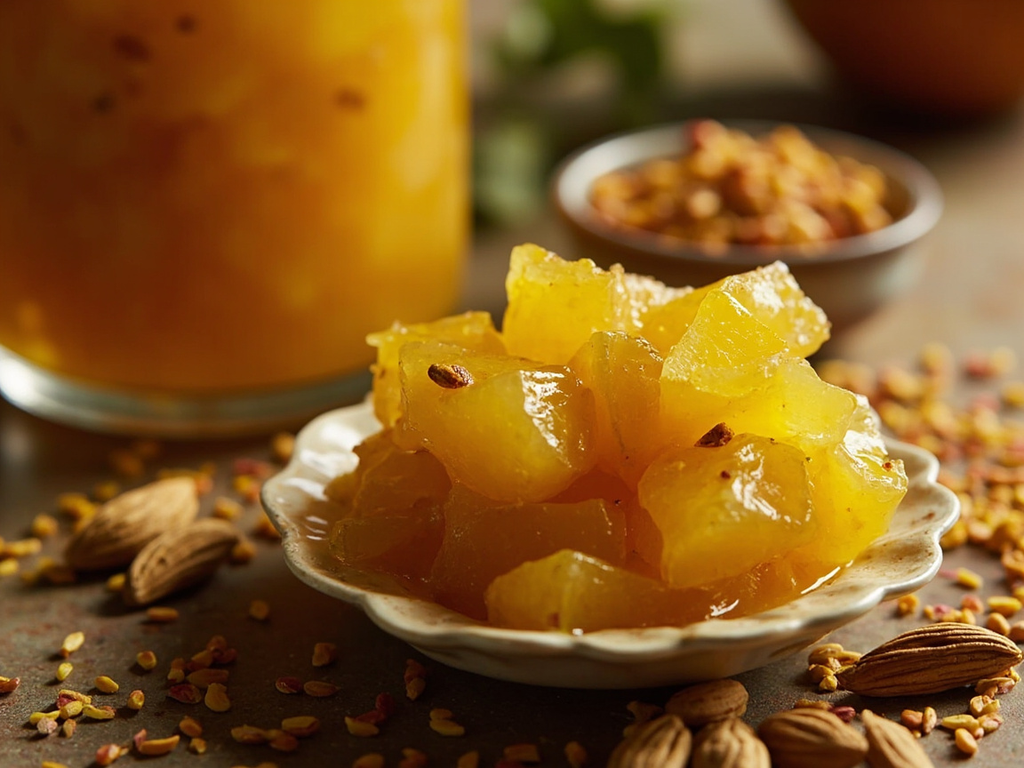
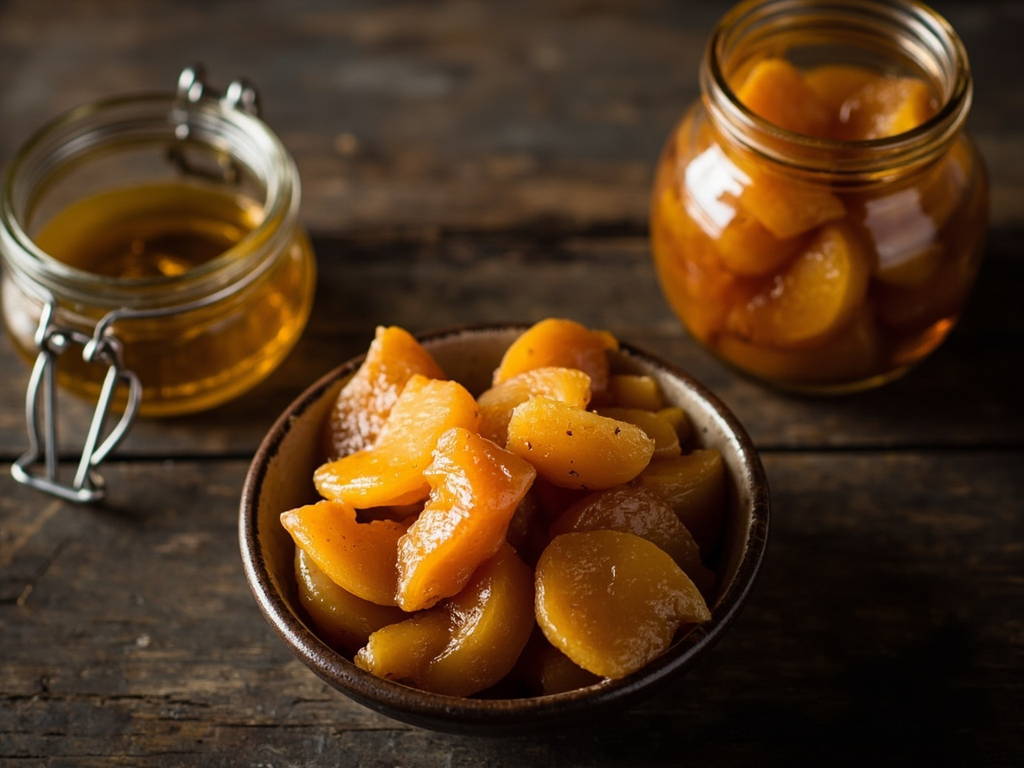
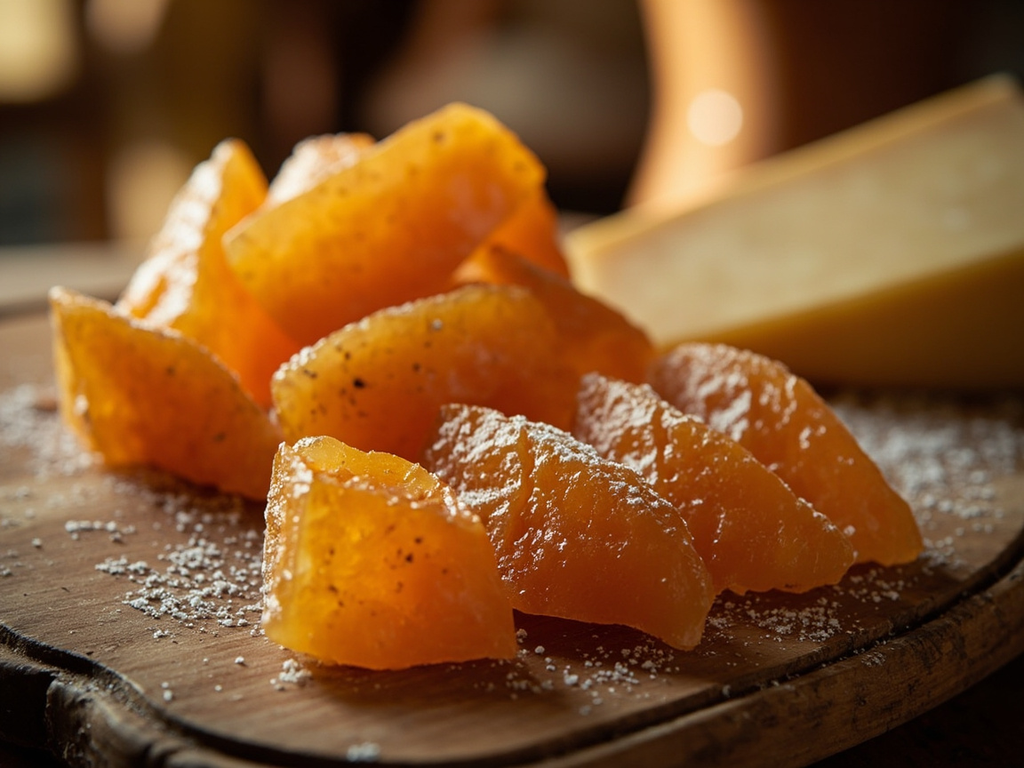
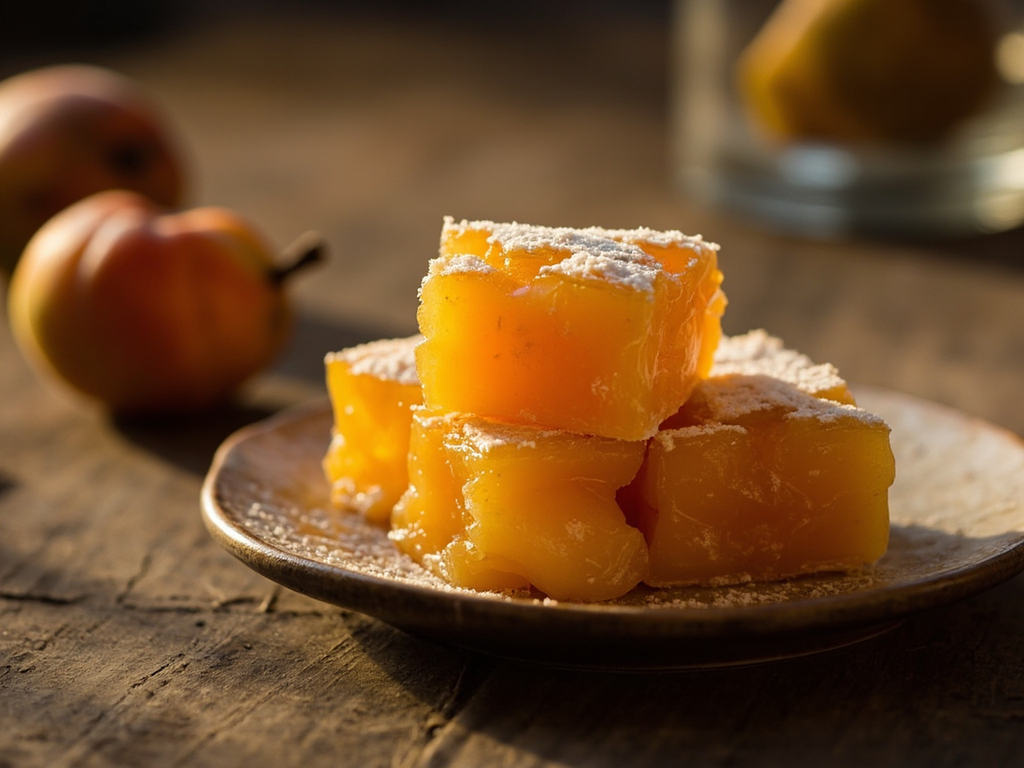
A thick paste of cooked and strained quinces, slowly reduced with sugar until it sets into a firm, translucent, amber-hued and tangy tablet, cut into diamond shapes.
Here is a keeper sweetness, as we kept in every well-ordered pantry. You cook the quince — that hard, fragrant fruit — until it yields, you strain it, and you stir its pulp with sugar over the fire, for a long time, until the spoon draws a furrow that does not close. You spread it, let it set, then cut it into diamonds that keep for weeks. At the end of the meal, with a cup of ipocrasso, it is a simple and steadfast pleasure — I always had a tablet within reach of my brush.
- •Quinces — several, very ripe (base fruit)
- •Sugar (or honey) — equal weight to pulp (preservative and sweetness)
- •Rose water or orange flower water — a dash (optional) (perfume)
Cotognata — quince paste from the pantry
A thick paste of cooked and strained quinces, slowly reduced with sugar until it sets into a firm, translucent, amber-hued and tangy tablet, cut into diamond shapes.
Why this dish? In a well-off household in Raphael's Rome, the pantry kept firm preserves to last the year. *Cotognata* — quince paste set into tablets — was cut into perfumed diamonds offered with ipocrasso at the end of the meal, or taken along as provisions. A sweetness that lasts, as one hoped the frescoes would last.
Here is a keeper sweetness, as we kept in every well-ordered pantry. You cook the quince — that hard, fragrant fruit — until it yields, you strain it, and you stir its pulp with sugar over the fire, for a long time, until the spoon draws a furrow that does not close. You spread it, let it set, then cut it into diamonds that keep for weeks. At the end of the meal, with a cup of ipocrasso, it is a simple and steadfast pleasure — I always had a tablet within reach of my brush.
Ingredients (period version)
- Quinces — several, very ripe (base fruit)
- Sugar (or honey) — equal weight to pulp (preservative and sweetness)
- Rose water or orange flower water — a dash (optional) (perfume)
Ingredients
- Quinces — 1 kg (yields ~700 g pulp) (base fruit)
- Sugar — same weight as pulp obtained (set and preservation)
- Lemon juice — 1 tbsp (acidity, helps setting)
- Rose water — 1 tsp (optional) (period perfume)
Method
- Wash, quarter the quinces (do not peel), and cook in water until very tender.
- Strain the pulp through a sieve or food mill to obtain a smooth purée; weigh it.
- Add an equal weight of sugar and the lemon juice, cook over low heat, stirring constantly, for 30-45 minutes until the paste pulls away from the pan bottom.
- Perfume with rose water, spread 1.5 cm thick on a parchment-lined tray.
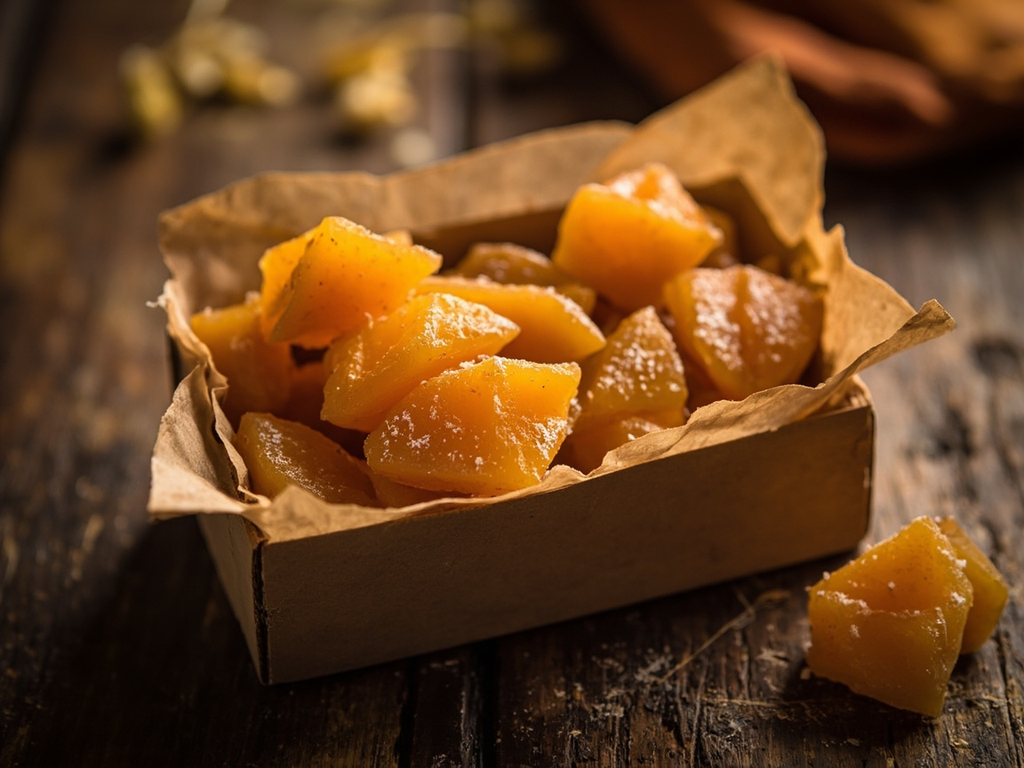
- Let dry in the air for 1-2 days, then cut into diamonds and store in a box (dust with sugar to prevent sticking).
How it was made : The quince, too tart to eat raw, was the quintessential preserving fruit. Firm quince pastes (the common ancestor of Italian *cotognata*, Spanish *membrillo*, and French *cotignac*) were made across medieval and Renaissance Europe. Sugar, still costly, made it a bourgeois and noble pantry luxury.
The contemporary twist : Diamonds rolled in crystal sugar and served alongside a piece of pecorino: the sweet-savory pairing already loved at Renaissance tables.
Sources : Maestro Martino, Libro de arte coquinaria, c. 1465 · Bartolomeo Platina, De honesta voluptate, 1474
Raphael · Charactorium