 flip
flipQuince Paste
Quince Paste
Why this dish? A man of the sword always on the move, exiled as far as the Château du Crest near Geneva, Agrippa knew the art of preserving fruit for the bad season and travel. Quince paste, hard and fragrant, kept for months and held its place on noble tables as well as in campaign chests.
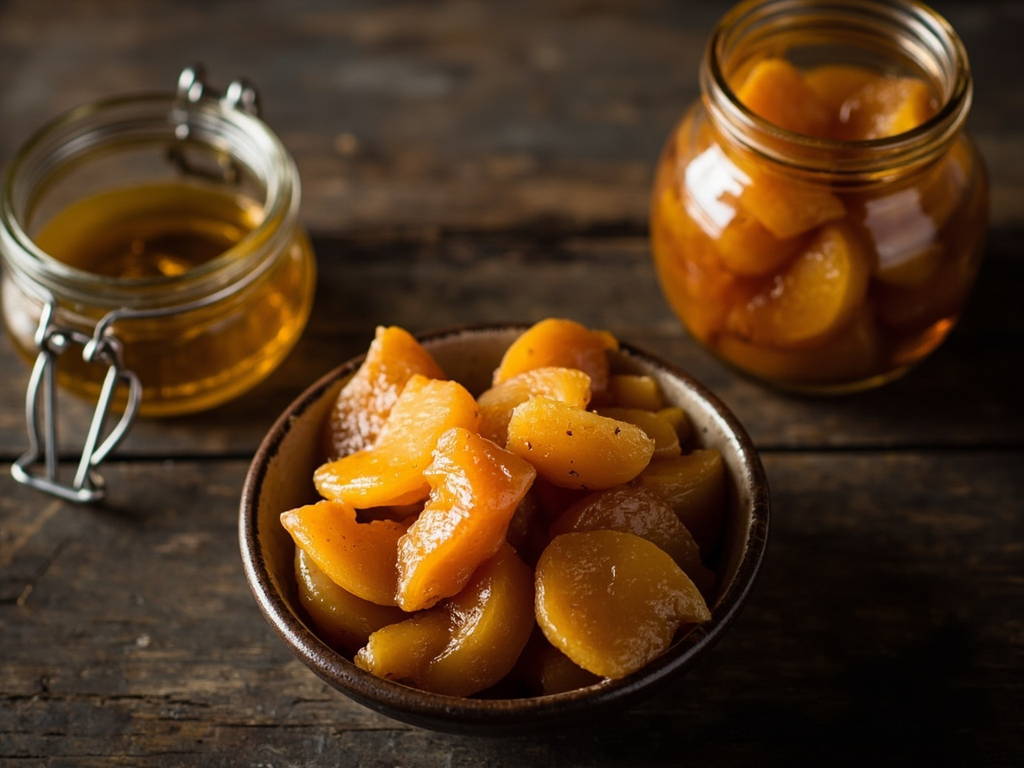
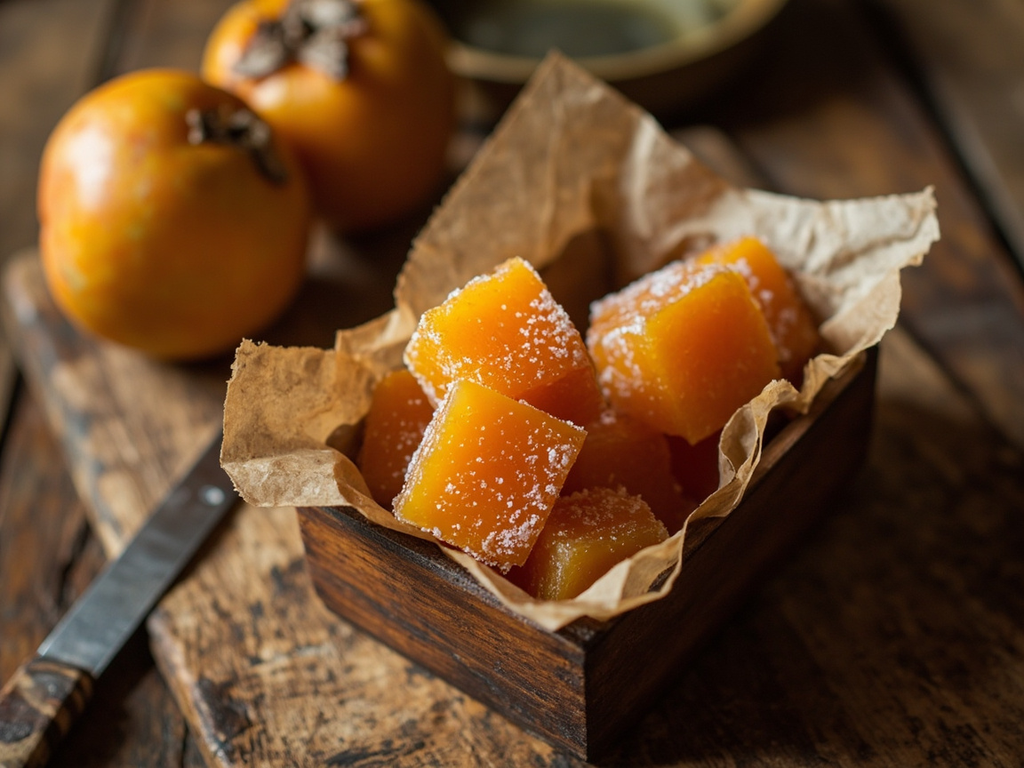
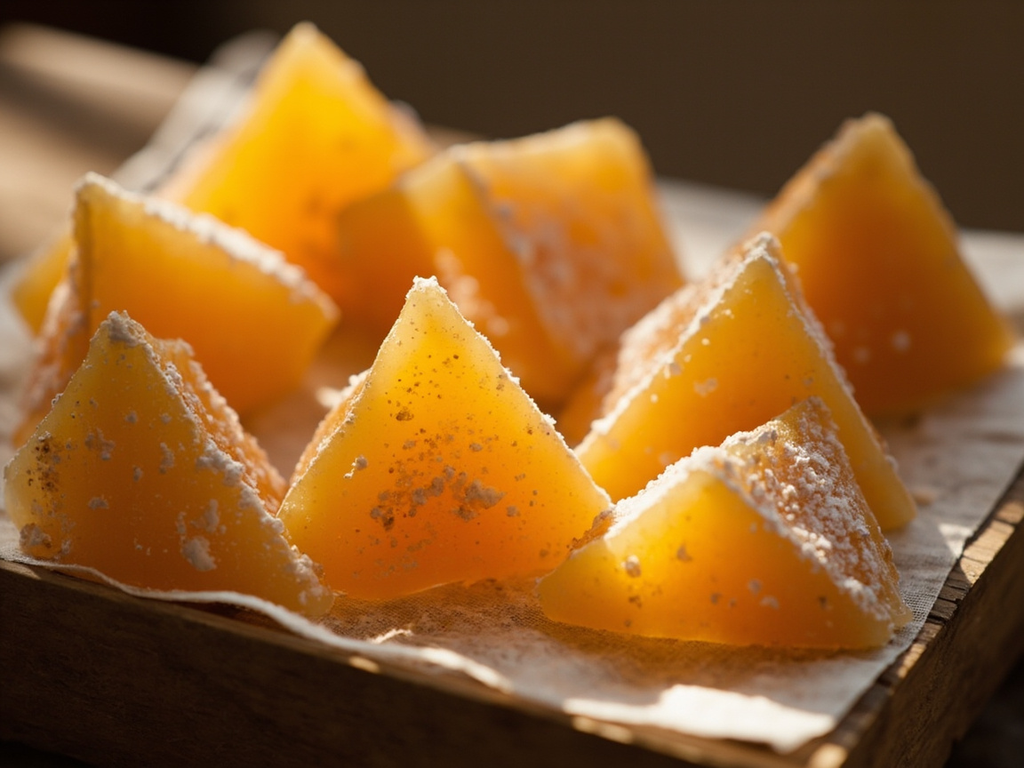
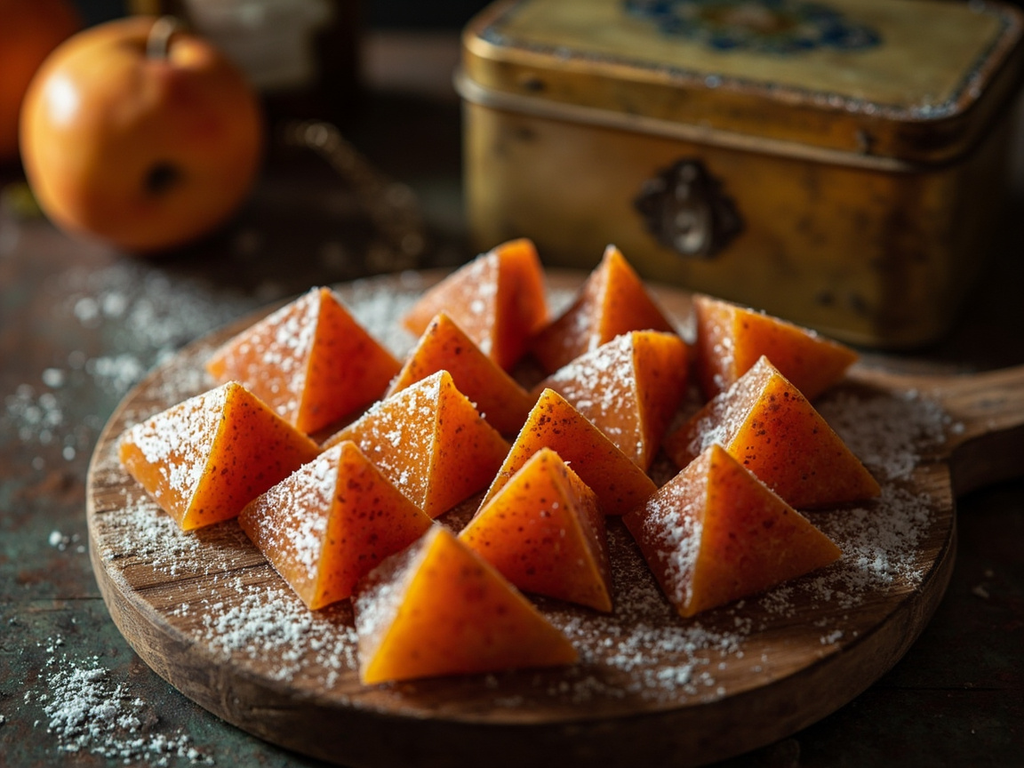
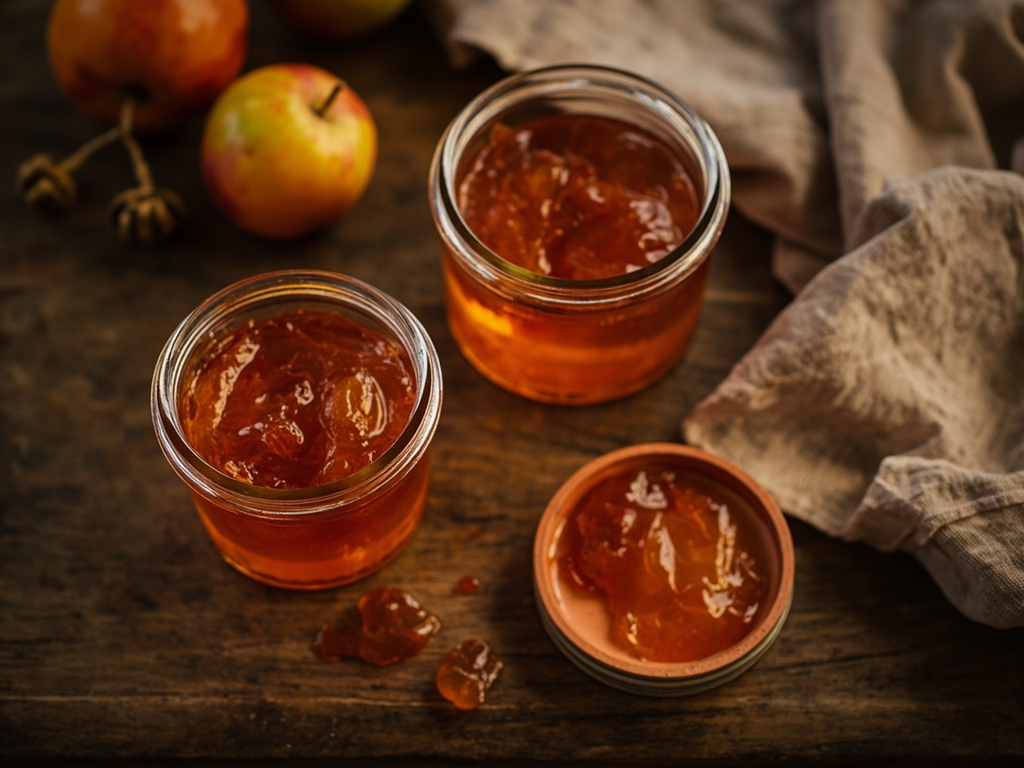
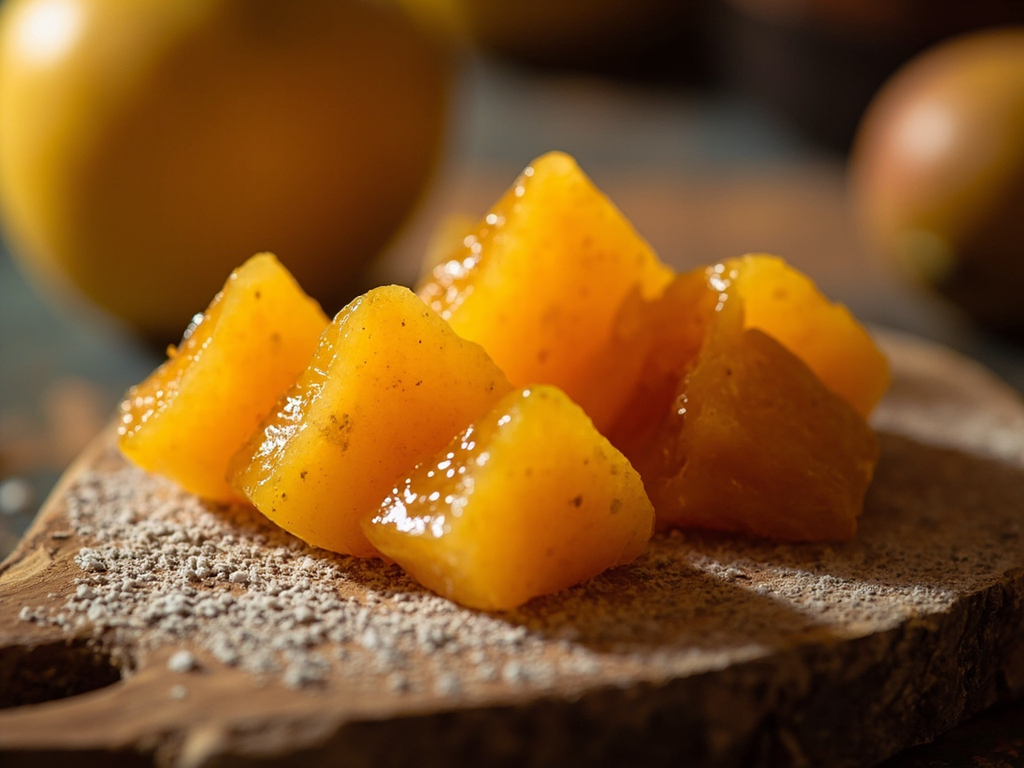
A quince paste cooked with sugar until firm, cut into diamonds. Sweet, tart, and fragrant, it keeps for a long time: the quintessential preserve-candy of the Renaissance.
The quince, that harsh fruit that cannot be eaten raw, becomes through fire and sugar the sweetest of delicacies. Cook it long until the paste thickens and takes on an amber color, then let it dry in diamonds. Thus prepared, it keeps all winter and travels in the chest without spoiling — I have carried it on the roads of exile, and it was sweet comfort on bitter evenings. A square of quince paste at the meal's end, and the mouth keeps memory of summer.
- •Ripe quinces — a few (fruit)
- •Sugar (or honey) — equal weight to pulp (preservation and sweetness)
- •Water — a little (cooking liquid)
Quince Paste
A quince paste cooked with sugar until firm, cut into diamonds. Sweet, tart, and fragrant, it keeps for a long time: the quintessential preserve-candy of the Renaissance.
Why this dish? A man of the sword always on the move, exiled as far as the Château du Crest near Geneva, Agrippa knew the art of preserving fruit for the bad season and travel. Quince paste, hard and fragrant, kept for months and held its place on noble tables as well as in campaign chests.
The quince, that harsh fruit that cannot be eaten raw, becomes through fire and sugar the sweetest of delicacies. Cook it long until the paste thickens and takes on an amber color, then let it dry in diamonds. Thus prepared, it keeps all winter and travels in the chest without spoiling — I have carried it on the roads of exile, and it was sweet comfort on bitter evenings. A square of quince paste at the meal's end, and the mouth keeps memory of summer.
Ingredients (period version)
- Ripe quinces — a few (fruit)
- Sugar (or honey) — equal weight to pulp (preservation and sweetness)
- Water — a little (cooking liquid)
Ingredients
- Quinces — 1 kg (fruit)
- Sugar — same weight as obtained pulp (preservation and sweetness)
- Lemon juice — 1 tbsp (color and balance)
- Water — for first cooking (cooking liquid)
Method
- Wash the quinces, cut into quarters (with skin and seeds, rich in pectin) and cook in water until tender, 30-40 minutes.
- Retrieve the pulp and pass it through a sieve or food mill to obtain a smooth purée.
- Weigh the purée and add the same weight of sugar, plus the lemon juice.
- Cook over low heat, stirring constantly, for 30-45 minutes until the paste thickens and pulls away from the bottom of the pan.
- Spread the paste 1.5 cm thick on an oiled dish or parchment paper, let dry for several days in a dry place, then cut into diamonds and store away from humidity.
How it was made : Quince paste (from Latin cotoneum, quince) was a renowned specialty of Orléans, offered to kings and ambassadors. 'Dry preserves' of quince were among the first sweet preserved foods, made in autumn to last all year thanks to the high sugar content.
The contemporary twist : Rolled into small cubes in crystal sugar and served with aged goat cheese, the quince paste becomes a sweet-savory mignardise worthy of a festive platter.
Agrippa d'Aubigné · Charactorium