 flip
flipMostarda of Parma — fruits in syrup with mustard
Mostarda of Parma — fruits in syrup with mustard
Why this dish? Farnese became Duke of Parma in 1586; *mostarda* is the sweet-piquant pride of Lombardy and Emilia, his land. A preserve of fruits in syrup spiked with mustard, it accompanied meats at great tables and kept all winter.
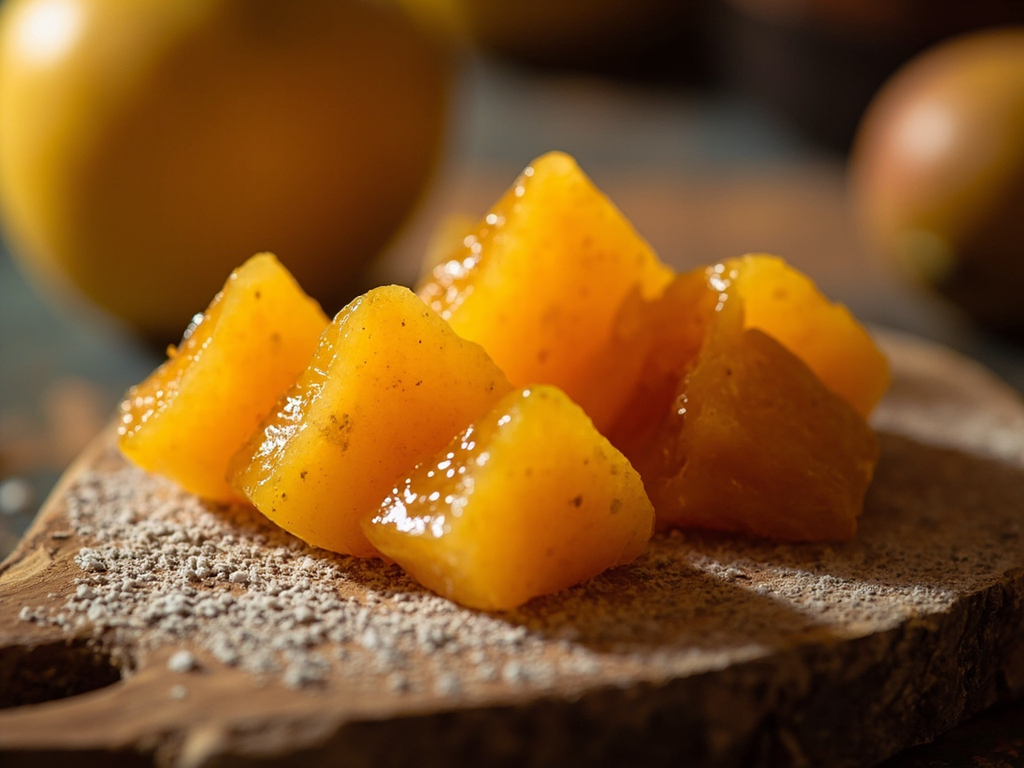
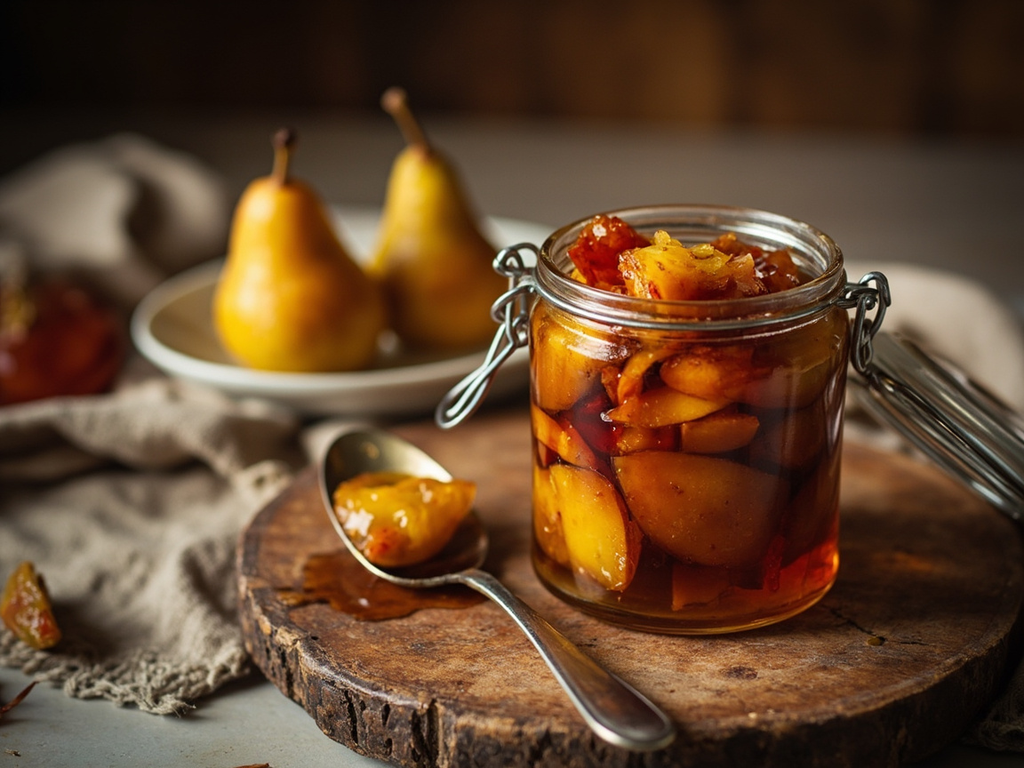
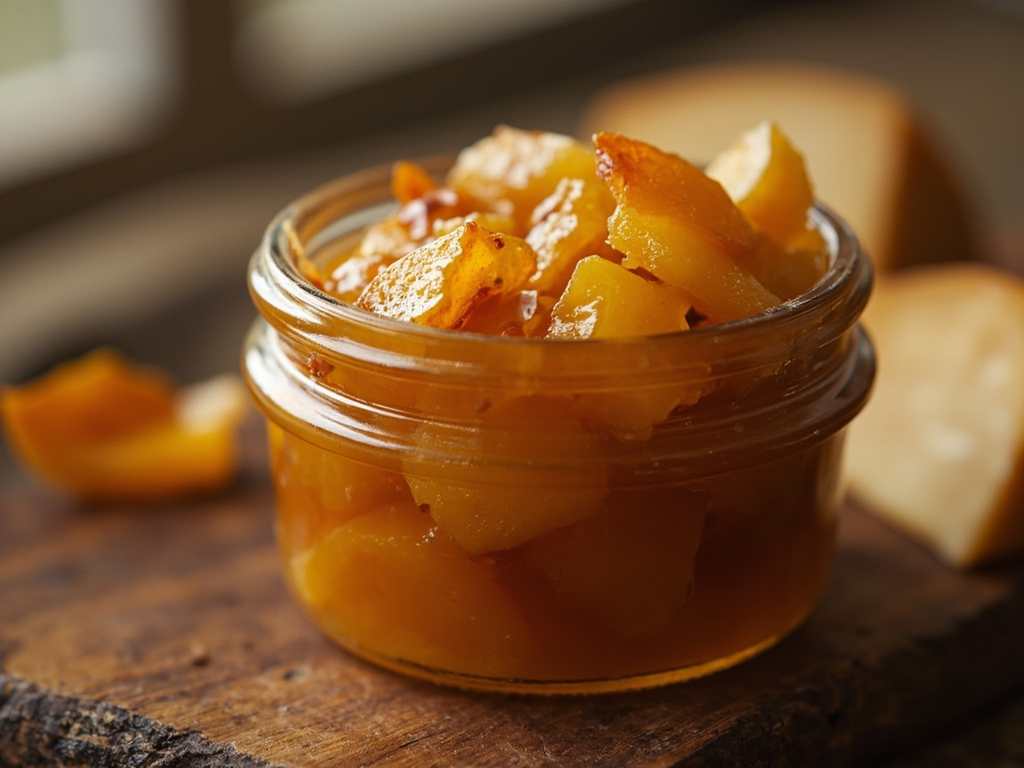
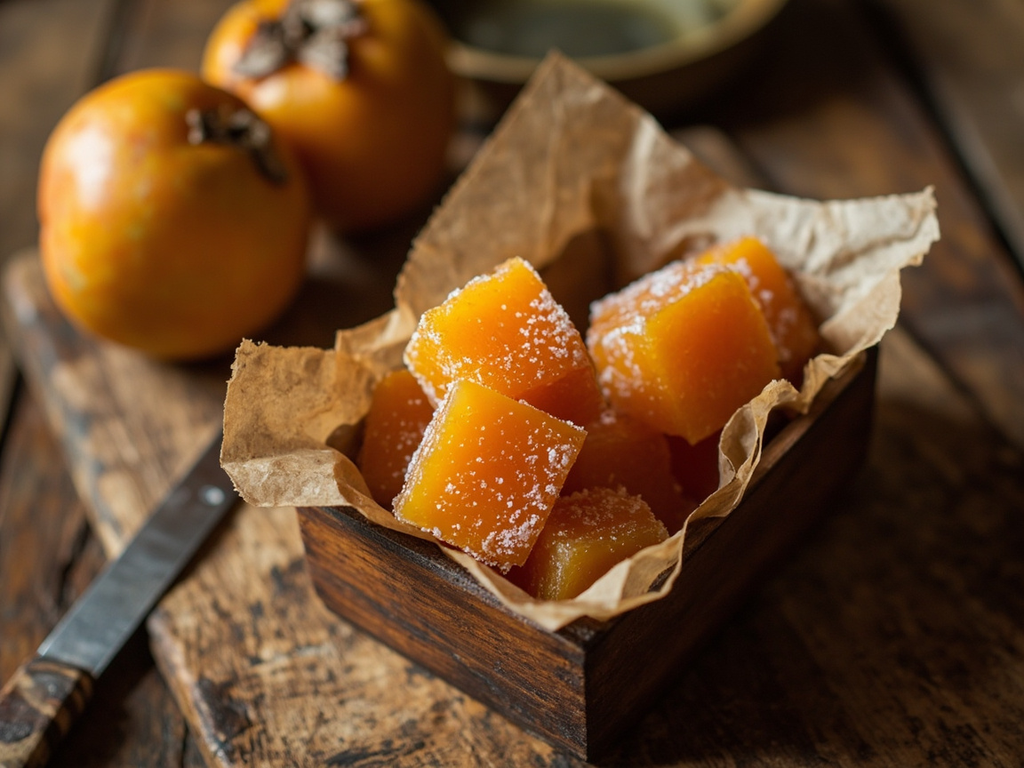
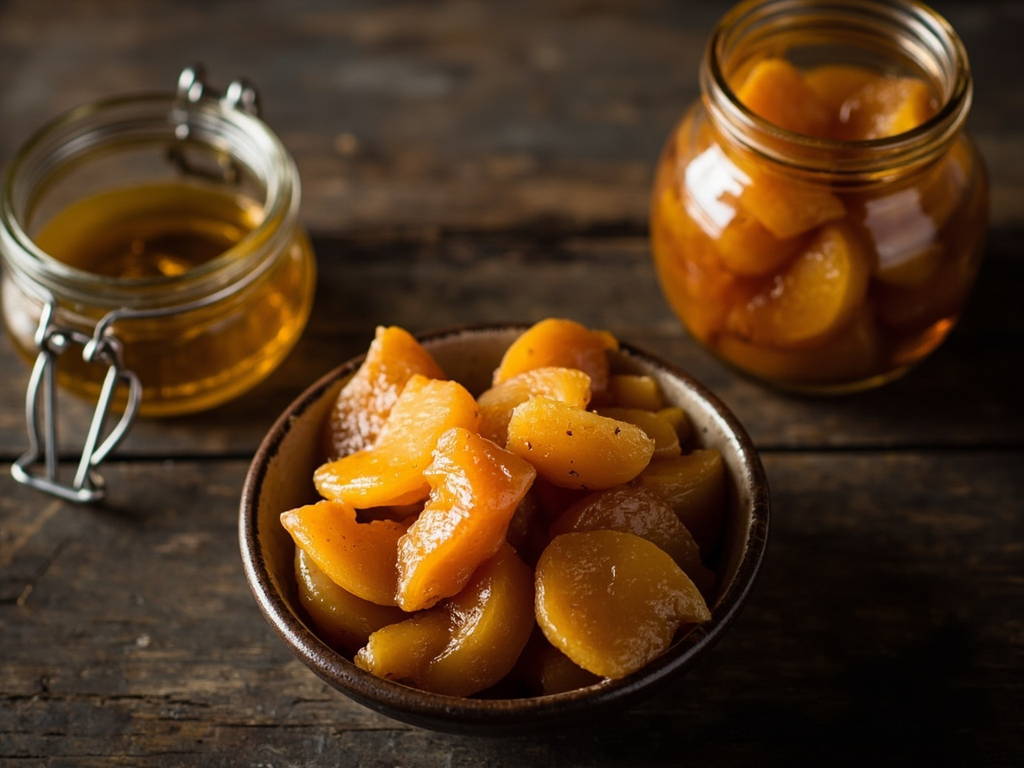
Quarters of quince and pear candied in syrup, awakened by mustard essence: a condiment both sweet and biting, which accompanies roasts and defies time in its pot.
Here is a sweetness from my home, the lands of Parma. One takes quinces and pears, candies them gently in syrup day after day, then mingles in the mustard that stings and makes the eye water: sweet on the tongue, fiery to the nose. It is kept in a pot all winter, and served alongside meats to awaken the palate. Keep it sealed and cool, and it will be faithful company until the fair days return.
- •Quinces and firm pears — equal parts (fruits to candy)
- •Sugar (or honey) — as much as the fruit (syrup and preservation)
- •Mustard (crushed seeds or essence) — according to desired heat (signature pungency)
- •White wine — a splash (maceration)
Mostarda of Parma — fruits in syrup with mustard
Quarters of quince and pear candied in syrup, awakened by mustard essence: a condiment both sweet and biting, which accompanies roasts and defies time in its pot.
Why this dish? Farnese became Duke of Parma in 1586; *mostarda* is the sweet-piquant pride of Lombardy and Emilia, his land. A preserve of fruits in syrup spiked with mustard, it accompanied meats at great tables and kept all winter.
Here is a sweetness from my home, the lands of Parma. One takes quinces and pears, candies them gently in syrup day after day, then mingles in the mustard that stings and makes the eye water: sweet on the tongue, fiery to the nose. It is kept in a pot all winter, and served alongside meats to awaken the palate. Keep it sealed and cool, and it will be faithful company until the fair days return.
Ingredients (period version)
- Quinces and firm pears — equal parts (fruits to candy)
- Sugar (or honey) — as much as the fruit (syrup and preservation)
- Mustard (crushed seeds or essence) — according to desired heat (signature pungency)
- White wine — a splash (maceration)
Ingredients
- Quinces — 300 g (peeled, in quarters) (fruit)
- Firm pears — 300 g (peeled, in quarters) (fruit)
- Sugar — 500 g (syrup and preservation)
- Water — 200 ml (syrup)
- Yellow mustard seeds — 2 tsp (crushed) — or 1/2 tsp hot mustard powder (pungency)
- Lemon juice — 1 tbsp (acidity and fruit firmness)
Method
- Peel and quarter the quinces and pears; sprinkle with lemon juice to prevent browning.
- Prepare a syrup with sugar and water; poach the fruits for 10 minutes without breaking them, then let macerate overnight.
- The next day, drain the fruits, boil the syrup alone to thicken, then pour back over the fruits. Repeat ideally over 2–3 days to candy them well.
- Dissolve the mustard in a little warm syrup (never boiling, or it will lose its fire) and stir into the cooled *mostarda*.
- Pack into sterilized jars, seal, and store in a cool place. Serve in small amounts with roasted meats or cheeses.
How it was made : *Mostarda* (mostarda di frutta, of which Cremona's is most famous) descends from cooked grape must (*mostum*) with mustard. Preserving fruits in a thick syrup exhausted the available sugar and defied putrefaction: it was both a noble table delicacy and a winter preservation technique, typical of the Po plain from which the House of Farnese came.
The contemporary twist : A spoonful of *mostarda* on a platter of aged cheeses and Parma charcuterie: the sweet-piquant marriage still holds, five centuries later.
Sources : Tradition of Lombard and Emilian mostarda di frutta (Cremona, Parma) · Bartolomeo Scappi, Opera, 1570 (sugar-preserved fruits)
Alessandro Farnese · Charactorium