 flip
flipBicerin — the Turin "little glass" of coffee, chocolate, and cream
Bicerin — the Turin "little glass" of coffee, chocolate, and cream
Why this dish? Bicerin is THE iconic drink of Turin's historic cafés, Rita's hometown. Before long days in the lab, it was in these plush cafés that Turinese warmed themselves with a layered glass of coffee, chocolate, and cream — a fragment of the elegant Turin of her youth.
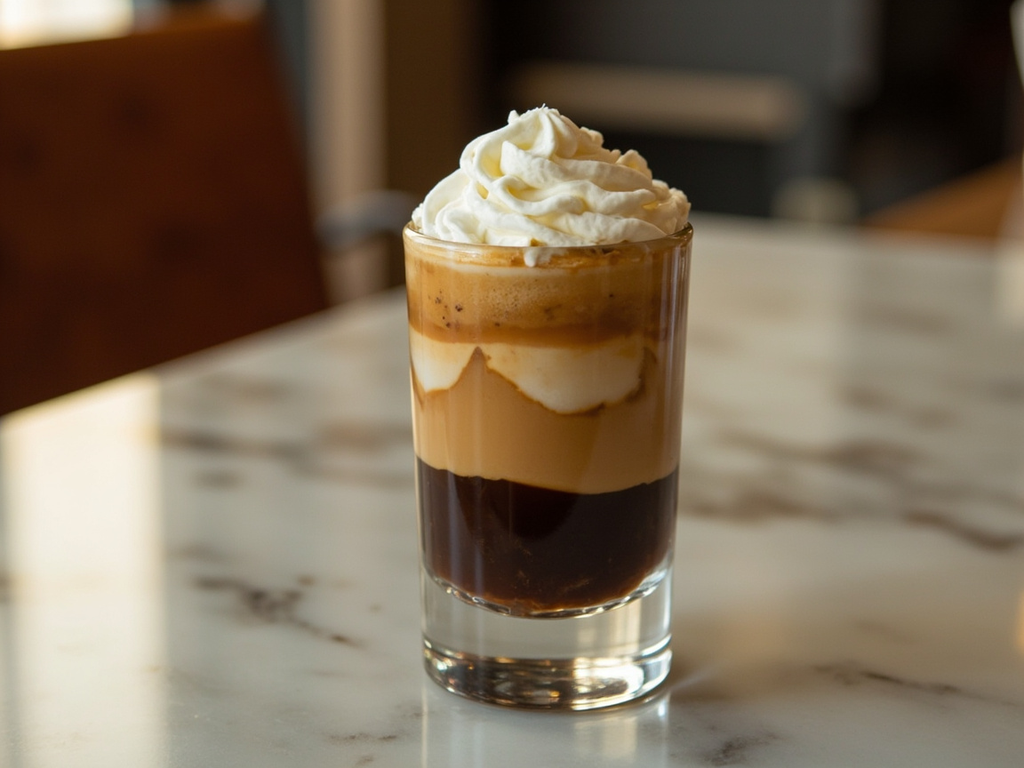
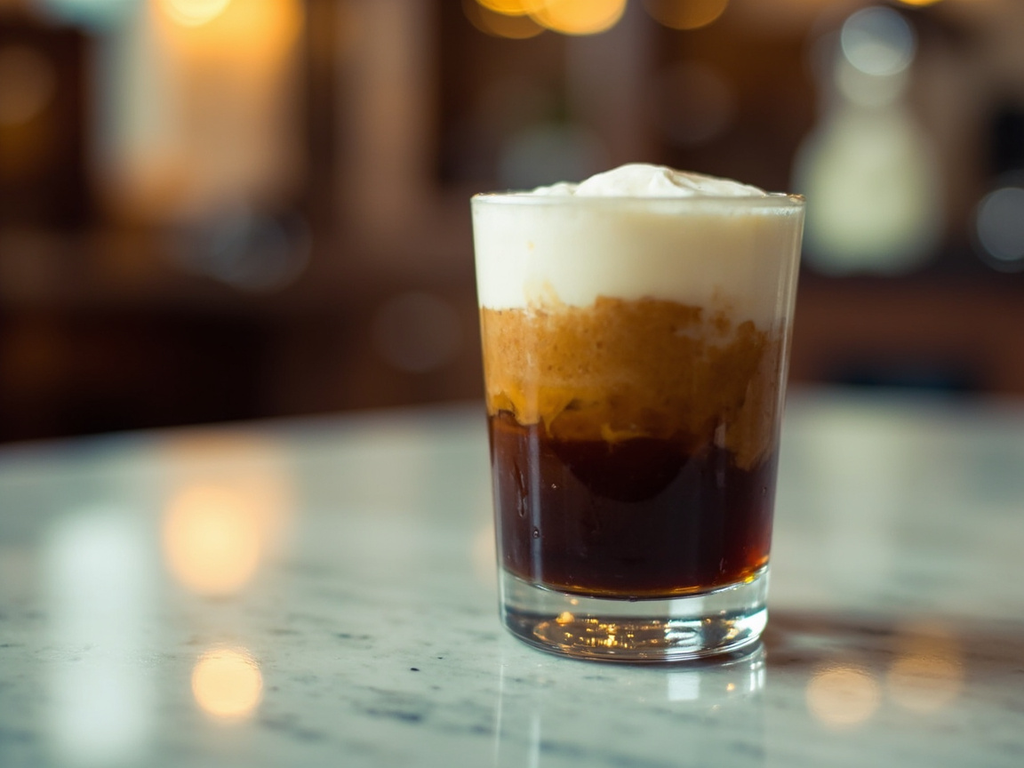
A hot drink served in a small glass, with three distinct layers that are not mixed: melted chocolate at the bottom, coffee in the middle, frothed milk cream on top. Both sweet and bitter, comforting.
In Turin, you see, we don't say a coffee: we say a bicerin, "the little glass," and everything lies in the art of not mixing the three layers. The melted chocolate sleeps at the bottom, the black coffee comes on top, and the cold cream crowns it: you drink hot through cold, bitter through sweet. I have had it many times at the counter, standing, before rushing to the lab — a stolen moment of warmth in the Piedmontese fog. Do not stir it: let the flavors meet on their own on the tongue.
- •Cocoa and sugar melted into liquid chocolate — a glass bottom (bottom layer)
- •Hot black coffee — a measure (middle layer)
- •Milk cream — a spoonful (top layer)
Bicerin — the Turin "little glass" of coffee, chocolate, and cream
A hot drink served in a small glass, with three distinct layers that are not mixed: melted chocolate at the bottom, coffee in the middle, frothed milk cream on top. Both sweet and bitter, comforting.
Why this dish? Bicerin is THE iconic drink of Turin's historic cafés, Rita's hometown. Before long days in the lab, it was in these plush cafés that Turinese warmed themselves with a layered glass of coffee, chocolate, and cream — a fragment of the elegant Turin of her youth.
In Turin, you see, we don't say a coffee: we say a bicerin, "the little glass," and everything lies in the art of not mixing the three layers. The melted chocolate sleeps at the bottom, the black coffee comes on top, and the cold cream crowns it: you drink hot through cold, bitter through sweet. I have had it many times at the counter, standing, before rushing to the lab — a stolen moment of warmth in the Piedmontese fog. Do not stir it: let the flavors meet on their own on the tongue.
Ingredients (period version)
- Cocoa and sugar melted into liquid chocolate — a glass bottom (bottom layer)
- Hot black coffee — a measure (middle layer)
- Milk cream — a spoonful (top layer)
Ingredients
- Dark chocolate — 40 g (bottom layer (melted with milk))
- Milk — 60 ml (to melt with chocolate)
- Strong espresso coffee — 60 ml (middle layer)
- Whole liquid cream — 40 ml (top layer, lightly whipped)
- Sugar — to taste (sweetness)
Method
- Gently melt the chocolate with the milk until smooth and warm; sweeten.
- Pour this chocolate layer into the bottom of a small thick heatproof glass.
- Prepare a hot espresso and pour it delicately over the back of a spoon so it rests on the chocolate without mixing.
- Lightly whip the cream (it should remain pourable), spoon it as the top layer over the coffee.
- Serve immediately, without stirring: drink all three layers in one go, hot under cold.
How it was made : Born in the 18th century at Caffè Al Bicerin in Turin, derived from the bavareisa, the bicerin was served in small handleless glasses (hence its Piedmontese name, "little glass"). It was drunk especially during Lent because it was nourishing; it was, it is said, the favorite drink of the writer Cavour and many Turinese.
The contemporary twist : Served in a thin-walled clear glass to show the three distinct layers, a curl of gianduja (Turin chocolate-hazelnut) placed on the cream.
Rita Levi-Montalcini · Charactorium