 flip
flipSoupe à l'Oignon Gratinée des Halles
Soupe à l'Oignon Gratinée des Halles
Why this dish? Desnos roamed Paris at night, from Montparnasse cafés to the central cobblestones. At daybreak, near Les Halles, the famous steaming gratinée was shared with market porters and partygoers. It was the quintessential convivial hour, when the surrealist band prolonged the night around a burning hot bowl.
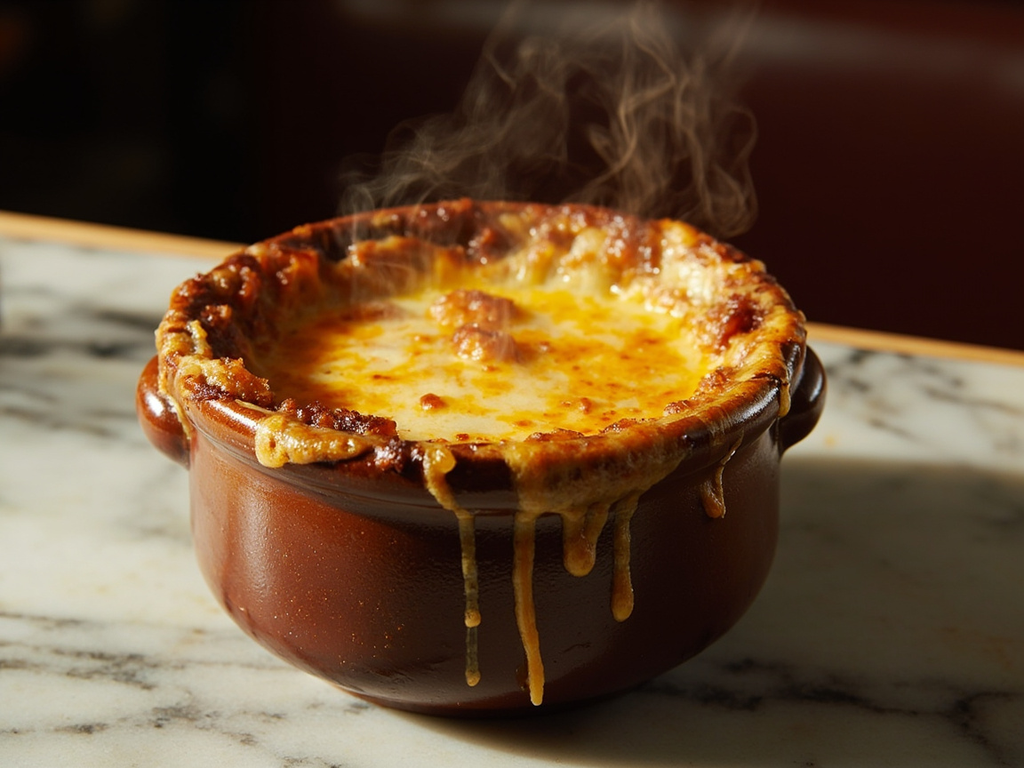
Onions slowly cooked until brown, moistened with broth, poured over bread and topped with a hat of melted cheese. The soup that warms bodies and seals friendships at dawn.
You haven't lived if you haven't eaten gratinée at Les Halles at four in the morning, elbow to elbow with butchers in their aprons! We'd leave the café with our heads full of words and smoke, and there, that burning hot bowl would put your soul back in place. The trick, you see, is to let the onions melt softly, slowly, until they take on the color of honey—no rushing, like a poem. And the cheese on top that strings as it grills: a delight that burns your fingers. We'd come out renewed, ready to remake the world.
- •Onions — a large handful, sliced (sweet-caramelized base)
- •Butter — a knob (cooking)
- •Broth (from pot-au-feu) — one ladle per bowl (liquid)
- •Stale bread — a few slices (base)
- •Cheese for gratin (Gruyère, Comté) — a good layer (gratiné topping)
Soupe à l'Oignon Gratinée des Halles
Onions slowly cooked until brown, moistened with broth, poured over bread and topped with a hat of melted cheese. The soup that warms bodies and seals friendships at dawn.
Why this dish? Desnos roamed Paris at night, from Montparnasse cafés to the central cobblestones. At daybreak, near Les Halles, the famous steaming gratinée was shared with market porters and partygoers. It was the quintessential convivial hour, when the surrealist band prolonged the night around a burning hot bowl.
You haven't lived if you haven't eaten gratinée at Les Halles at four in the morning, elbow to elbow with butchers in their aprons! We'd leave the café with our heads full of words and smoke, and there, that burning hot bowl would put your soul back in place. The trick, you see, is to let the onions melt softly, slowly, until they take on the color of honey—no rushing, like a poem. And the cheese on top that strings as it grills: a delight that burns your fingers. We'd come out renewed, ready to remake the world.
Ingredients (period version)
- Onions — a large handful, sliced (sweet-caramelized base)
- Butter — a knob (cooking)
- Broth (from pot-au-feu) — one ladle per bowl (liquid)
- Stale bread — a few slices (base)
- Cheese for gratin (Gruyère, Comté) — a good layer (gratiné topping)
Ingredients
- Yellow onions — 500 g (4 large) (base)
- Butter — 40 g (cooking)
- Beef broth — 1 liter (liquid)
- Stale country bread — 4 slices (base)
- Grated Gruyère or Comté — 150 g (gratin)
- Salt, pepper — to taste (seasoning)
- Dry white wine — 1 glass (optional) (deglazing)
Method
- Thinly slice the onions. Cook them in butter over low heat for 25-30 minutes, stirring, until a nice golden color.
- Deglaze optionally with white wine, let evaporate.
- Pour in the hot broth, salt, pepper, and simmer 15 minutes.
- Divide into ovenproof bowls, place a slice of bread on each, cover generously with grated cheese.
- Place under the broiler until the cheese is bubbly and golden. Serve piping hot.
How it was made : The gratinée des Halles is a Parisian institution from the early 20th century: the belly of Paris, its great market, never slept, and the bistros around served this soup day and night to workers and night owls in tails. It was the rallying point of all classes at daybreak.
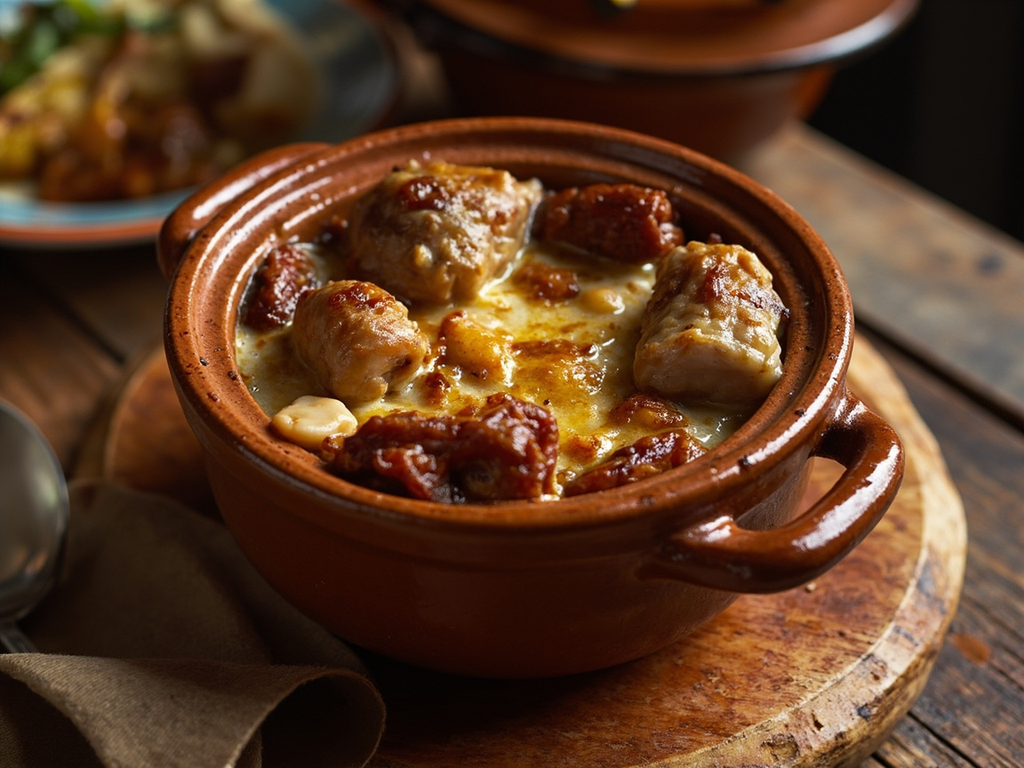
The contemporary twist : Served in an individual cast-iron pot, with overflowing melted cheese crust—old-fashioned brasserie style, to share after an evening out.
Sources : Émile Zola, Le Ventre de Paris, 1873 (setting of Les Halles) · Auguste Escoffier, Le Guide culinaire, 1903
Robert Desnos · Charactorium