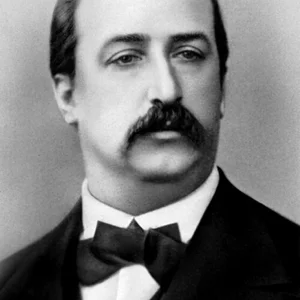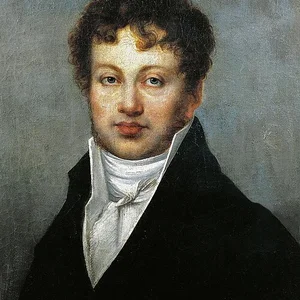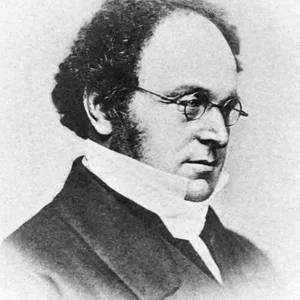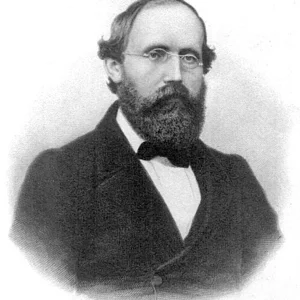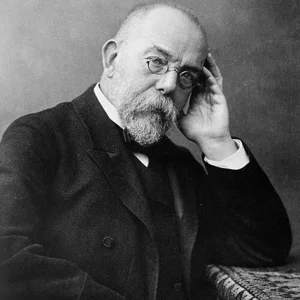

German physician and microbiologist (1843–1910), pioneer of modern bacteriology. He identified the agents responsible for tuberculosis, cholera, and anthrax, revolutionizing the understanding of infectious diseases.
Robert Koch(1843 — 1910)
Robert Koch
Empire allemand, royaume de Hanovre
8 min read
Frequently asked questions
Famous Quotes
« One day, tuberculosis will be as easy to fight as smallpox.»
« If my work has helped to banish the fear of this terrible disease, I am satisfied.»
Key Facts
- 1876: demonstrates that Bacillus anthracis is the causative agent of anthrax
- 1882: discovery of the tuberculosis bacillus (Mycobacterium tuberculosis)
- 1883: identification of the cholera vibrio during an expedition to Egypt and India
- 1884: formulation of Koch's postulates, a rigorous method for establishing microbial causality
- 1905: Nobel Prize in Physiology or Medicine for his research on tuberculosis
Works & Achievements
Koch's first major work: he demonstrated that the anthrax bacterium forms resistant spores, explaining why the disease could reappear in infected pastures years later. This work established the principle that each infectious disease has a specific causative agent.
A landmark paper in which Koch described the discovery of the Koch bacillus (Mycobacterium tuberculosis), the causative agent of tuberculosis, and proved its role in the disease using a rigorous methodology. Considered one of the most important texts in the history of medicine.
Koch formulated four logical criteria for proving that a microbe causes a disease: isolate the agent, culture it, re-inoculate it, and recover the same disease. These postulates still structure reasoning in medical microbiology today.
During a field mission to Egypt and India, Koch isolated Vibrio cholerae and demonstrated its transmission through contaminated water. This discovery laid the groundwork for effective public health policies against cholera.
An extract from tuberculosis bacillus cultures, initially presented as a remedy and later recognized as a diagnostic tool for tuberculosis infection. Tuberculin was the starting point for Von Pirquet's skin test and remains in use in medicine today.
In East Africa, Koch studied sleeping sickness and treatments using organic arsenic compounds, contributing to the earliest antiparasitic chemotherapies. This work foreshadowed the research of his student Paul Ehrlich.
Anecdotes
On March 24, 1882, Robert Koch addressed the Berlin Physiological Society to announce that he had identified the agent responsible for tuberculosis, a disease then killing one in seven Europeans. As his lecture ended, the room fell silent: the scientists present, including Paul Ehrlich, understood they had just witnessed one of the greatest moments in the history of medicine.
It was in a tiny laboratory set up in his country doctor's practice in Wollstein — a birthday gift from his wife Emmy — that Koch made his first great discoveries about anthrax. Working at night after his consultations, without assistance or funding, he photographed for the first time the complete life cycle of a pathogenic bacterium.
In 1890, Koch announced with great fanfare the discovery of tuberculin, presented as a cure for tuberculosis. Thousands of desperate patients flocked to Berlin from across Europe. The disappointment was immense when it became clear that tuberculin did not cure the disease — it could, however, be used to diagnose it, and was repurposed for that purpose, which still represented a genuine advance.
The rivalry between Koch and Louis Pasteur was one of the most famous in the history of science. It combined scientific jealousy with Franco-German tensions following the War of 1870. In their public exchanges, the two scientists criticized each other's methods without restraint, yet both were in fact helping to build the same bacteriological revolution.
To identify the cholera bacillus in 1883, Koch traveled to Egypt and then to India, straight into the heart of the epidemics. In rudimentary conditions, he took samples from corpses, observed the microbe's characteristic comma shape, and established its link to contaminated water. This scientific heroism in the field earned even the admiration of his rivals.
Primary Sources
If the importance of a disease for mankind is a measure of the effort that should be devoted to its investigation, then tuberculosis must stand as the most significant subject above all others.
I have succeeded in consistently finding a bacillus in anthrax blood, cultivating it outside the animal body in pure cultures, and reproducing anthrax disease anew through these pure cultures.
The constant presence of microorganisms in infectious diseases, and the possibility of cultivating them in pure culture and reproducing the disease through these pure cultures, forms the basis for demonstrating their causal significance.
Tuberculosis is not an inevitable disease. It is caused by a specific pathogen — one that is known, that can be found, cultivated, and combated.
The comma bacillus is the only constant finding in cholera; it is present in the excretions of patients and in the intestinal contents of corpses, and it is absent in other diseases.
Key Places
A mining town in the Harz mountains where Robert Koch was born on December 11, 1843. His father was a mining engineer, and this industrial region shaped his taste for rigorous observation of the natural world.
A small provincial town where Koch practiced as a country doctor from 1872 to 1880 and where, in a makeshift laboratory, he made his discoveries on anthrax. It was here that his scientific career truly took off.
The Institute for Infectious Diseases founded in Berlin in 1891 for Koch brought together an entire generation of bacteriologists. Renamed the Robert Koch Institute, it remains Germany's central public health agency to this day.
Koch traveled to Egypt and then to India in 1883–1884 to study cholera in the field, in direct contact with ongoing epidemics. It was in Calcutta that he conclusively identified the cholera vibrio in the water of sacred ponds.
A spa town in Baden-Württemberg where Koch retreated to recuperate and where he died on May 27, 1910, just a few weeks after delivering his final scientific lecture.
Typical Objects

Koch used the brand-new microscopes from the Carl Zeiss firm in Jena, equipped with exceptionally precise oil-immersion objectives. With them, he was able to observe and photograph bacteria with a clarity never before achieved.

Invented by Julius Richard Petri, Koch's assistant, this small glass dish allowed bacteria to be cultured on a solid agar medium without contamination. It remains to this day the essential tool of every microbiology laboratory.

Koch was the first to use agar-agar to solidify his culture media, making it possible to isolate pure bacterial colonies. This innovation, suggested by a colleague's wife, revolutionized bacteriology.

To make bacteria visible under the microscope, Koch used synthetic dyes derived from aniline. Developing the staining technique for the tuberculosis bacillus was a major technical breakthrough.

Koch was a pioneer in using microphotography to document his discoveries. He adapted a camera to his microscope, providing irrefutable visual evidence where verbal descriptions could be disputed.

Before his fame, Koch practiced as a general practitioner in Wollstein. His rural physician's bag — stethoscope, lancets, vials — symbolizes the modest origins of a researcher who built his reputation in a provincial practice.
School Curriculum
Vocabulary & Tags
Key Vocabulary
Tags
Daily Life
Morning
Koch rose early, particularly during his years as a country doctor in Wollstein. After a frugal breakfast, he made his rounds on horseback to the surrounding farms and hamlets, treating peasants and laborers. As soon as he returned, he put on his laboratory coat.
Afternoon
Afternoons were devoted to consultations at the practice, but Koch would slip away as early as possible to return to his tiny personal laboratory. He prepared his culture media, examined his microscopic preparations, and took meticulous notes, often standing for hours at a time.
Evening
Evenings, and sometimes much of the night, were dedicated to research and microphotography. Koch developed his photographs himself, adjusted the lighting, and wrote up his observations. His wife Emmy would sometimes bring him food so he would not lose time.
Food
Koch followed a simple, middle-class diet: soup, boiled or roasted meat, seasonal vegetables, and rye bread. During his field missions in Egypt or India, he adapted to local conditions, taking care to drink only boiled water, convinced as he was of the waterborne transmission of disease.
Clothing
In town or at the university, Koch wore the dark three-piece suit of the educated bourgeoisie of the Wilhelmine era: black frock coat, waistcoat, tie, and top hat for official occasions. In the laboratory, he wore a long white linen coat — an emerging symbol of the hygienist scientist.
Housing
In Wollstein, Koch lived in a modest middle-class house with a garden, typical of small Prussian towns. His wife Emmy converted one of the rooms into a laboratory to give him a proper workspace. Upon his appointment to Berlin, he moved into a comfortable apartment in a scientific quarter near the university, and later into a villa as his renown grew.
Historical Timeline
Period Vocabulary
Liens externes & ressources
Références
Œuvres
Démonstration du cycle vital de Bacillus anthracis
1876
Die Ätiologie der Tuberculose (L'étiologie de la tuberculose)
1882
Les quatre postulats de Koch
1884
Identification du vibrion cholérique
1883
La tuberculine
1890
Travaux sur la trypanosomiase (maladie du sommeil) en Afrique
1906–1907