 flip
flipThe Shoebox Lunch: Cold Fried Chicken for the Journey (Shoebox lunch)
The Shoebox Lunch: Cold Fried Chicken for the Journey (Shoebox lunch)
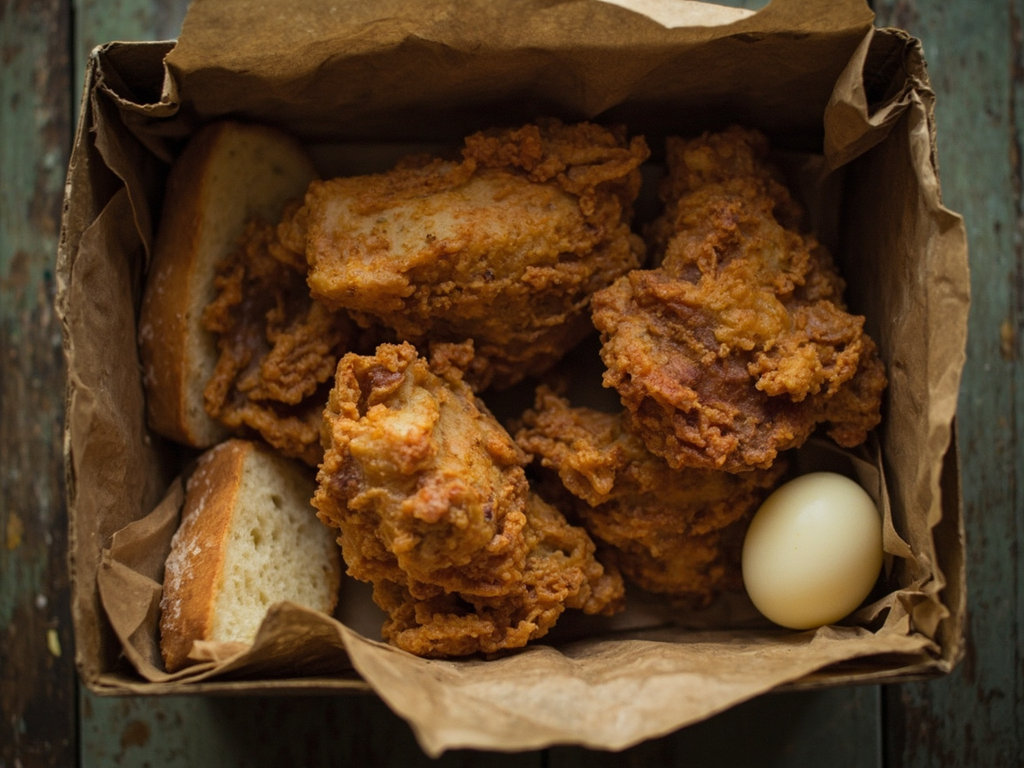
Why this dish? Under segregation, Black people could not enter restaurants or dining cars. So the meal was carried in a shoebox lined with paper: fried chicken (which keeps and is eaten cold without issue), bread, and a fruit. Rosa Parks, born into that America and an activist against it, knew intimately this ritual of dignity in the face of humiliation.
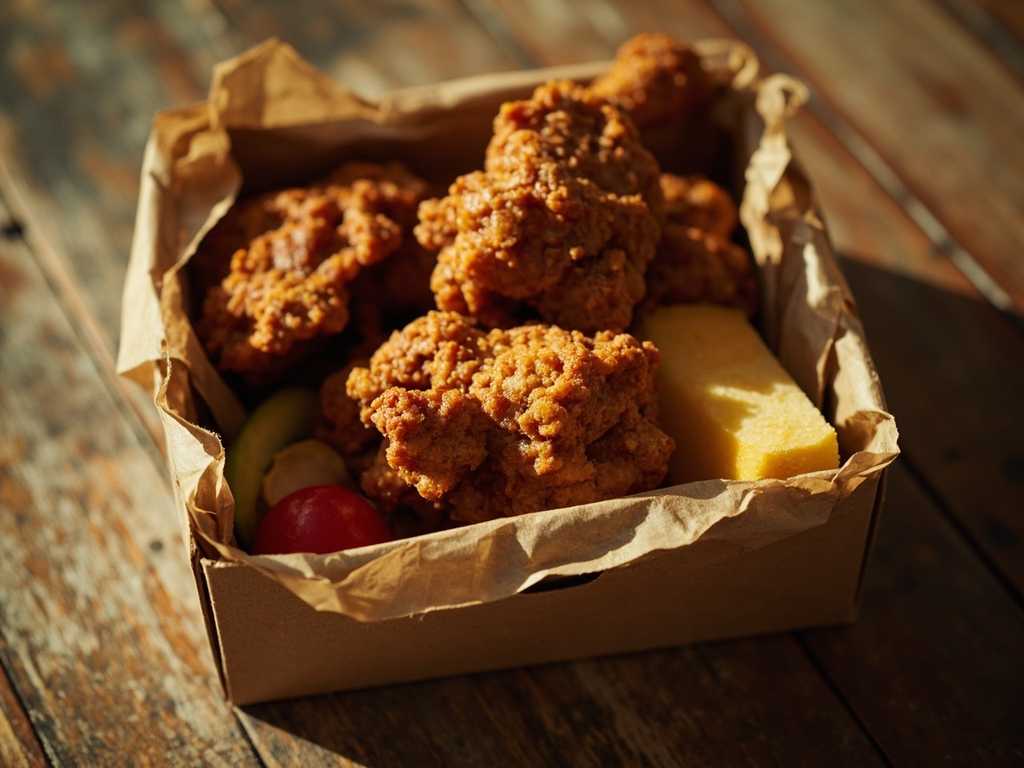
Chicken marinated in buttermilk, breaded and fried crispy, then cooled: it travels perfectly and is eaten by hand, on the road. The most moving symbol of African American travel cuisine.
Before a long trip, I'd prepare the box the night before. I'd let the chicken soak in buttermilk all night — that's the secret to keeping it tender — then roll it in well-seasoned flour and brown it in hot fat. We couldn't sit down to eat like everyone else, so we ate with dignity, in our seats, with what we had made with our own hands. I'd line the shoebox with clean paper, add a slice of bread and a fruit, and no one could take that from us.
- •Chicken pieces — one cut-up chicken (base)
- •Buttermilk — enough to cover (tenderizing marinade)
- •Flour — two cups (breading)
- •Lard or vegetable shortening — for frying (frying fat)
- •Salt, pepper, paprika — generously (seasoning)
The Shoebox Lunch: Cold Fried Chicken for the Journey (Shoebox lunch)
Chicken marinated in buttermilk, breaded and fried crispy, then cooled: it travels perfectly and is eaten by hand, on the road. The most moving symbol of African American travel cuisine.
Why this dish? Under segregation, Black people could not enter restaurants or dining cars. So the meal was carried in a shoebox lined with paper: fried chicken (which keeps and is eaten cold without issue), bread, and a fruit. Rosa Parks, born into that America and an activist against it, knew intimately this ritual of dignity in the face of humiliation.
Before a long trip, I'd prepare the box the night before. I'd let the chicken soak in buttermilk all night — that's the secret to keeping it tender — then roll it in well-seasoned flour and brown it in hot fat. We couldn't sit down to eat like everyone else, so we ate with dignity, in our seats, with what we had made with our own hands. I'd line the shoebox with clean paper, add a slice of bread and a fruit, and no one could take that from us.
Ingredients (period version)
- Chicken pieces — one cut-up chicken (base)
- Buttermilk — enough to cover (tenderizing marinade)
- Flour — two cups (breading)
- Lard or vegetable shortening — for frying (frying fat)
- Salt, pepper, paprika — generously (seasoning)
Ingredients
- Chicken thighs and drumsticks — 8 pieces (base (dark meat stays moist cold))
- Buttermilk — 500 ml (marinade)
- Flour — 250 g (breading)
- Paprika — 2 tsp (color and flavor)
- Garlic powder — 1 tsp (aromatic)
- Salt and pepper — generous (seasoning)
- Frying oil — 1 liter (cooking)
Method
- The night before, marinate the chicken in salted buttermilk, refrigerated overnight.
- Mix flour, paprika, garlic powder, salt, and pepper. Drain the chicken and coat generously in the flour mixture.
- Heat oil to 165-170 °C. Fry the pieces for 12-15 minutes, turning, until deep golden and cooked through (75 °C internal).
- Drain on a wire rack (not paper, to keep crispiness) and season immediately with salt.
- Cool completely: fried chicken is eaten cold, that's the whole point for travel.
- Pack in a box lined with parchment paper along with a slice of bread and a fruit.
How it was made : The "shoebox lunch" is a legacy of segregation and the Great Migration of Black people from the South to the North (including Detroit, where Rosa Parks moved in 1957). Denied access to restaurants, Black travelers carried a homemade cold meal; fried chicken, which keeps and can be eaten without utensils, was the centerpiece.
The contemporary twist : Served in a real small kraft box street-food style, with a homemade pickle and a square of cornbread — a deliberate tribute to the ritual.
Sources : Psyche Williams-Forson, « Building Houses out of Chicken Legs: Black Women, Food, and Power », 2006 · Jessica B. Harris, « High on the Hog », 2011
Rosa Parks · Charactorium