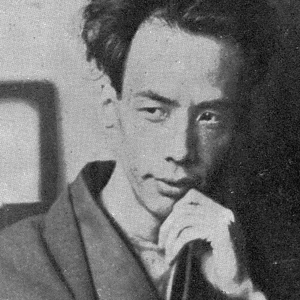

Japanese writer of the early 20th century, a master of the short story. He drew on Japan's ancient tales to explore the ambiguity of truth and human psychology. A major figure of modern Japanese literature, he took his own life in 1927.
Ryunosuke Akutagawa(1892 — 1927)
Ryūnosuke Akutagawa
Japon
6 min read
Frequently asked questions
Key Facts
- Born in 1892 in Tokyo, during the Meiji era
- Published his short story 'Rashōmon' in 1915
- Published 'In a Grove' (Yabu no naka) in 1922, which would inspire Kurosawa's film in 1950
- Took his own life in 1927 at the age of 35
- The Akutagawa Prize, created in 1935, honors young Japanese writers in his memory
Works & Achievements
The debut short story that revealed his talent: beneath a ruined gate in a devastated Kyoto, a servant wavers between honesty and survival.
The story of a monk humiliated by his very long nose; it was this tale that earned Akutagawa the praise of Natsume Sōseki.
A moral tale of Buddhist inspiration about a robber to whom the Buddha offers a chance at salvation, often read by children.
The tale of a painter willing to sacrifice everything, even his own family, in the name of perfecting his art.
A murder recounted by several witnesses who contradict one another; a masterpiece on the nature of truth, adapted by Kurosawa.
A collection of biting aphorisms on morality, art, and society.
A satire of human society seen through the imaginary land of the kappa, creatures of folklore.
A fragmentary autobiography, published after his death, in which he gazes lucidly upon his own existence.
Anecdotes
Akutagawa is said to have been born in 1892, a Year of the Dragon, and family legend holds that he came into the world in the month, on the day, and even at the hour of the Dragon. This is why he was given the name Ryūnosuke, in which the character “ryū” (龍) means “dragon.”
A few months after his birth, his mother sank into madness. The baby was entrusted to the family of his maternal uncle, the Akutagawa, whose name he took. All his life he was haunted by the dread of having inherited this mental fragility, a fear that runs through several of his stories.
The greatest writer of the age, Natsume Sōseki, read the young Akutagawa’s short story “The Nose” and wrote him an enthusiastic letter urging him to keep writing. This support from an admired master launched the career of the 24-year-old newcomer.
Akutagawa was an insatiable reader of old tales. Many of his short stories, such as “Rashōmon” or “In a Grove,” are modern retellings of stories drawn from the “Konjaku Monogatari,” a twelfth-century Japanese collection.
In 1950, the filmmaker Akira Kurosawa adapted two of Akutagawa’s short stories in his film “Rashōmon,” which brought Japanese cinema to worldwide attention. Ever since, people speak of the “Rashomon effect” to describe contradictory accounts of the same event.
In his honor, his friend the writer Kikuchi Kan created the Akutagawa Prize in 1935, which is today the most prestigious literary award in Japan for young authors.
Primary Sources
It was evening. Beneath the Rashōmon gate, a servant was waiting for the rain to stop.
Yes, sir. I am indeed the one who found the body. This morning, as I always do, I had set out to cut wood in the mountains, behind the grove.
What I feel is only a vague uneasiness (bonyari shita fuan) about my future.
The wisest way to face life is to despise convention while living as if one did not despise it.
Key Places
District of Tokyo where Akutagawa was born in 1892. His biological family, the Niihara, ran a dairy there.
Akutagawa studied English literature here. It was during his student years that he published his first short stories.
To earn a living early in his career, Akutagawa taught English here for a few years.
District where Akutagawa settled and held a genuine literary salon for young writers. It was here that he lived his final years and took his own life in 1927.
In 1921, Akutagawa travelled across China as a correspondent for a major Osaka newspaper. This exhausting journey marked a turning point in his health and his inspiration.
Temple in the Sugamo district where Akutagawa's grave is located.
Typical Objects
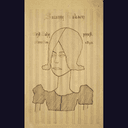
Japanese grid-ruled sheets in which each small square holds a single character. Writers like Akutagawa drafted their short stories by hand on this paper.
📷 Domaine public · Wikimedia Commons ↗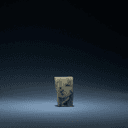
Traditional instruments of Japanese writing: an ink stick is rubbed against the moistened stone, then the characters are traced with the brush. Akutagawa used them for his drafts and his correspondence.
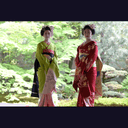
A traditional Japanese garment of cross-folded fabric, fastened with a wide sash (obi). Akutagawa often wore it at home, while slipping into a Western suit when he went out.
📷 CC BY-SA 2.0 · Wikimedia Commons ↗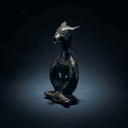
A vast collection of Japanese and Buddhist tales compiled in the 12th century. Akutagawa drew directly from it the material for several of his most famous short stories.
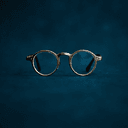
The small wire-rimmed glasses seen in most portraits of Akutagawa, with his thin face and tousled hair. They became the typical image of the Japanese intellectual of the time.
Akutagawa loved to draw kappa, those mischievous water creatures of Japanese folklore, and identified with them. He devoted one of his last works to them, a satire of society.
School Curriculum
Vocabulary & Tags
Key Vocabulary
Daily Life
Morning
Often an insomniac and of fragile health, Akutagawa rose without much enthusiasm. He began his day with reading and correspondence, surrounded by the countless books of his study in **Tabata**.
Afternoon
The afternoon was devoted to writing—slow and demanding—on squared paper. His home was also a meeting place: young writers came to discuss literature over a cup of tea.
Evening
In the evening, Akutagawa read late into the night. Tormented by insomnia and anxiety, he increasingly turned to sleeping pills to find rest.
Food
He ate classic Japanese cuisine: rice, fish, miso soup and pickled vegetables, accompanied by green tea. His delicate stomach, however, forced him to eat sparingly.
Clothing
At home, he wore the traditional kimono; to teach or go out in the city, he donned a Western suit. Thin, with unruly hair and small round glasses, he had the typical look of a **Taishō**-era intellectual.
Housing
He lived in a Japanese house in **Tabata**, in **Tokyo**, with rooms covered in tatami mats and sliding partitions. His study overflowed with old and modern books, both Japanese and foreign.
Historical Timeline
Period Vocabulary
Liens externes & ressources
Références
Œuvres
Rashōmon (羅生門)
1915
Le Nez (Hana, 鼻)
1916
Le Fil de l'araignée (Kumo no Ito, 蜘蛛の糸)
1918
Figures infernales (Jigokuhen, 地獄変)
1918
Dans le fourré (Yabu no naka, 藪の中)
1922
Les Paroles d'un nain (Shuju no kotoba, 侏儒の言葉)
1923-1927
Kappa (河童)
1927