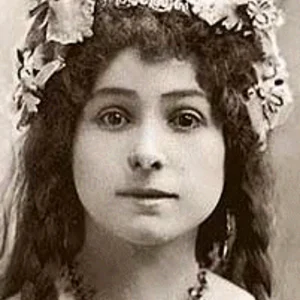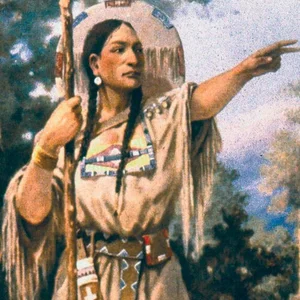

A Shoshone woman (c. 1788–1812), Sacagawea served as the indispensable interpreter and guide for the Lewis and Clark Expedition (1804–1806). Her knowledge of the land, languages, and Indigenous peoples enabled the American expedition to cross the continent all the way to the Pacific.
Sacagawea(1786 — 1812)
Sacagawea
États-Unis
7 min read
Frequently asked questions
Key Facts
- Born around 1788 among the Shoshone people, in present-day Idaho
- Captured at around age 12 by Hidatsa warriors, she was sold to Canadian fur trapper Toussaint Charbonneau
- Joined the Lewis and Clark Expedition in 1804, giving birth to her son Jean-Baptiste Charbonneau during the journey
- Her presence with an infant was interpreted by the peoples they encountered as a sign of peace, helping facilitate negotiations
- Died around 1812 according to written sources, though some Shoshone oral traditions dispute this date
Works & Achievements
Sacagawea accompanied and guided the expedition over more than 6,000 miles, from Fort Mandan to the Pacific Ocean and back. Her contributions as interpreter, diplomat, and geographic guide were fundamental to the mission's success.
Sacagawea negotiated access to horses from her own people, enabling the expedition to cross the Rocky Mountains. Her presence assured Native tribes of the peaceful intentions of the American explorers.
Throughout the journey, Sacagawea identified edible and medicinal plants that helped the expedition survive in harsh conditions. She also guided Lewis and Clark using her precise memory of the landscapes of the American West.
Sacagawea translated in a chain with her husband Charbonneau, moving from Shoshone to Hidatsa, then from Hidatsa to French, and finally from French to English. This complex linguistic network was the only means of communication between the expedition and the Native nations.
Anecdotes
During the Lewis and Clark Expedition, Sacagawea suddenly recognized the lands of her childhood in the Rocky Mountains. She pointed out a mountain pass that the explorers would never have found on their own, allowing the expedition to cross the Rocky Mountain barrier before the first snows.
In August 1805, Sacagawea was reunited with her brother Cameahwait, who had become chief of the Shoshone, and whom she had not seen since her abduction by the Hidatsa. This emotional reunion allowed Lewis and Clark to negotiate the purchase of horses essential for crossing the mountains.
In May 1805, the pirogue carrying the expedition's journals, scientific instruments, and medicines capsized. Sacagawea, holding her infant Jean-Baptiste in her arms, calmly retrieved the floating items. Meriwether Lewis praised her composure in his journal, describing her as braver than any of the men present.
Sacagawea traveled throughout the entire expedition with her baby Jean-Baptiste, born in February 1805, strapped to her back in the Shoshone tradition. The soldiers affectionately nicknamed the child 'Pomp,' and William Clark grew so fond of him that he raised him and funded his education in Europe.
Primary Sources
The Indian woman to whom I ascribe equal fortitude and resolution with any person onboard at the time of the accident... caught and preserved most of the light articles which were washed overboard.
The wife of Shabono our interpreter we find reconciles all the Indians, as to our friendly intentions. A woman with a party of men is a token of peace.
The Shoshone preserve the memory of Bird Woman (Sacagawea) as the one who bridged worlds, guiding strangers without betraying her people, speaking with her hands and her heart as much as with her voice.
Your woman who accompanied you that long dangerous and fatiguing route to the Pacific Ocian and back diserved a greater reward for her attention and services on that rout than we had in our power to give her.
Key Places
A mountain pass in the Rockies where Sacagawea recognized the lands of her childhood in 1805 and guided the expedition toward her Shoshone people. This crossing proved decisive for the survival of the Corps of Discovery.
The winter encampment where Sacagawea gave birth to Jean-Baptiste in February 1805 and officially joined the Lewis and Clark Expedition as interpreter and guide.
The final destination of the expedition, reached in November 1805 thanks in large part to Sacagawea's guidance. She was one of the very few women to see the Pacific Ocean at that time.
The trading post where Sacagawea died in December 1812, most likely of typhoid fever. The company clerk's journal records her passing.
The ancestral homeland of the Agaidika Shoshones, where Sacagawea was born. In this landscape she recognized the geographical landmarks that guided the expedition through the Rockies.
Typical Objects

A wooden and leather structure decorated with beads, in which Sacagawea carried her infant Jean-Baptiste on her back throughout the expedition. This object symbolizes both Native American motherhood and Sacagawea's exceptional courage.

A traditional Shoshone garment made of tanned hide, decorated with beads and fringe, worn by Sacagawea. Her Native American clothing signaled to the tribes they encountered that the expedition came in peace.

A necklace or belt of white and purple shells used as a medium of exchange and a sign of peace between Indigenous nations. Sacagawea used it to facilitate trade negotiations with the tribes they met.

A hide pouch containing medicinal plants, herbs, and sacred objects, carried by Sacagawea. Her knowledge of plants allowed her to treat members of the expedition and identify edible vegetation in hostile terrain.

A hollowed-log vessel used by the expedition to navigate the Snake and Columbia rivers. From these boats, Sacagawea guided route decisions and interpreted signals from the riverside tribes.

Tools carried by Lewis and Clark that Sacagawea quickly learned to use. Her topographical memory of the landscapes of her childhood complemented these instruments in a decisive way.
School Curriculum
Vocabulary & Tags
Key Vocabulary
Tags
Daily Life
Morning
Sacagawea rose before dawn to prepare the camp and feed Jean-Baptiste. She gathered wood, lit the fire, and made a porridge of corn or dried roots. While exploring the camp's surroundings, she identified edible plants and animal tracks worth following.
Afternoon
Afternoons were spent walking or paddling canoes, often covering more than 20 kilometers a day. Sacagawea guided the route, interpreted signals from tribes they encountered, and negotiated with local chiefs. She carried Jean-Baptiste in her cradleboard without ever slowing the group.
Evening
At the evening camp, Sacagawea prepared meals from the day's provisions — dried meat, berries, roots. She sewed and mended the leather clothing worn down by the long marches, then shared with the expedition's men what she remembered from childhood about the lands and peoples ahead.
Food
Daily food varied with the seasons and the territories they crossed. On the plains, the group ate dried bison, deer, and beaver meat. Sacagawea supplemented the diet with camas roots, wild berries, and nuts. During times of scarcity in the Rockies, the expedition survived thanks to her knowledge of edible plants.
Clothing
Sacagawea wore a long tanned deerskin dress decorated with colored beads and fringe in the Shoshone tradition. Soft-leather moccasins and leggings protected her during the long marches over rough terrain. In winter, a bison-fur cape completed her outfit to face the extreme temperatures of the Rockies.
Housing
During the expedition, Sacagawea slept in tents or makeshift shelters built each evening. Her earlier life among the Hidatsa had been spent in large semi-sunken earthen lodges capable of housing several families. During extended stops such as Fort Mandan or Fort Clatsop, the expedition built log cabins to wait out the winter.
Historical Timeline
Period Vocabulary
Visual Style
Paysages grandioses de l'Ouest américain du début du XIXe siècle, palette de terres et d'ocres, style naturaliste inspiré des peintres explorateurs comme Bodmer.
Sound Ambience
Ambiance sonore des grands espaces de l'Ouest américain : vent sur les prairies, rivières tumultueuses des Rocheuses, tambours shoshones et crépitement du feu de camp.
Liens externes & ressources
Références
Œuvres
Traversée du continent américain avec l'expédition Lewis et Clark
1804-1806
Médiation diplomatique avec les nations shoshones et bannocks
1805
Transmission du savoir botanique et géographique
1804-1806
Interprétariat multilingue (shoshone, hidatsa, français, anglais par signes)
1804-1806