 flip
flipYayin harekach — Wine Aromatized with Honey and Spices
Yayin harekach — Wine Aromatized with Honey and Spices
Why this dish? The Song of Songs attributed to Solomon mentions "aromatic wine" (yayin harekach) and "pomegranate juice." Wine flowed freely in royal banquets, often sweetened with honey and perfumed with spices from the East — the drink of wisdom and celebration united.
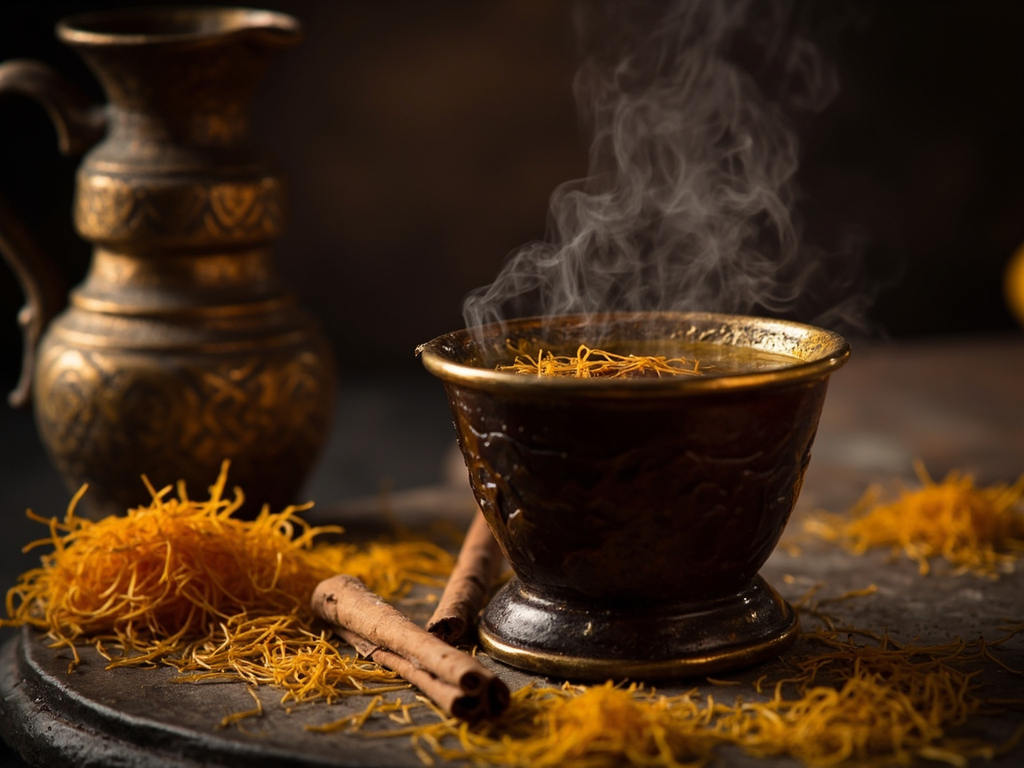
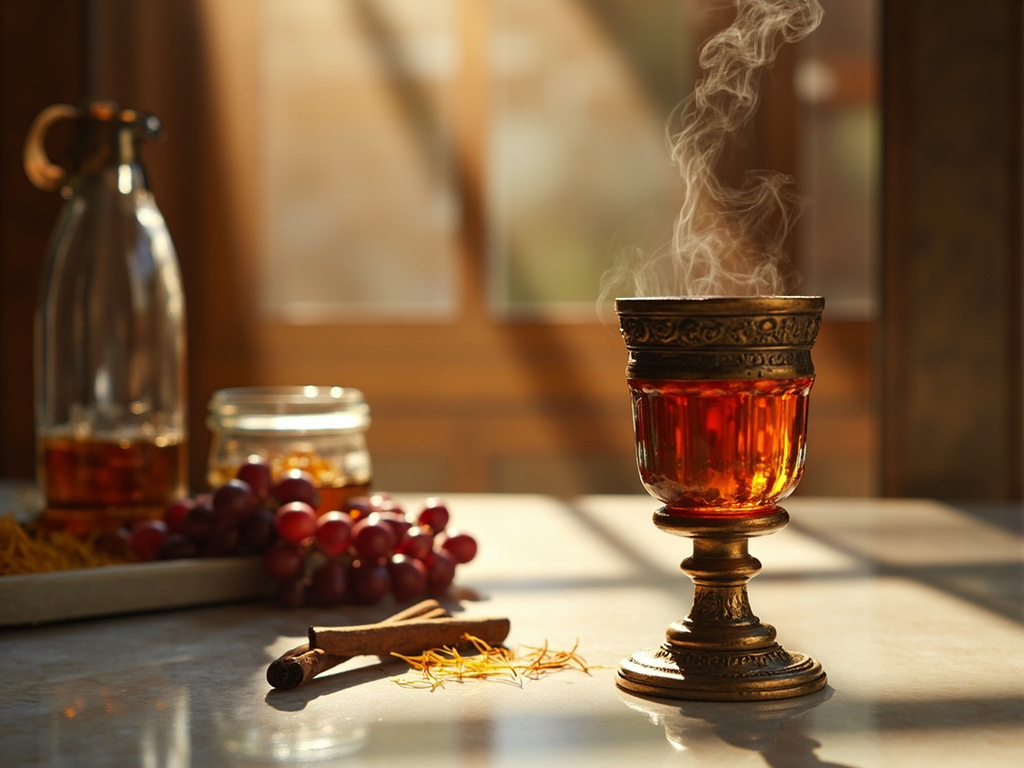
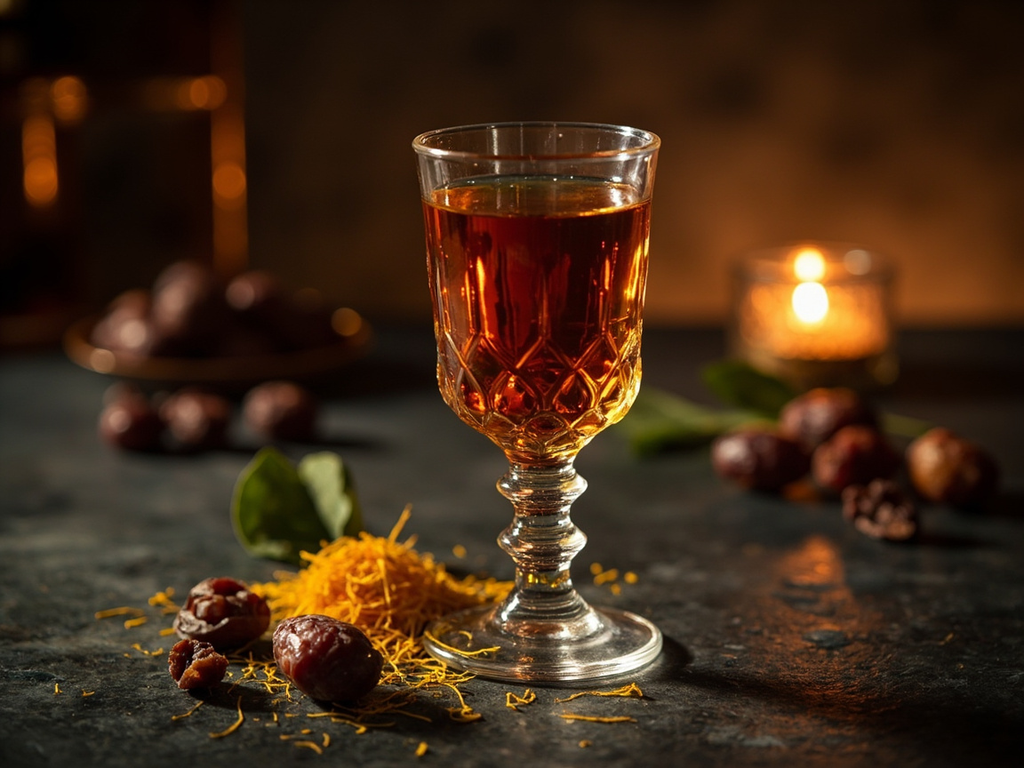
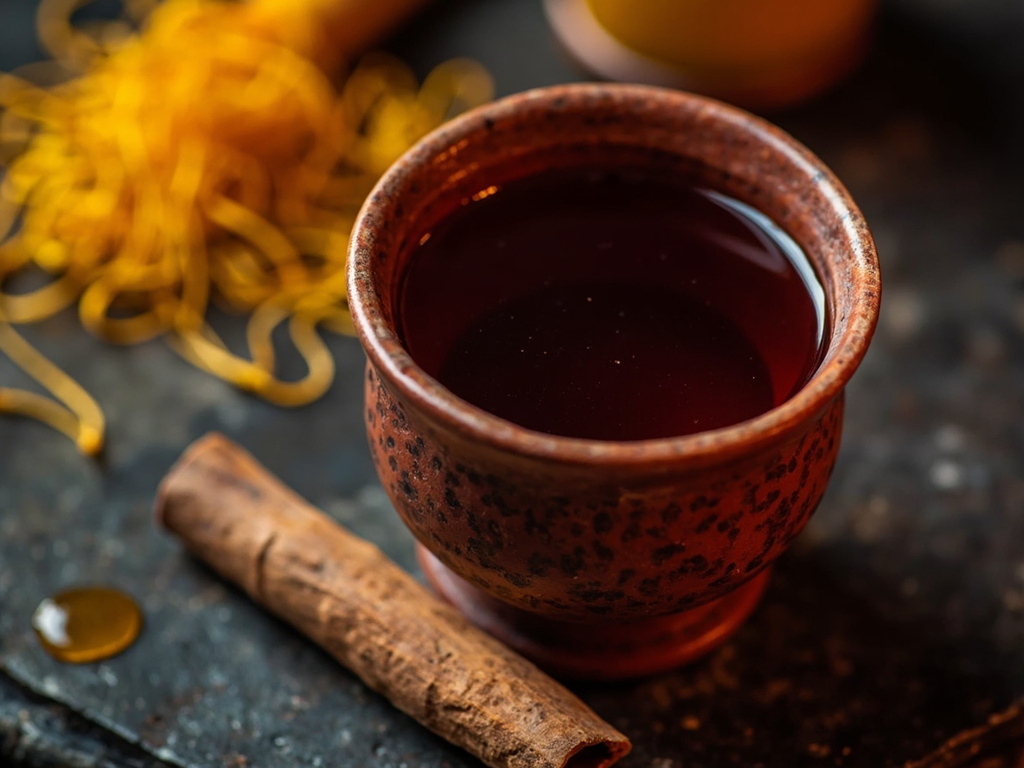
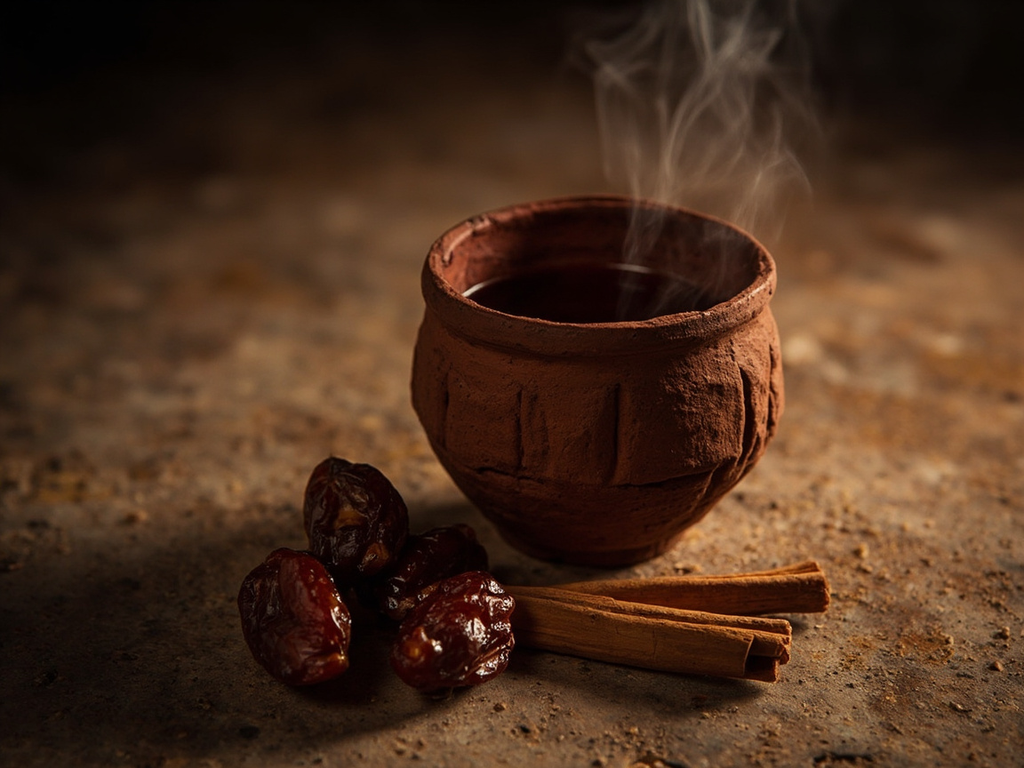
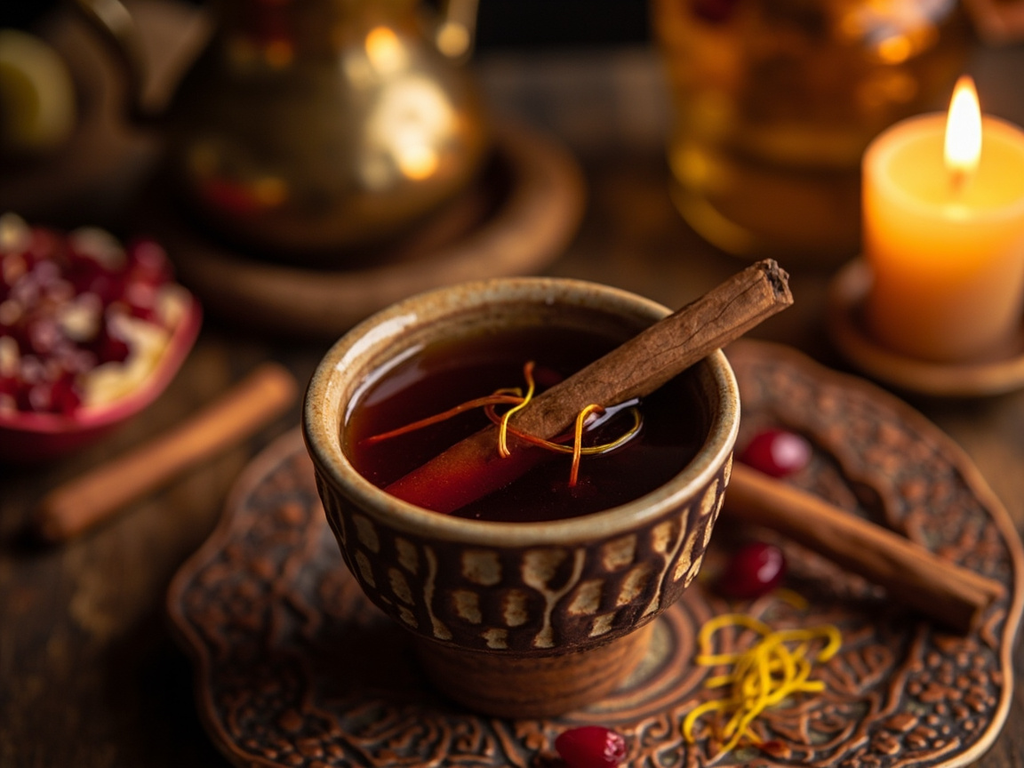
A gently heated wine, married with honey, cinnamon, and saffron, with a splash of pomegranate. Served warm in cups, it is the liquid soul of the mishteh.
Raise the cup with me, friend, for wine gladdens the heart of man — and who could know that better than I? Take the wine from my vines, warm it without boiling, melt honey into it, throw in cinnamon and a few threads of saffron brought by caravans. A tear of pomegranate, and it is worthy of a king. Drink with measure, however: for at the bottom of the cup, as at the bottom of all glory, I have often found wind.
- •Grape wine — a jug (base)
- •Honey — to taste (sweetness)
- •Cinnamon — one stick (spice from Sheba)
- •Saffron — a few threads (color and fragrance)
- •Pomegranate juice — a drizzle (tangy fruitiness)
Yayin harekach — Wine Aromatized with Honey and Spices
A gently heated wine, married with honey, cinnamon, and saffron, with a splash of pomegranate. Served warm in cups, it is the liquid soul of the mishteh.
Why this dish? The Song of Songs attributed to Solomon mentions "aromatic wine" (yayin harekach) and "pomegranate juice." Wine flowed freely in royal banquets, often sweetened with honey and perfumed with spices from the East — the drink of wisdom and celebration united.
Raise the cup with me, friend, for wine gladdens the heart of man — and who could know that better than I? Take the wine from my vines, warm it without boiling, melt honey into it, throw in cinnamon and a few threads of saffron brought by caravans. A tear of pomegranate, and it is worthy of a king. Drink with measure, however: for at the bottom of the cup, as at the bottom of all glory, I have often found wind.
Ingredients (period version)
- Grape wine — a jug (base)
- Honey — to taste (sweetness)
- Cinnamon — one stick (spice from Sheba)
- Saffron — a few threads (color and fragrance)
- Pomegranate juice — a drizzle (tangy fruitiness)
Ingredients
- Fruity red wine — 75 cl (base)
- Honey — 3 tbsp (sweetness)
- Cinnamon stick — 1 (spice)
- Saffron — 1 pinch of threads (color and fragrance)
- Pomegranate juice — 100 ml (tangy fruitiness)
- Non-alcoholic version: grape juice — 75 cl (alternative base for children)
Method
- Pour the wine (or grape juice) into a saucepan with cinnamon and saffron.
- Heat gently without ever boiling, about 10 minutes, to infuse the spices.
- Off the heat, dissolve honey and add pomegranate juice.
- Let rest 5 minutes, remove the cinnamon stick.
- Serve warm in cups or bowls.
How it was made : Ancient wine, thicker and sometimes resinous, was often drunk diluted with water and sweetened with honey or grape syrup (defrutum). Expensive imported spices turned it into a prestige drink reserved for wealthy tables and feasts.
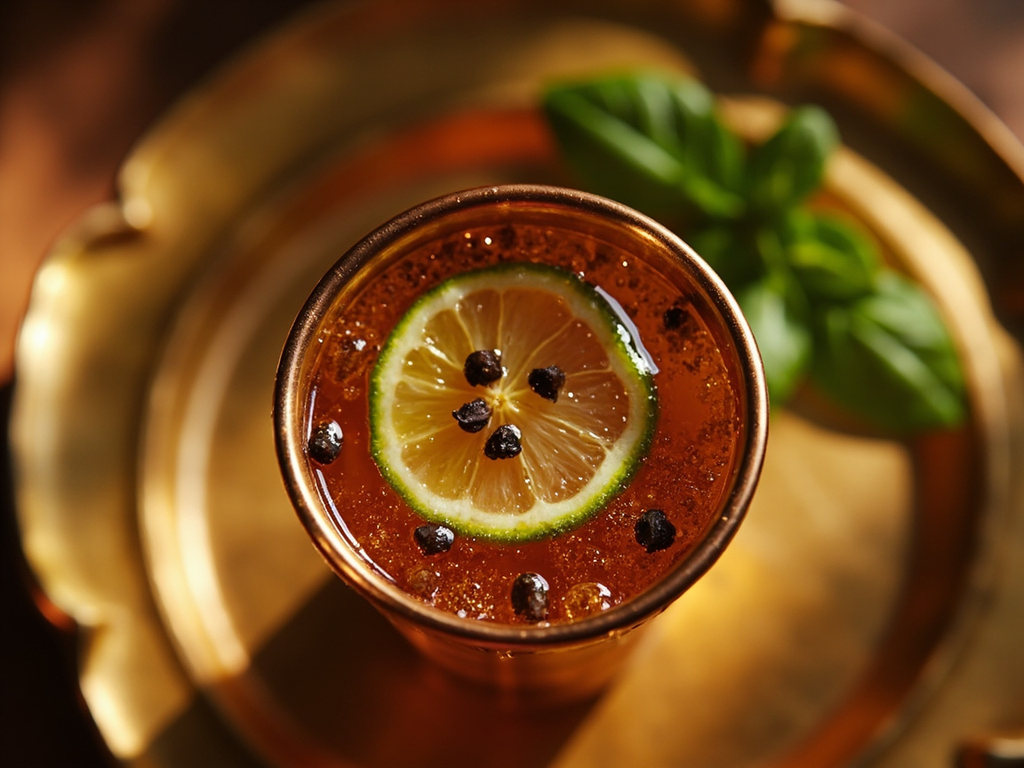
The contemporary twist : Served chilled in summer, with floating pomegranate seeds: a "Solomon's wine" oriental sangria version (and its non-alcoholic version for the whole family).
Solomon · Charactorium