 flip
flipBiancomangiare (almond blancmange with capon)
Biancomangiare (almond blancmange with capon)
Why this dish? Biancomangiare, sweet and white, was THE dish brought to the sick and convalescent in Quattrocento Florence. For an artist exhausted by long hours on a scaffold in the Sistine Chapel, it was the warm comfort prescribed by the dietary wisdom of the time.
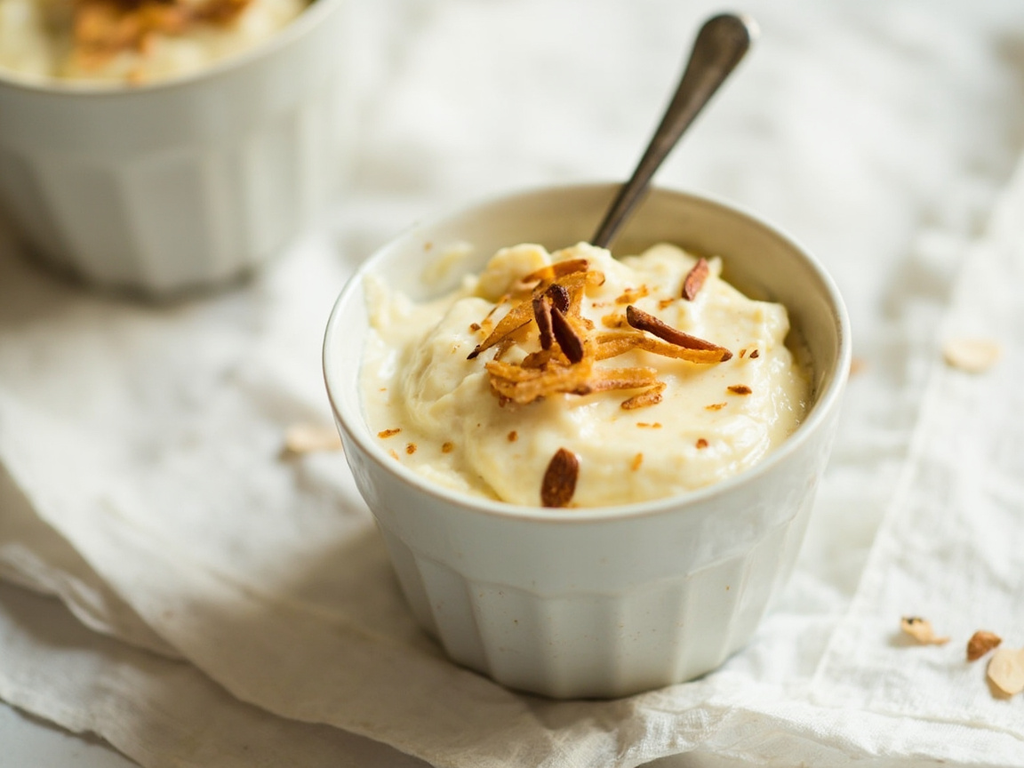
A smooth white cream of pounded capon breast, bound with almond milk and rice flour, sweetened and perfumed with rose water. Nourishing yet light, it was the food of waning strength—a dish of care as much as pleasure.
When the body weakens, no burning sauces or sharpness: we ask for biancomangiare, white as Lenten linen. We pound the capon breast until it unravels into threads, drown it in almond milk, thicken with rice flour, and sweeten with sugar and a hint of rose water. Physicians deem it restorative, and I tell you: warm, in a bowl, it is a balm for those who have stared too long at the ceiling and forgotten to eat.
- •Cooked capon breast — one breast (protein, shreds)
- •Almond milk — plenty (liquid, sweetness)
- •Rice flour — as needed (binder)
- •Sugar — as desired (sweetness)
- •Rose water — a few drops (perfume)
- •Salt — a pinch (balance)
Biancomangiare (almond blancmange with capon)
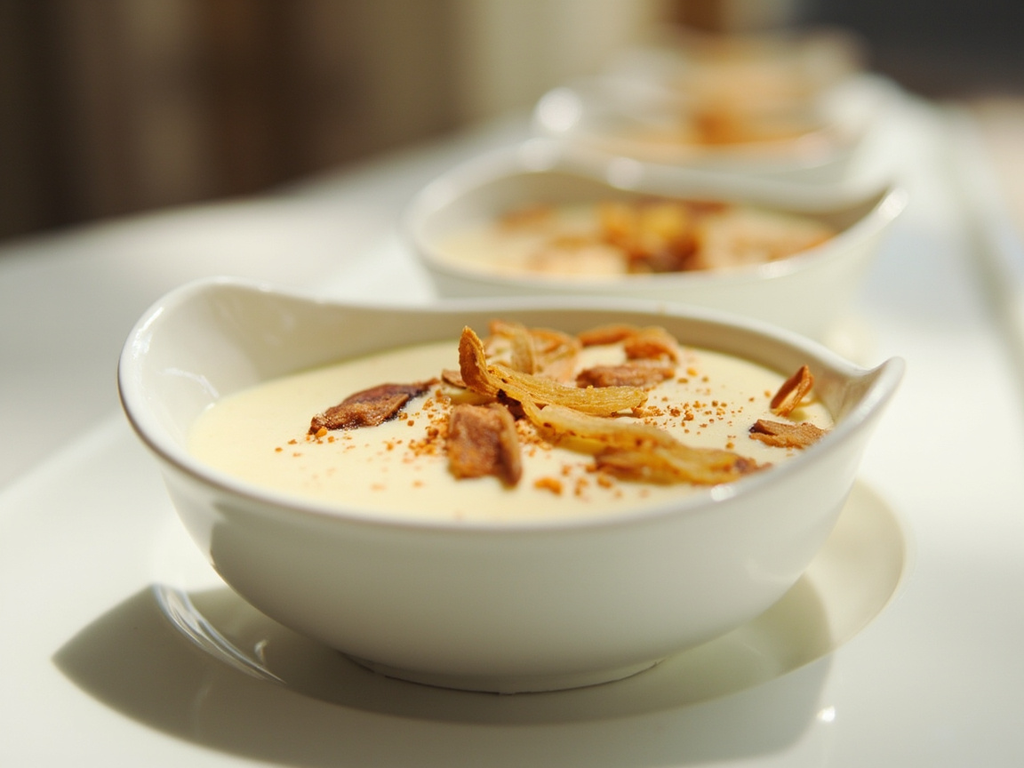
A smooth white cream of pounded capon breast, bound with almond milk and rice flour, sweetened and perfumed with rose water. Nourishing yet light, it was the food of waning strength—a dish of care as much as pleasure.
Why this dish? Biancomangiare, sweet and white, was THE dish brought to the sick and convalescent in Quattrocento Florence. For an artist exhausted by long hours on a scaffold in the Sistine Chapel, it was the warm comfort prescribed by the dietary wisdom of the time.
When the body weakens, no burning sauces or sharpness: we ask for biancomangiare, white as Lenten linen. We pound the capon breast until it unravels into threads, drown it in almond milk, thicken with rice flour, and sweeten with sugar and a hint of rose water. Physicians deem it restorative, and I tell you: warm, in a bowl, it is a balm for those who have stared too long at the ceiling and forgotten to eat.
Ingredients (period version)
- Cooked capon breast — one breast (protein, shreds)
- Almond milk — plenty (liquid, sweetness)
- Rice flour — as needed (binder)
- Sugar — as desired (sweetness)
- Rose water — a few drops (perfume)
- Salt — a pinch (balance)
Ingredients
- Poached chicken or capon breast — 200 g (protein)
- Unsweetened almond milk — 50 cl (liquid)
- Rice flour — 40 g (binder)
- Sugar — 60 g (sweetness)
- Rose water — 1 tsp (perfume)
- Salt — 1 pinch (balance)
- Sliced almonds (optional) — a handful (decoration)
Method
- Poach the poultry breast, drain and shred very finely (by hand or pound in a mortar).
- Dissolve the rice flour in a little cold almond milk to avoid lumps.
- Heat the remaining almond milk with sugar and a pinch of salt; whisk in the flour mixture.
- Add the shredded poultry and cook over low heat for 12–15 minutes, stirring, until a coating cream forms.
- Off the heat, perfume with rose water. Serve warm in bowls, sprinkled with toasted sliced almonds.
How it was made : Biancomangiare appears in all major medieval and Renaissance collections; Maestro Martino gives several versions. Its whiteness (capon, almonds, rice, sugar) made it a prestige dish AND the quintessential "invalid's food" in medieval dietetics, considered mild and easy to digest. It was pounded long in a stone mortar, lacking blenders.
The contemporary twist : Serve in a smooth verrine, topped with a veil of rose water and edible petals: a "primavera" version recalling the floral garlands of the painting Primavera.
Sources : Maestro Martino da Como, Libro de arte coquinaria (~1465) · Platina, De honesta voluptate et valetudine, 1474
Sandro Botticelli · Charactorium