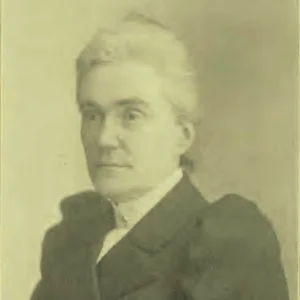

Sarah Good was one of the first women accused of witchcraft during the Salem trials of 1692. A beggar marginalized by the Puritan community of Massachusetts, she proclaimed her innocence and denied any practice of witchcraft right up to her hanging.
Sarah Good(1653 — 1692)
Sarah Good
Angleterre
6 min read
Frequently asked questions
Famous Quotes
« I am no more a witch than you are a wizard, and if you take away my life, God will give you blood to drink.»
Key Facts
- Accused of witchcraft at the very start of the Salem trials in March 1692, among the first three women named alongside Tituba and Sarah Osborne
- A beggar marginalized and stigmatized by the Puritan community, an easy target for accusations
- Constantly denied any practice of witchcraft, unlike Tituba, who confessed under duress
- Convicted and hanged on July 19, 1692, in Salem
- Her daughter Dorothy (Dorcas) Good, aged 4, was also imprisoned and accused
Works & Achievements
Before the magistrates, Sarah Good relentlessly proclaimed her innocence, refusing the false confession that might have saved her life — a rare act of resistance among the accused.
Her final words to Reverend Noyes (“God will give you blood to drink”) became one of the most famous phrases of the Salem trials.
As the first accused and an unjustly condemned outcast, Sarah Good embodies the innocent crushed by collective hysteria and intolerance.
Her name is among the condemned officially cleared by Massachusetts, first in 1711 and then in the state's later formal apologies.
Her story has inspired many works about Salem, including Arthur Miller's 1953 play *The Crucible*.
Anecdotes
On 29 February 1692, Sarah Good was one of the first three women accused of witchcraft in Salem, alongside the enslaved woman Tituba and Sarah Osborne. A scorned beggar who wandered from house to house, she was an easy target: poor, without support, and of ill repute.
Her daughter Dorothy Good, around four years old, was also arrested and imprisoned. Under questioning, the child reportedly “confessed” and accused her own mother, becoming the youngest person jailed during the Salem trials.
At the time of her arrest, Sarah Good was pregnant. She gave birth in prison to a baby named Mercy, who died for lack of care in the appalling conditions of the jail.
On the scaffold, on 19 July 1692, the Reverend Nicholas Noyes urged her to confess. She shot back at him: “I am no more a witch than you are a wizard, and if you take away my life, God will give you blood to drink.” Legend has it that Noyes died years later of a hemorrhage, his mouth full of blood.
During her interrogation, Sarah Good fiercely denied the charges and accused Sarah Osborne of being the true culprit, in a desperate attempt to deflect suspicion — behavior that only worsened her case in the eyes of the judges.
Primary Sources
You are hereby required to bring before us Sarah Good, wife of William Good, to answer to several charges of witchcraft brought against her to the detriment of several people of the village of Salem.
Hathorne: “What evil spirit have you familiarity with?” Good: “None.” — “Why do you hurt these children?” — “I do not hurt them, it is Osborne.”
At her execution, Mr. Noyes urged her to confess; she answered that he lied, that she was no more a witch than he was a wizard, and that if he took away her life, God would give him blood to drink.
Sarah Good pleaded not guilty and put herself for trial upon God and her country; the jury found her guilty of the crime of witchcraft with which she was charged.
Key Places
Village where Sarah Good was born, the daughter of a prosperous innkeeper, before the loss of her inheritance plunged her into poverty.
Farming community where the crisis of 1692 erupted and where Sarah Good was accused of bewitching the young girls afflicted with convulsions.
Port town where the interrogations and the trial before the Court of Oyer and Terminer were held.
Jails where Sarah Good was kept in chains for months and where she gave birth to her daughter Mercy, who died in detention.
Execution hill where Sarah Good was hanged on July 19, 1692, hurling her famous curse at the Reverend Noyes.
Typical Objects

Sarah Good smoked a pipe, a habit deemed scandalous for a poor woman in the Puritan community. At her arrest, she reportedly demanded tobacco.

Those accused of witchcraft were chained in the jails of Ipswich, Salem, and Boston, for it was believed that iron hindered their evil power.

Instrument of the public execution of the Salem condemned at Gallows Hill. Hanging, not the stake, was the punishment inflicted on witches in the English colonies.

The austere garb of the colony's women, made of wool or dark linen. Sarah Good's patched clothes signaled her poverty and marked her as an outcast.

A handwritten document recording the magistrates' questions and the accused's answers. These Salem papers are the main sources on the affair.

Sarah Good walked from farm to farm across the village to beg for food and shelter; when turned away, she muttered words that the villagers interpreted as curses.
School Curriculum
Vocabulary & Tags
Key Vocabulary
Tags
Lieu
Daily Life
Morning
Without a stable home, Sarah Good often woke up in a barn or under a makeshift shelter. At dawn, she would set off again to beg for a little bread or milk from the neighboring farms.
Afternoon
The afternoon was spent walking from house to house, her child by her side. When she was refused charity, she would leave grumbling, and the superstitious villagers saw curses in this.
Evening
In the evening, she looked for a place to sleep, sometimes tolerated in a stable, often driven away. The cold of the Massachusetts winters made these nights especially hard for her and her children.
Food
Her diet depended entirely on charity: leftover cornbread, oat porridge, milk or vegetables that the farmers agreed to give. Hunger was a constant companion.
Clothing
She wore the austere, patched clothing of the poor Puritans: a dark woolen dress, a worn apron and a linen cap. Her tattered garments immediately revealed her condition as a beggar.
Housing
Sarah Good had no home of her own. After the ruin of her household, she lived on forced hospitality, sleeping in barns, lean-tos or out in the open, depending on the tolerance of the inhabitants.
Historical Timeline
Period Vocabulary
Liens externes & ressources
Références
Œuvres
Déni public de sorcellerie
1er mars 1692
La malédiction de Gallows Hill
19 juillet 1692
Figure emblématique de la victime des procès de Salem
à partir de 1692
Réhabilitation posthume
1711 et 1957
Inspiration littéraire et artistique
XXe siècle