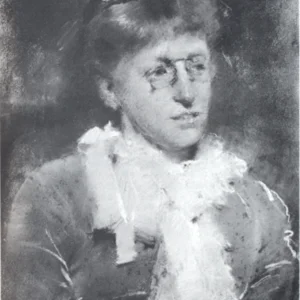

An English colonist of New England, Sarah Osborne was one of the first three women accused of witchcraft during the Salem trials of 1692. Marginalized for having lived with a servant before marriage and for neglecting church, she always denied the accusations and died in prison.
Sarah Osborne(1640 — 1692)
Sarah Osborne
6 min read
Frequently asked questions
Key Facts
- Accused of witchcraft on March 1, 1692, among the first three people charged in Salem alongside Tituba and Sarah Good
- Unlike Tituba, she consistently denied any practice of witchcraft during the interrogations
- An elderly and marginalized woman: land disputes, absenteeism from church, and her union with a former servant fueled suspicion
- Died in prison in Boston on May 10, 1692, without having been tried or executed
Works & Achievements
Facing the magistrates, she denies any pact with the devil and presents herself as a victim — one of the few defense pleas recorded at the start of the trial.
Her evocation of a nightmarish apparition illustrates the colonial fears that blended the devil with a Native American figure, a topic studied by historians.
Unlike Tituba, who “confessed,” Osborne maintained her innocence, becoming a symbol of the accused unjustly crushed by rumor.
The first person to die because of the affair, she stands among the victims commemorated and studied as a textbook case of mass hysteria.
Anecdotes
On March 1, 1692, Sarah Osborne was one of the first three women questioned at Salem Village, alongside Tituba and Sarah Good. Too ill to walk on her own, she was brought before the magistrates after having been bedridden for weeks.
To defend herself, she turned the accusation around: she declared that she was “more likely bewitched herself than a witch,” claiming to have seen in a dream a thing resembling an Indian that had seized her by the back of the neck.
She was reproached above all for no longer attending church for over a year: she replied that she had stayed home because of her illnesses, not out of contempt for God. In Puritan times, missing worship was almost a confession of guilt.
Her reputation was already tarnished: a well-off widow, she had married her former indentured servant, Alexander Osborne, and had quarreled with her sons over the inheritance from her first husband. This tale of money and scandal made her an easy target.
Sarah Osborne was never tried nor hanged: she died in chains in a Boston prison on May 10, 1692, becoming one of the first victims of the Salem panic without any verdict ever having been rendered.
Primary Sources
Asked why she did not go to the meeting (to worship). She answered that she had been sick and infirm and unable to go.
She said she was more likely bewitched than a witch. She told that she had seen, or dreamed that she saw, a thing like an Indian, all black, which pinched her on the neck and pulled her by the hair toward the door of the house.
Complaint against Sarah Good, Sarah Osborne and Tituba for having committed acts of witchcraft on the bodies of Elizabeth Parris, Abigail Williams, Ann Putnam and Elizabeth Hubbard.
You are hereby required to bring Sarah Osborne, wife of Alexander Osborne of Salem Village, tomorrow morning about ten o'clock, to be examined concerning suspicions of witchcraft.
Key Places
Farming hamlet where Sarah Osborne lived and where the panic of 1692 broke out. Neighborhood rivalries there fueled the accusations.
Household where the first “victims,” Betty Parris and Abigail Williams, were seized by fits, the starting point of the affair.
Administrative and port center where the region's judicial authorities were based.
Jail where Sarah Osborne was transferred and died in chains on 10 May 1692, before any trial.
Memorial inaugurated in 1992 in Salem in tribute to the victims of the trials, including Sarah Osborne.
Liens externes & ressources
Références
Œuvres
Témoignage d'innocence lors de son interrogatoire
1er mars 1692
Récit de sa vision de l'«Indien noir»
1er mars 1692
Refus de se reconnaître coupable jusqu'à sa mort
mars–mai 1692
Postérité dans la mémoire de Salem
à partir de 1692