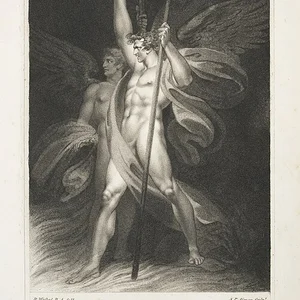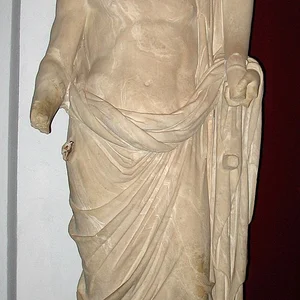

Saturn is a major god of Roman mythology, assimilated with the Greek Cronus. God of agriculture, time, and abundance, he ruled over the Golden Age. His festival, the Saturnalia, was one of the most important celebrations in ancient Rome.
Saturn
Saturn
8 min read
Frequently asked questions
Key Facts
- Saturn is the Roman equivalent of Cronus, the Greek Titan who devoured his children
- He is said to have ruled over Latium during the Golden Age, a time of peace and abundance
- The Saturnalia, celebrated in December, inverted the social order: slaves were waited upon by their masters
- The Temple of Saturn in the Roman Forum (497 BC) housed the public treasury
- The planet Saturn bears his name, the sixth planet in the solar system
Works & Achievements
According to Virgil (*Aeneid*, VIII) and Dionysius of Halicarnassus, Saturn is said to have founded the first city on the Capitoline Hill, Saturnia, thus becoming the first civilizing king of Italy before Rome's foundation by Romulus.
Saturn presided over the Golden Age, a mythical era of peace, equality, and abundance free from forced labor, described by Hesiod in *Works and Days* and later by Ovid in the *Metamorphoses*. This ideal reign stands as the founding utopia of ancient thought.
The dedication of the Temple of Saturn, which housed Rome's public treasury, marks the official institutionalization of his cult. This monument, whose columns remain visible today, is one of the oldest and most significant structures on the Roman Forum.
Establishment of the great annual festival celebrated from December 17 to 23, marked by the inversion of social roles and the exchange of gifts. Through their symbolism and winter timing, the Saturnalia had a lasting influence on the year-end celebrations of Western civilizations.
The Romans gave Saturn's name to the planet visible to the naked eye that appeared to them the slowest and most distant, in reference to the god of time and long cycles. This designation has endured through the centuries and remains in use across all European languages.
Anecdotes
According to Roman mythology, Saturn devoured his own children at birth, for an oracle had foretold that he would be overthrown by one of them. Jupiter was saved by his mother Ops, who handed Saturn a swaddled stone in his place. This myth, borrowed from the Greek Cronus, symbolizes time consuming everything it brings forth.
The Saturnalia, celebrated from December 17 to 23, was the most popular festival in ancient Rome. During these festivities, the social order was temporarily reversed: slaves dined with their masters, received gifts, and were free to speak their minds. This period of ritual equality recalled the Golden Age when Saturn reigned without class distinctions.
The Temple of Saturn, erected at the foot of the Capitoline Hill as early as 498 BCE, housed not only the god's statue but also the *aerarium*: Rome's public treasury. Its eight Doric columns, still visible today on the Roman Forum, make it one of the oldest surviving monuments in the city.
Saturn was depicted as an old man holding a scythe or sickle, symbols of the harvest and the passage of time. His cult statue was filled with oil and his feet wrapped in woolen bands throughout the year, then solemnly unbound during the Saturnalia to signify the return of the Golden Age.
In Roman tradition, Saturn was said to have ruled over Latium after being driven from Olympus by Jupiter. He then taught the early inhabitants of Italy the arts of agriculture and civilization, ushering in a Golden Age of peace and abundance whose memory was celebrated each year during the Saturnalia.
Primary Sources
"The Saturnalia is a festival of such antiquity and such sanctity that its origins cannot be determined with certainty. Some say that Saturn himself instituted these days of rejoicing to keep alive in men the memory of the Golden Age, when all were equal."
"He came first from the ethereal realms of Olympus, a fugitive from Jupiter’s arms and exiled from his kingdom. He gathered the undisciplined race scattered on the high mountains, gave them laws, and chose to call this land Latium, from the safe refuge he had found there."
"The first age was gold: without compulsion, without law, faith and justice reigned of their own accord. The earth itself, unwounded by the plowshare or the hoe, produced everything of its own accord, and men were content with food grown without cultivation."
"In the same year the temple of Saturn was dedicated, and the Saturnalia were instituted as a public festival for the Roman people."
"Saturn takes his name from the fact that he is satiated (*saturatur*) with years; it is he whom the Greeks call Kronos, meaning time — he therefore devours the years as time consumes and abolishes all things."
Key Places
Erected in 498 BC, this temple is the main place of worship for Saturn in Rome and one of the city's oldest monuments. It housed the public treasury (*aerarium*) and served as the center of Saturnalia celebrations.
The religious and political heart of Rome, the Capitoline Hill is linked to the tradition of Saturnia, the first city founded by Saturn on this site according to Virgil and Dionysius of Halicarnassus, before the founding of Rome.
The mythical region where Saturn is said to have reigned after being driven from Olympus by Jupiter. Ancient sources present Latium as the cradle of the Golden Age, where Saturn taught agriculture and gave laws to primitive peoples.
The dwelling of the Greco-Roman gods, from which Saturn was driven by his son Jupiter following the Titanomachy. This place symbolizes the fall of Saturnian power and the transition from the Age of Titans to that of the Olympians.
The subterranean abyss of Greco-Roman mythology into which Saturn-Cronus was cast after his defeat by Jupiter-Zeus. This place symbolizes the imprisonment of ancient power — vanquished, but not destroyed.
Typical Objects

Saturn's principal attribute, the scythe symbolizes both the agricultural harvest and time that cuts all things short. It also recalls the Greek myth of Cronus castrating his father Uranus with a flint sickle, a founding motif of Titanic mythology.

The feet of Saturn's cult statue were wrapped in white wool bands year-round, symbolizing restraint and dormancy. They were solemnly removed during the Saturnalia to signify liberation and the return to the equality of the Golden Age.

During the final days of the Saturnalia, Romans exchanged small figurines made of terracotta or wax known as sigillaria. These popular gifts symbolized the equality among men that the festival was meant to evoke.

Torches and candles exchanged as gifts during the Saturnalia, symbolizing the light and warmth of the Golden Age in the depths of winter. Their festive use is often cited as a distant ancestor of Christmas candles.

A felt cap normally worn by freed Roman slaves as a symbol of liberty. During the Saturnalia, even enslaved people wore the pilleus, marking the festive equality that recalled the reign of Saturn.

An instrument for measuring time by the flow of water, widely used in the Roman world. As the god of time assimilated with Cronus, Saturn is closely associated with devices that track the irreversible passage of hours and ages.
School Curriculum
Vocabulary & Tags
Key Vocabulary
Daily Life
Morning
In Roman religious practice, the priests of the Temple of Saturn began the day with oil libations poured over the god's statue and ritual prayers at sunrise. Morning was the preferred time for agricultural offerings: grain, fruit, and first fruits of the harvest were laid upon the altar.
Afternoon
The Temple of Saturn, seat of the *aerarium*, saw a steady stream of quaestors and magistrates charged with overseeing the public treasury. Official ceremonies in honor of Saturn were often held in the early afternoon, accompanied by animal sacrifices — bulls or pigs — on feast days.
Evening
During the Saturnalia, evenings were devoted to banquets at which masters served their slaves, in a festive reversal of the ordinary social order. Dice were played, gifts were exchanged (*sigillaria* and *cerei*), and songs and poems were recited celebrating Saturn's reign and the golden age.
Food
Food offerings to Saturn included ears of wheat, fruit, and honey, symbols of the agricultural abundance of the golden age. During the Saturnalia, public and private banquets were particularly lavish, featuring meats, wines, and pastries in celebration of the god of abundance's mythical generosity.
Clothing
The cult statue of Saturn was draped in a woolen toga, its feet bound in white woolen bands throughout the year. During the Saturnalia, these bands were ritually removed and participants wore the *pilleus*, the cap of liberty, as a sign of festive equality recalling the golden age.
Housing
In mythological tradition, Saturn ruled over Latium from the Capitoline Hill, Rome's founding hill, after his fall from Olympus. His Roman temple, built of tufa and marble, served both as a place of worship and an administrative building housing the state treasury, making Saturn a god intimately linked to the civic life of Rome.
Historical Timeline
Period Vocabulary
Liens externes & ressources
Références
Œuvres
Fondation de Saturnia
Temps mythiques
Règne sur l'âge d'or (aurea aetas)
Temps mythiques
Temple de Saturne (Forum romain)
498 av. J.-C.
Saturnales (Saturnalia)
Avant le Ve s. av. J.-C.
Planète Saturne
Antiquité