 flip
flipAmbul thiyal — sour fish with goraka that keeps
Ambul thiyal — sour fish with goraka that keeps
Why this dish? Sri Lanka is an island of fishermen, and fish curries held a place of honor on Sinhalese tables in Sirimavo's time. Ambul thiyal, almost dry and heavily soured with goraka, kept for several days without ice under the tropical climate — a valuable know-how before widespread refrigeration, from humble homes to official residences.
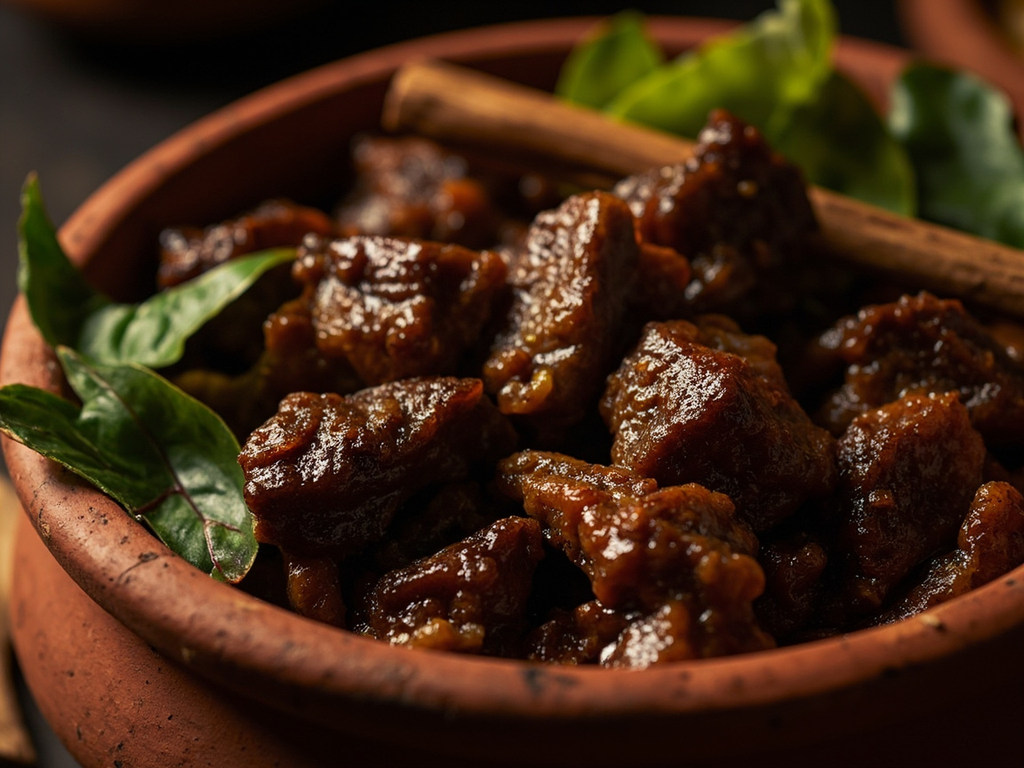
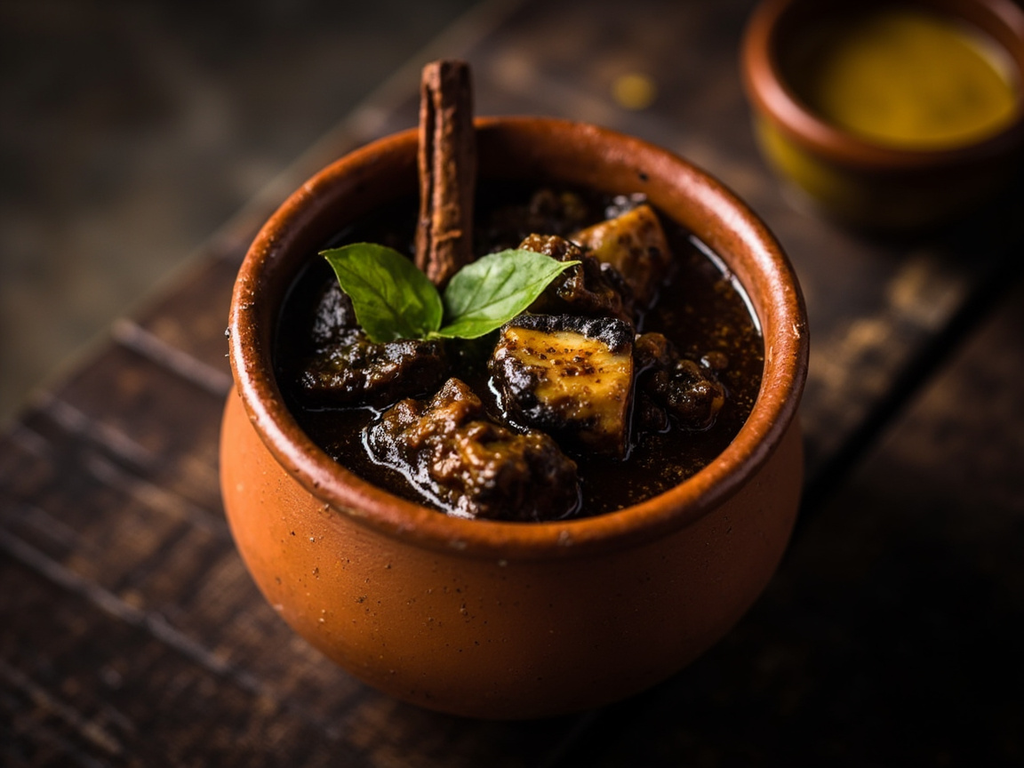
Chunks of firm fish dry-cooked with black goraka, pepper, and cinnamon until coated in a dark, sour, and spicy crust. The acidity of goraka acts as a preservative: the dish improves the next day.
Fish, under our sun, does not forgive waiting: so our grandmothers coated it with black goraka, that dried berry with a blessed sharpness. You cook it dry, without a drop of coconut milk, with pepper and a shard of our cinnamon, until each piece is clad in darkness. Prepare it one day, eat it the next: it will only be better, and the heat will not have prevailed over it.
- •Firm fish (tuna, bonito) — in large cubes (base)
- •Goraka (Garcinia) soaked and ground — a few fruits (souring agent and preservative)
- •Crushed black pepper — generously (hot spiciness)
- •Ceylon cinnamon — one stick (signature perfume)
- •Curry leaves, pandan (rampe) — a few (aromatics)
- •Garlic, ginger, salt — to taste (base)
Ambul thiyal — sour fish with goraka that keeps
Chunks of firm fish dry-cooked with black goraka, pepper, and cinnamon until coated in a dark, sour, and spicy crust. The acidity of goraka acts as a preservative: the dish improves the next day.
Why this dish? Sri Lanka is an island of fishermen, and fish curries held a place of honor on Sinhalese tables in Sirimavo's time. Ambul thiyal, almost dry and heavily soured with goraka, kept for several days without ice under the tropical climate — a valuable know-how before widespread refrigeration, from humble homes to official residences.
Fish, under our sun, does not forgive waiting: so our grandmothers coated it with black goraka, that dried berry with a blessed sharpness. You cook it dry, without a drop of coconut milk, with pepper and a shard of our cinnamon, until each piece is clad in darkness. Prepare it one day, eat it the next: it will only be better, and the heat will not have prevailed over it.
Ingredients (period version)
- Firm fish (tuna, bonito) — in large cubes (base)
- Goraka (Garcinia) soaked and ground — a few fruits (souring agent and preservative)
- Crushed black pepper — generously (hot spiciness)
- Ceylon cinnamon — one stick (signature perfume)
- Curry leaves, pandan (rampe) — a few (aromatics)
- Garlic, ginger, salt — to taste (base)
Ingredients
- Tuna steaks — 500 g, cubed (base)
- Dried goraka (or substitute tamarind + lime zest) — 5 pieces (souring agent)
- Black pepper — 1 tbsp crushed (spiciness)
- Ceylon cinnamon — 1 stick (perfume)
- Curry leaves — 10 leaves (aromatic)
- Pandan leaf — 1 (optional) (aromatic)
- Garlic + ginger — 2 cloves / 1 piece, made into paste (base)
- Turmeric, chili powder, salt, coconut oil — 1 tsp each / to taste (seasoning)
Method
- Soak the goraka for 15 minutes in a little hot water, then grind it into a dark paste (or dilute tamarind with a lime zest).
- Mix the fish cubes with the goraka paste, garlic-ginger, pepper, turmeric, chili powder, and salt; marinate for 20 minutes.
- Place the fish in a saucepan with cinnamon, curry leaves, pandan, a drizzle of coconut oil, and just a splash of water.
- Cook covered, then uncovered, over low heat, stirring gently, until the liquid evaporates and the fish is coated in an almost dry, dark sauce (20–25 min).
- Let rest; serve preferably the next day, with rice.
How it was made : Goraka was dried and smoked over the hearth, giving it its sour-smoky taste. Cooked dry in an earthenware pot (mati badi), ambul thiyal could travel and wait several days in a tropical kitchen without spoiling, long before refrigerators.
The contemporary twist : Served as bite-sized pieces on small rice domes, pierced with a shard of cinnamon, in the style of a Sinhalese-inspired amuse-bouche.
Sirimavo Bandaranaike · Charactorium