 flip
flipCalabaza en tacha
Calabaza en tacha
Why this dish? The convents of New Spain were famous for their *dulces*: candying fruits and squashes in cane sugar allowed them to be preserved and offered to benefactors. Sor Juana, who managed the kitchen of San Jerónimo, was intimately familiar with this art of monastic confectionery.
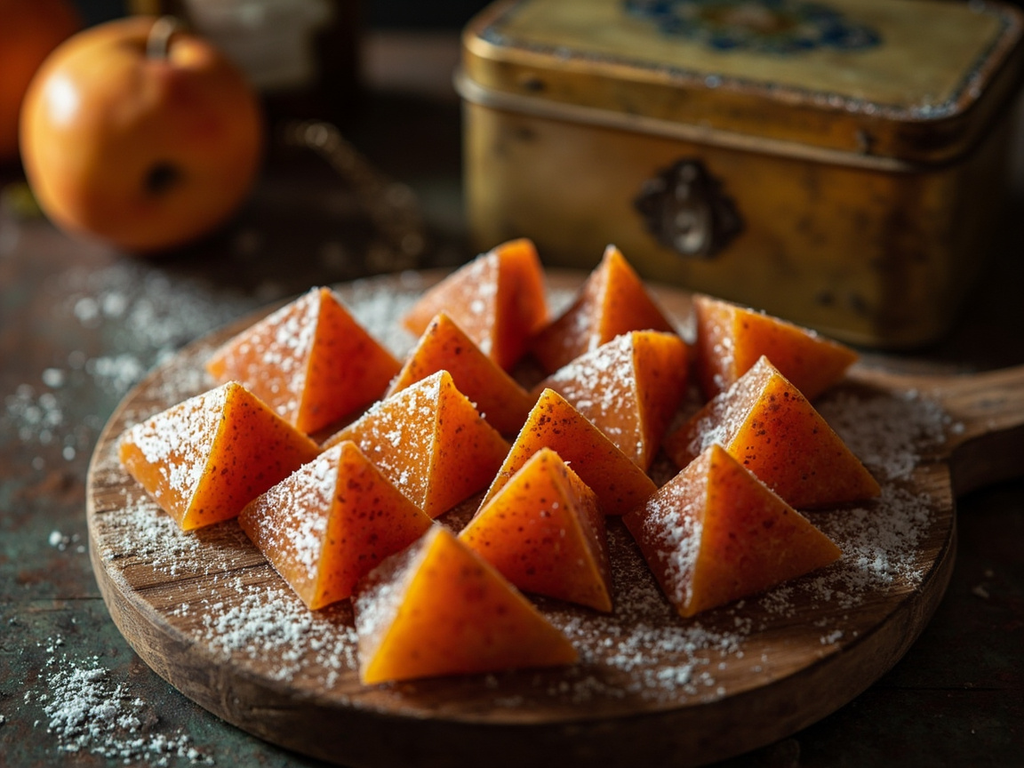
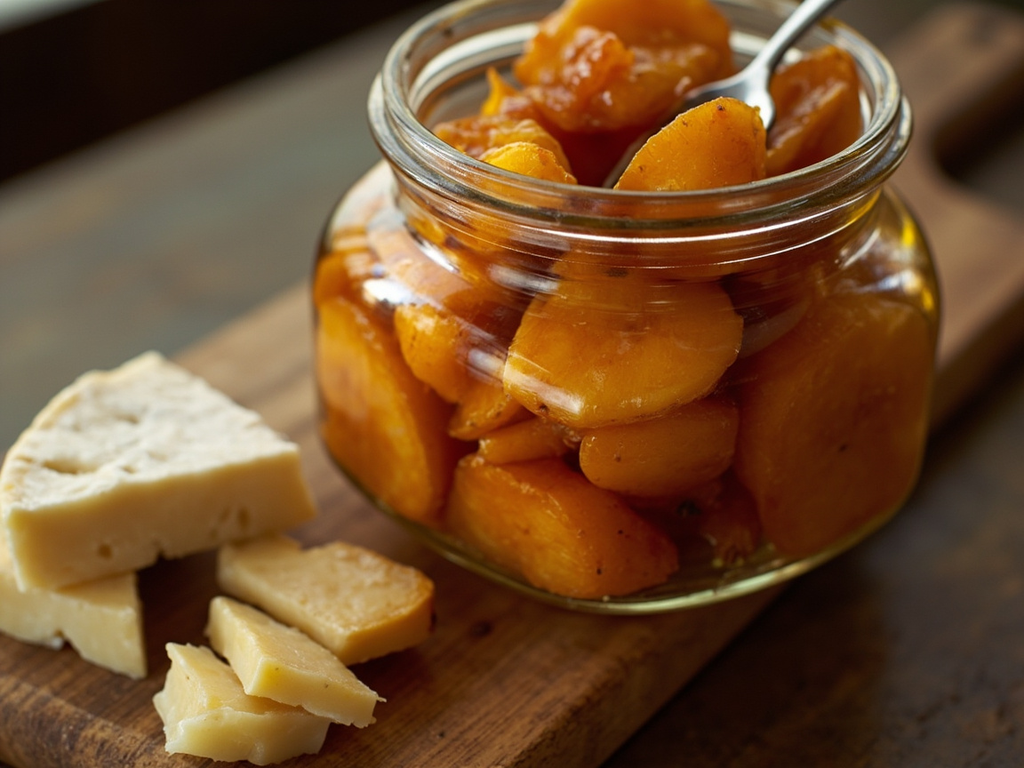
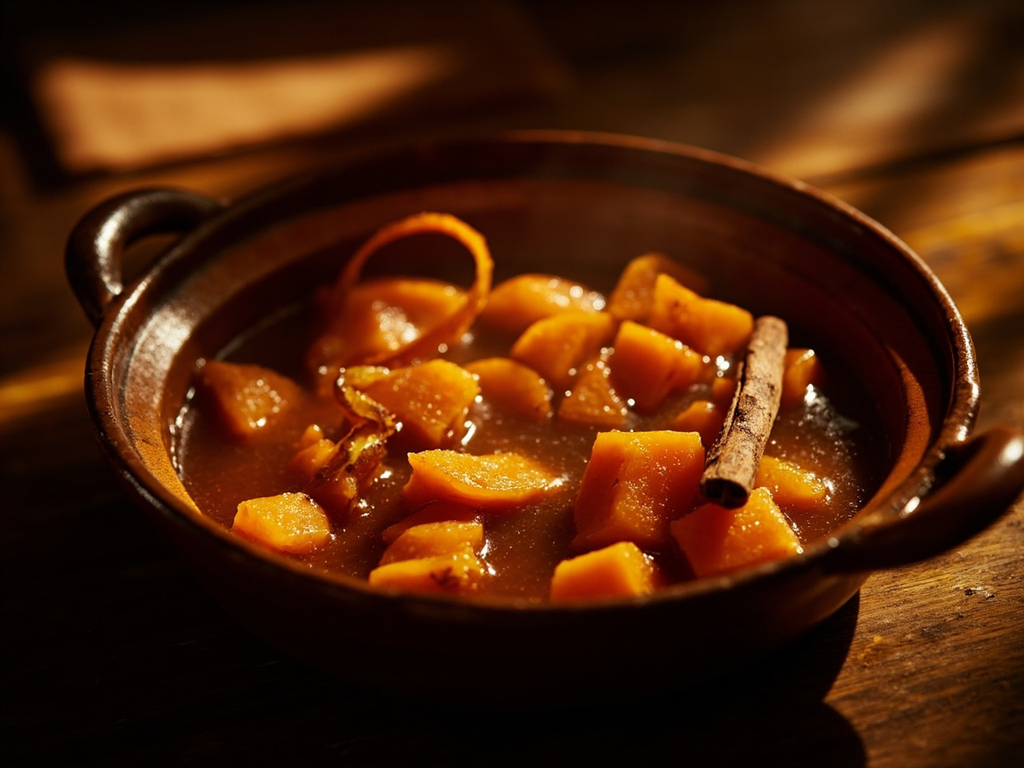
Pieces of squash simmered very slowly in a thick piloncillo syrup perfumed with cinnamon and orange, until they become translucent, shiny, and candied — a sweet that keeps and is meant to be shared.
See how the humblest squash turns into a jewel when left to drink the cane syrup for a long time. I place the pieces in the cauldron — the *tacha* — with the piloncillo, a cinnamon stick, and the peel of a bitter orange, and I watch over the low fire until the flesh becomes amber and light. Thus we kept these sweets for feast days and for our benefactors; for even in the convent, a little sweetness makes austerity more bearable.
- •Calabaza de Castilla (squash) — in large pieces with skin (base)
- •Piloncillo (raw cane sugar) — generously (preserving syrup)
- •Cinnamon — one stick (aroma)
- •Bitter orange peel — a few strips (tangy aroma)
- •Water — a little (to start the syrup)
Calabaza en tacha
Pieces of squash simmered very slowly in a thick piloncillo syrup perfumed with cinnamon and orange, until they become translucent, shiny, and candied — a sweet that keeps and is meant to be shared.
Why this dish? The convents of New Spain were famous for their *dulces*: candying fruits and squashes in cane sugar allowed them to be preserved and offered to benefactors. Sor Juana, who managed the kitchen of San Jerónimo, was intimately familiar with this art of monastic confectionery.
See how the humblest squash turns into a jewel when left to drink the cane syrup for a long time. I place the pieces in the cauldron — the *tacha* — with the piloncillo, a cinnamon stick, and the peel of a bitter orange, and I watch over the low fire until the flesh becomes amber and light. Thus we kept these sweets for feast days and for our benefactors; for even in the convent, a little sweetness makes austerity more bearable.
Ingredients (period version)
- Calabaza de Castilla (squash) — in large pieces with skin (base)
- Piloncillo (raw cane sugar) — generously (preserving syrup)
- Cinnamon — one stick (aroma)
- Bitter orange peel — a few strips (tangy aroma)
- Water — a little (to start the syrup)
Ingredients
- Squash (kabocha or butternut) — 1 kg in large cubes with skin (base)
- Piloncillo (or dark brown sugar) — 400 g (syrup)
- Cinnamon — 2 sticks (aroma)
- Orange — 1 (zest in strips) (aroma)
- Water — 250 ml (to start the syrup)
Method
- In a large pot, dissolve the piloncillo in water with the cinnamon and orange zest.
- Arrange the squash pieces, skin side down, in the syrup.
- Cook covered over very low heat for 45 minutes to 1 hour, basting regularly with the syrup.
- Uncover and continue cooking until the syrup thickens and coats the squash, which becomes translucent.
- Let cool in the syrup; the squash keeps for several days, becoming more candied over time.
How it was made : The *tacha* referred to the large copper cauldron in which cane sugar was cooked; the nuns candied squashes, sweet potatoes, and fruits to preserve them well beyond the seasons. The ember fire, slow and steady, required patient supervision for several hours.
The contemporary twist : Serve warm with a drizzle of condensed milk and a pinch of cinnamon, in the style of a Day of the Dead dessert — the boundary between convent confection and popular festivity.
Sources : Josefina Muriel & Guadalupe Pérez San Vicente, La cocina conventual mexicana · Salvador Novo, Cocina mexicana o historia gastronómica de la Ciudad de México
Sor Juana Inés de la Cruz · Charactorium