 flip
flipManchamanteles de gallina
Manchamanteles de gallina
Why this dish? This stew appears among the recipes in the manuscript attributed to the convent of San Jerónimo, where Sor Juana lived and kept the kitchen accounts. On major liturgical feast days, the nuns prepared this opulent dish for the table of distinguished guests and the viceroy, whose protégée she was.
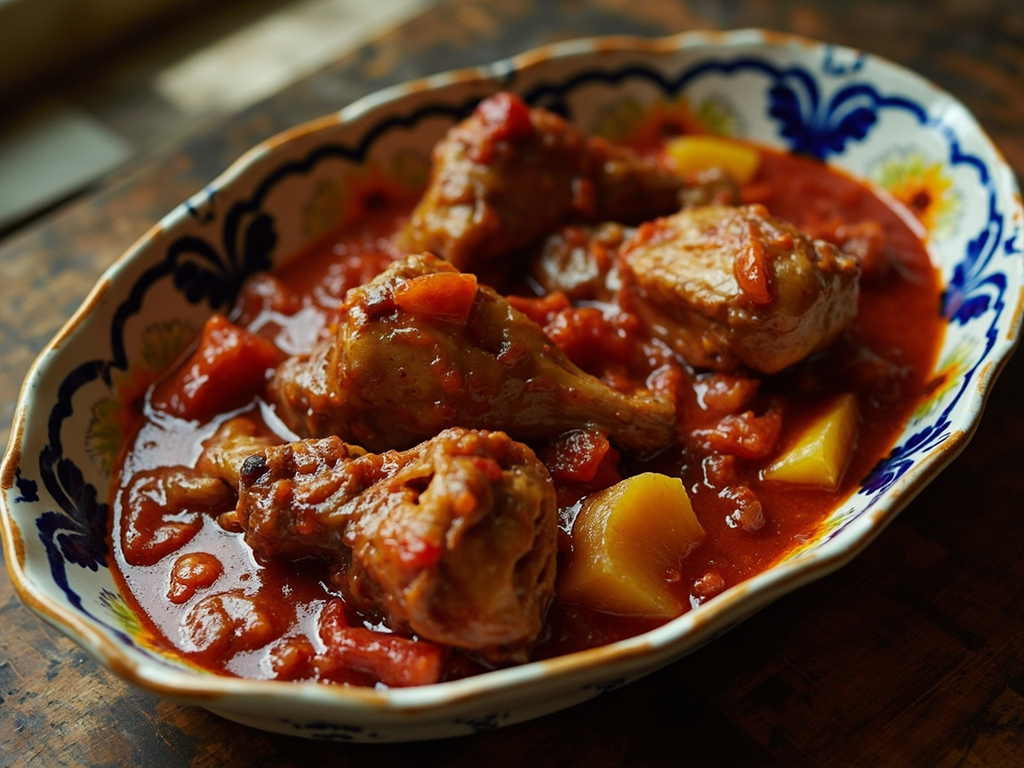
A sumptuous stew of poultry simmered in a sauce of mild chiles, tomato, fruits (apple, plantain, pineapple), and spices, whose name — 'tablecloth-stainer' — tells of its festive generosity: the sauce is so rich it stains the table linens.
Come closer, please, and fear not for the tablecloth: this stew is called *manchamanteles* precisely because it stains the napkins, and no guest leaves without bearing its mark, like a sweet wound. On the days of our patron saint, we served it to the viceroy's guests: the hen simmers among chiles ground on the *metate*, married to cane sugar and Castilian cinnamon, and we throw in fruits to soften the fire. Taste how the spicy and the sweet quarrel, as reason and passion quarrel in the soul — there is all my philosophy served in a bowl.
- •Hen (gallina) — one, in pieces (festive protein)
- •Mild ancho chiles — a handful, deveined (sauce base, mild heat)
- •Ripe tomatoes — a few (acidity and binder)
- •Plantain and pineapple chunks — to taste (fruity sweetness)
- •Cinnamon, cloves, almonds — a little of each (Castilian spices)
- •Lard — a spoonful (fat)
- •Cane sugar (piloncillo) — a chunk (sweet-sour balance)
Manchamanteles de gallina
A sumptuous stew of poultry simmered in a sauce of mild chiles, tomato, fruits (apple, plantain, pineapple), and spices, whose name — 'tablecloth-stainer' — tells of its festive generosity: the sauce is so rich it stains the table linens.
Why this dish? This stew appears among the recipes in the manuscript attributed to the convent of San Jerónimo, where Sor Juana lived and kept the kitchen accounts. On major liturgical feast days, the nuns prepared this opulent dish for the table of distinguished guests and the viceroy, whose protégée she was.
Come closer, please, and fear not for the tablecloth: this stew is called *manchamanteles* precisely because it stains the napkins, and no guest leaves without bearing its mark, like a sweet wound. On the days of our patron saint, we served it to the viceroy's guests: the hen simmers among chiles ground on the *metate*, married to cane sugar and Castilian cinnamon, and we throw in fruits to soften the fire. Taste how the spicy and the sweet quarrel, as reason and passion quarrel in the soul — there is all my philosophy served in a bowl.
Ingredients (period version)
- Hen (gallina) — one, in pieces (festive protein)
- Mild ancho chiles — a handful, deveined (sauce base, mild heat)
- Ripe tomatoes — a few (acidity and binder)
- Plantain and pineapple chunks — to taste (fruity sweetness)
- Cinnamon, cloves, almonds — a little of each (Castilian spices)
- Lard — a spoonful (fat)
- Cane sugar (piloncillo) — a chunk (sweet-sour balance)
Ingredients
- Chicken thighs — 6 (protein)
- Dried ancho chiles — 3, seeded (sauce base)
- Tomatoes — 4 ripe (acidity)
- Plantain — 1, sliced (sweetness)
- Fresh pineapple — 2 slices, diced (tangy sweetness)
- Blanched almonds — 30 g (thickener)
- Cinnamon — 1 stick (spice)
- Cloves — 2 (spice)
- Piloncillo or brown sugar — 1 tbsp (balance)
- Lard or oil — 2 tbsp (cooking)
- Salt — to taste (seasoning)
Method
- Brown the chicken pieces in lard; set aside.
- Briefly fry the ancho chiles, then let them soak in hot water for 15 minutes.
- Blend the chiles with tomatoes, almonds, cinnamon, and cloves until smooth.
- Pour the sauce into the pot, let it reduce for a few minutes while stirring.
- Return the chicken, add the piloncillo, cover with a little water, and simmer for 30 minutes.
- Add the plantain and pineapple, cook for another 10 minutes, adjust salt and sugar.
How it was made : At the convent, chiles were toasted on the *comal* then patiently ground by hand on the *metate* with the spices; the poultry simmered in an earthenware pot (*olla*) over embers. The manuscript attributed to Sor Juana notes the proportions 'by eye,' in the manner of experienced cooks.
The contemporary twist : Plate the chicken coated in its sauce, sprinkled with toasted slivered almonds and thin slices of roasted pineapple — a deliberate baroque touch, like a sonnet on the plate.
Sources : Libro de cocina del Convento de San Jerónimo (recipes attributed to Sor Juana Inés de la Cruz), ed. Instituto Mexiquense de Cultura — debated attribution · Josefina Muriel & Guadalupe Pérez San Vicente, La cocina conventual mexicana
Sor Juana Inés de la Cruz · Charactorium