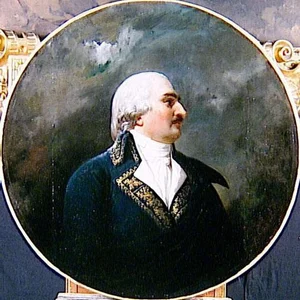
Soshangane (Manukosi) was a Nguni military leader who founded the Kingdom of Gaza in southeastern Africa in the early 19th century. Scattered during the Mfecane triggered by Zulu expansion, he established a vast empire covering present-day southern Mozambique.
Soshangane(1790 — 1859)
Soshangane
Royaume zoulou, Royaume de Gaza
6 min read
Frequently asked questions
Key Facts
- Fled Zululand during the Mfecane triggered by the expansion of Shaka (1820s)
- Founded the Kingdom of Gaza around 1824 in present-day southern Mozambique
- Subdued the Tsonga peoples and imposed the Nguni military system of regiments (amabutho)
- Gave his name to the Shangaan people (Tsonga-Shangaan), born from the merging of the Nguni and the local populations
- Died around 1858, leaving an empire that would endure until its conquest by the Portuguese in 1895
Works & Achievements
Creation of a vast state in southeastern Africa, one of the most powerful kingdoms born of the Mfecane. It survived until the Portuguese conquest of 1895.
Adaptation of the Zulu age-regiment system to the subjected peoples. This disciplined army was the strength of the Gaza Empire.
Integration of the local Tsonga populations through the imposition of the Nguni language, customs, and structures. The birth of the Shangaan identity, still alive today.
Subjection of the Portuguese settlements on the coast, forced to pay tribute in order to trade. An assertion of Gaza's sovereignty over the region.
Domination of the ivory routes between the interior and the coast. A major source of the empire's wealth and power.
Repelled the army sent by Shaka by exploiting the terrain, disease, and famine. Lastingly consolidated his independence.
Anecdotes
Soshangane also bore the name Manukosi, and his descendants took the name "Shangane" (or Tsonga-Shangane) in his honor: even today, millions of people in Mozambique and South Africa identify with this heritage born from a single warlord.
Defeated by the formidable Shaka Zulu, Soshangane did not give up: he fled north with his Ndwandwe clan and, instead of vanishing, founded his own empire, the Kingdom of Gaza, proving that a defeat could become the starting point of a new power.
Soshangane imposed Nguni military customs on the Tsonga peoples he subjugated: young men had to learn sis-Nguni, join regiments (amabutho), and fight with the short spear, transforming entire populations into the image of the Zulu army.
In 1828, the Zulu king Shaka sent a large army to crush Soshangane, but the Zulu warriors, exhausted, starving, and struck by the fever of Mozambique's lowlands, were forced to retreat: Soshangane had stood up to the greatest military power in the region.
Upon his death in 1859, Soshangane left his empire to his sons, triggering a bloody war of succession between Mawewe and Mzila: this fratricidal conflict weakened the Kingdom of Gaza and paved the way for Portuguese colonial penetration.
Primary Sources
Soshangane subdued the tribes he encountered, imposing upon them the language and military customs of his own people, and no one could approach his person without bowing down.
The chief Manikusse (Soshangane) dominates the lands stretching from Delagoa Bay to the Zambezi River, and our settlements pay him tribute to preserve the peace of trade.
The army sent by Shaka returned decimated not by the enemy's weapons but by the hunger and disease that prevailed in those distant lands.
Key Places
Soshangane's native region within the Ndwandwe confederation, in what is now northeastern South Africa. It was there that he was trained in the Nguni military arts before the defeat against Shaka.
Portuguese trading post on the coast of Mozambique that Soshangane attacked and forced into paying tribute. A point of contact between the Gaza Empire and maritime trade.
Region of central Mozambique toward which Soshangane shifted the heart of his empire in the 1830s. A strategic position for controlling the ivory routes to the north.
Vast empire founded by Soshangane, stretching from Delagoa Bay to the edges of the Zambezi. The center of his political and military power.
Site of the 1819 battle where Shaka crushed the Ndwandwe confederation. This defeat drove Soshangane to flee north and found his own kingdom.
Typical Objects
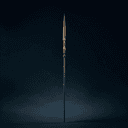
A spear with a short shaft and a broad blade, designed for close combat rather than throwing. Soshangane equipped his regiments with this Zulu weapon, inherited from Shaka's reforms.
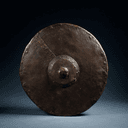
A large oval shield of oxhide stretched over a wooden frame, whose color indicated the bearer's regiment. It protected the warrior and was used to unbalance opponents in hand-to-hand combat.

A wooden club with a rounded head, used as a throwing or melee weapon. It rounded out the Nguni warrior's arsenal and also served as a badge of authority.

A feather headdress (notably of crane feathers) and leopard-skin capes reserved for the king and his dignitaries. These ornaments marked out Soshangane as the supreme sovereign of the Gaza Empire.

Elephant ivory was the chief source of wealth of the Gaza Empire, traded with Portuguese trading posts for weapons and cloth. Control of this trade was the foundation of Soshangane's economic power.
📷 CC0 · Wikimedia Commons ↗
A drum of wood and hide beaten during military gatherings and royal celebrations, setting the rhythm for war dances. It served to muster the regiments and to celebrate victories.
School Curriculum
Vocabulary & Tags
Key Vocabulary
Daily Life
Morning
As king, Soshangane began his day surrounded by his advisors and guards within his royal kraal. He received reports on the herds, the harvests and the movements of the regiments, and listened to the grievances of his subjects.
Afternoon
The afternoon was devoted to the affairs of the kingdom: receiving subject chiefs who came to pay homage, judging disputes and preparing military campaigns. The king also oversaw the trade of ivory with the Portuguese merchants.
Evening
The evening gathered the court around feasts of meat and sorghum beer. There, warriors' exploits were recounted, the king's praises were sung (izibongo) and people danced to the rhythm of the drums.
Food
The diet was based on sorghum and millet (porridges and beer), curdled milk (amasi) from the great cattle herds, and meat during festivals. Cattle, a sign of wealth, were slaughtered only for major occasions.
Clothing
The warriors wore loincloths of animal skins and ornaments of cow tails on their arms and legs. The king distinguished himself with capes of leopard skin and headdresses of feathers, the insignia of his supreme rank.
Housing
Soshangane lived in a large royal kraal made of round huts of wattle-and-daub roofed with thatch (the rondavels), arranged around a central enclosure for the cattle. The whole was surrounded by a protective palisade.
Historical Timeline
Period Vocabulary
Liens externes & ressources
Références
Œuvres
Fondation du royaume (empire) de Gaza
vers 1825
Organisation militaire en régiments (amabutho)
années 1820-1830
Assimilation des peuples tsonga
années 1820-1840
Mise sous tribut des comptoirs portugais
années 1830-1850
Contrôle du commerce de l'ivoire
années 1830-1850
Résistance victorieuse à l'invasion zouloue de 1828
1828