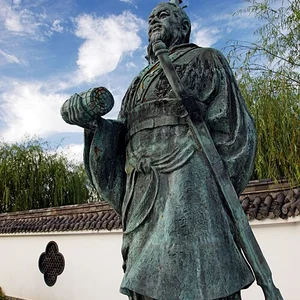

Sun Tzu was a Chinese general and philosopher of the 6th century BC, author of The Art of War. This military treatise, one of the oldest in the world, continues to influence military, political, and economic strategy to this day.
Sun Tzu(543 av. J.-C. — 495 av. J.-C.)
Sun Tzu
État Qí, État Wu
7 min read
Frequently asked questions
Famous Quotes
« Know your enemy and know yourself; in a hundred battles, you will never be defeated.»
« The supreme art of war is to subdue the enemy without fighting.»
« All warfare is based on deception.»
Key Facts
- Born around 543 BC in the state of Qi (China)
- Wrote The Art of War (Bingfa) around 512 BC, the earliest known treatise on military strategy
- Served as a general under King Helü of Wu
- His work comprises 13 chapters covering every aspect of strategy
- Died around 495 BC; his treatise would go on to influence centuries of military thought worldwide
Works & Achievements
A military treatise in 13 chapters, considered the oldest work on military strategy in the world still read and studied today. For 2,500 years, it has influenced armies, political leaders, and business executives around the world.
A series of military campaigns organized by Sun Tzu for King Helü, culminating in the capture of Ying in 506 BC. This victory concretely illustrates the principles of deception, speed, and wearing down the enemy described in his treatise.
A founding episode reported by Sima Qian, in which Sun Tzu demonstrated to King Helü that any group of soldiers, however reluctant, can be disciplined through the strict and impartial application of military rules.
Anecdotes
Before being hired by King Helü of Wu, Sun Tzu had to prove his abilities by training the palace concubines. He divided them into two companies and issued his orders; the women burst out laughing. He then had the king's two favorite concubines — appointed as group leaders — executed as an example. From that moment on, no one laughed, and the drills proceeded with perfect discipline.
In The Art of War, Sun Tzu teaches that the greatest victory is one achieved without fighting. This principle — revolutionary for its time — holds that a true strategist uses cunning, diplomacy, and espionage to force the enemy into submission before a single sword is drawn.
In 506 BC, Sun Tzu helped deliver a decisive victory for Wu over the powerful kingdom of Chu at the Battle of Boju. Wu's armies, though outnumbered, marched hundreds of kilometers in secret and struck in five successive engagements, capturing the capital Ying. This campaign stands as a perfect illustration of the strategies described in his treatise.
The Art of War was among the first texts to establish espionage as an indispensable tool of warfare. Sun Tzu devotes an entire chapter to it, identifying five types of spies and arguing that an uninformed general must first seek to know his enemy — a remarkably forward-thinking idea in 6th-century BC China.
The authorship of The Art of War has long been debated by modern historians. Some scholars believe the text as we know it was compiled and expanded over multiple generations after Sun Tzu. However, bamboo manuscripts discovered in 1972 in the Yinqueshan tomb confirmed the text's antiquity, dating it to before the 2nd century BC.
Primary Sources
War is a matter of vital importance to the state; it is the province of life and death, the road to survival or ruin. It is mandatory that it be thoroughly studied.
To win one hundred victories in one hundred battles is not the acme of skill. To subdue the enemy without fighting is the acme of skill.
Sun Wu was a native of the state of Qi. His Art of War earned him an audience with King Helü of Wu, who gave him command of his armies. To the west, he defeated the powerful state of Chu and entered Ying; to the north, he struck fear into Qi and Jin.
Foreknowledge of the enemy's situation cannot be obtained from spirits, nor by analogy with past events, nor by astrological calculations: it must be sought from men who know the enemy's situation.
Key Places
Capital of the state of Wu, where Sun Tzu served King Helü. From this city, he planned the military campaigns that built Wu's power.
Probable birthplace of Sun Tzu according to ancient historical sources. Linzi was the prosperous capital of the state of Qi, a major intellectual and military center of the era.
City conquered by the armies of Wu led by Sun Tzu during the Battle of Boju in 506 BC, one of the most significant military achievements of the entire Spring and Autumn period.
Archaeological site where, in 1972, bamboo slips were discovered containing the oldest known manuscripts of The Art of War, dating to the 2nd century BC.
Typical Objects

In the 6th century BC, the Chinese wrote on thin strips of bamboo bound together with cords. The Art of War was most likely composed and transmitted on this medium before paper came into widespread use.

The four-horse war chariot was the central military unit of the Spring and Autumn period. Sun Tzu analyzes its use in his treatise, particularly for charges and swift maneuvers.

Chinese armies of the era used drums and gongs to relay orders on the battlefield despite the noise and confusion of combat. Sun Tzu devotes considerable attention to acoustic signaling in his treatise.

The straight double-edged sword was the weapon of the officer and general. It symbolized military authority and mastery of close-quarters combat in ancient China.

The composite bow made from horn, wood, and animal sinew was a formidable long-range weapon. Sun Tzu emphasizes the importance of archers in his strategies for dispersing and encircling the enemy.

Chinese generals used schematic representations of terrain drawn on silk or wood. Knowledge of the terrain is one of the fundamental principles of The Art of War.
School Curriculum
Vocabulary & Tags
Key Vocabulary
Daily Life
Morning
Sun Tzu rose before dawn to inspect the camp and check the guard posts. He studied his scouts' reports on the enemy's position and movements, for knowing the adversary was, in his view, a general's foremost duty.
Afternoon
The afternoon was devoted to troop training and formation drills. Sun Tzu supervised the maneuvers of war chariots, checked the discipline of the ranks, and held strategic councils with his officers, marking out terrain maps on wooden tablets.
Evening
In the evening, Sun Tzu dictated or wrote down his reflections on bamboo strips, refining the principles that would form his treatise. He meditated on the outcome of the day's engagements and planned future operations, sometimes alone by the light of a bronze oil lamp before his writing tablets.
Food
Like the soldiers of his time, Sun Tzu subsisted mainly on millet and rice, supplemented by dried vegetables, dried fish, and — more rarely — pork or game meat, reserved for officers during ceremonial occasions. Food on military campaigns was frugal and standardized to keep the troops mobile.
Clothing
As a general, Sun Tzu wore armor made of bronze plates or laced leather strips fastened over a thick silk tunic. He wore a helmet with a neck guard and carried a jian sword at his belt, symbols of his authority as commander.
Housing
On campaign, Sun Tzu lived in a large hemp-canvas tent divided into a command area and a rest area. In peacetime at the court of Wu, he occupied a residence of wood and rammed earth, surrounded by a bamboo garden, typical of the architecture of the Zhou period.
Historical Timeline
Period Vocabulary
Visual Style
Style peinture à l'encre de Chine, sobre et austère, avec des lavis monochromes et des accents jade et terracotta, évoquant les bronzes et laques de la période Zhou orientale.
Sound Ambience
Ambiance d'un campement militaire chinois du VIe siècle av. J.-C., mêlant tambours de bronze, cliquetis d'armes, ordres des officiers et bruits de la nature du delta du Yangtsé.
Liens externes & ressources
Références
Œuvres
L'Art de la guerre (Sunzi Bingfa, 孫子兵法)
vers 510 av. J.-C.
Campagne militaire de Wu contre Chu
512–506 av. J.-C.
Formation militaire des concubines royales
vers 515 av. J.-C.
See also
Related Characters
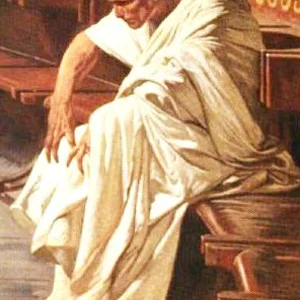
Catiline
107 av. J.-C. — 61 av. J.-C.
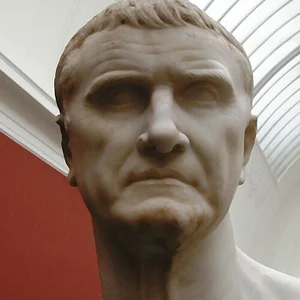
Crassus
114 av. J.-C. — 52 av. J.-C.
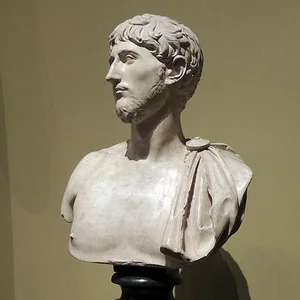
Lepidus
89 av. J.-C. — 12 av. J.-C.
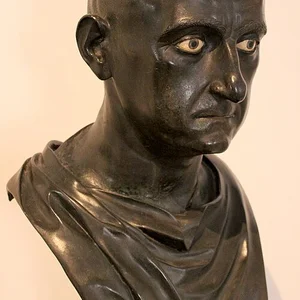
Scipio Africanus
234 av. J.-C. — 182 av. J.-C.
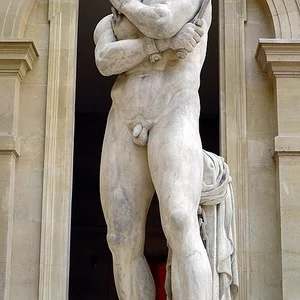
Spartacus
102 av. J.-C. — 70 av. J.-C.
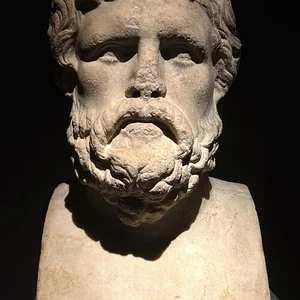
Xenophon
430 av. J.-C. — 353 av. J.-C.