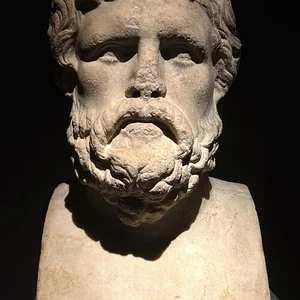

Greek historian, soldier, and philosopher born around 430 BC, and a disciple of Socrates. He led the retreat of the Ten Thousand Greek mercenaries from Persia, recounted in the Anabasis. A prolific author, he left behind historical, philosophical, and military works.
Xenophon(430 av. J.-C. — 353 av. J.-C.)
Xenophon
Athènes
9 min read
Frequently asked questions
Famous Quotes
« The sea! The sea! (Thalassa! Thalassa!)»
« No man can be a good leader who has not first learned to obey.»
Key Facts
- Born around 430 BC in Athens, disciple of Socrates
- Took part in the expedition of the Ten Thousand (401 BC) alongside Cyrus the Younger against Artaxerxes II
- Led the epic retreat of 10,000 Greek mercenaries from Mesopotamia to the Black Sea (401–400 BC)
- Exiled from Athens, he lived in Sparta and then in Elis; wrote the Anabasis, the Hellenica, and the Memorabilia
- Died around 353 BC in Corinth
Works & Achievements
An account of the retreat of the Ten Thousand Greek mercenaries from Persia, written in the third person. A masterpiece of travel literature and military memoir, it inspired Alexander the Great and many later conquerors.
A continuation of Thucydides' work covering Greek history from 411 to 362 BC, from the end of the Peloponnesian War to the Battle of Mantinea. A major historical source for this often poorly documented period.
A collection of conversations and anecdotes about Socrates, written to defend the philosopher's memory against his accusers. Together with the Symposium and the Apology of Socrates, it stands as an essential record of Socratic thought.
A historical novel and political treatise tracing the education and reign of Cyrus the Great, founder of the Persian Empire. The earliest example of fictionalized biography from antiquity, it profoundly influenced Western political thought.
A philosophical dialogue on the management of a farming estate and household, featuring Socrates as a character. The earliest treatise on domestic economy from antiquity, it gave our very word 'economy' its name.
A technical treatise on hunting methods, reflecting the aristocratic lifestyle Xenophon led at Scillus. It illustrates the importance of hunting as both military training and a noble pursuit in ancient Greece.
The earliest surviving treatise on horsemanship from antiquity, advocating the use of gentleness in training horses. Its recommendations, grounded in trust between rider and mount, are remarkably modern.
Anecdotes
At the Battle of Cunaxa in 401 BC, Xenophon was merely a civilian observer attached to the army of the Ten Thousand. After the Greek generals were assassinated by the Persians, the soldiers themselves chose him as one of their leaders, despite his lack of military experience. He was not yet thirty years old.
Xenophon was one of the last disciples of Socrates and attended his philosophical conversations in Athens. According to tradition, it was Socrates himself who advised him to join the expedition of Cyrus the Younger, forever changing the young man's destiny. Xenophon paid tribute to his teacher in the Memorabilia, a precious record of Socratic thought.
During the Ten Thousand's retreat through the mountains of Armenia in the dead of winter, Xenophon kept the soldiers' spirits up through impassioned speeches and quick decisions. When the mercenaries finally caught sight of the Black Sea and cried out 'Thalassa! Thalassa!' ('The sea! The sea!'), it was one of the most moving moments of this unprecedented military epic.
Exiled from Athens for having fought alongside Sparta, Xenophon was granted an estate at Scillus, near Olympia, by the Spartan king Agesilaus, where he lived for many years as a country gentleman. There he wrote much of his work while hunting, managing his estate, and raising his sons — a life he himself describes as ideal in the Oeconomicus.
Xenophon was the first ancient author to write a complete treatise on horsemanship, titled Peri Hippikes. His advice on training horses, based on gentleness and trust rather than force, is still considered remarkably modern by some experts in contemporary equestrian practice.
Primary Sources
At this, Xenophon rose, dressed in his finest battle attire, believing that if the gods granted him victory, it was fitting to receive it in a manner worthy of it, or that if he was to die, it was right to appear before them adorned as befits the brave.
Socrates never ceased to discuss human affairs, seeking to understand what is pious and what is impious, what is beautiful and what is ugly, what is just and what is unjust, what is meant by wisdom and by folly, by courage and by cowardice.
We reflected that Cyrus the Persian surpassed in power all the kings of his time, both those who inherited their thrones and those who won them by their own efforts. This great man seemed to us worthy of study.
After this, Lysander sailed into the Piraeus, the exiles returned, and the Spartans tore down the Long Walls to the sound of flutes, amid great rejoicing, believing that this day marked the beginning of freedom for Greece.
Farming is the mother and nurse of all the other arts; for when it flourishes, all the other arts flourish too; but when the land is forced to lie barren, the other arts wither away almost everywhere, on land and sea alike.
Key Places
Xenophon's birthplace, where he grew up, received his aristocratic education, and frequented Socrates in the gymnasia and on the agora. He was exiled from Athens for having fought against it on the side of Sparta.
Site of the decisive battle of 401 BC, where Cyrus the Younger was killed, leaving the Greek mercenaries stranded deep in the Persian Empire. It was here that the great adventure that inspired the Anabasis began.
A Greek city on the Black Sea where the Ten Thousand finally caught sight of the sea after their long retreat, crying out the famous words 'Thalassa! Thalassa!' ('The sea! The sea!'). This moment of hope and deliverance is one of the most celebrated in the Anabasis.
A farming estate given to Xenophon by the Spartans, near Olympia, where he lived as a country gentleman for more than twenty years. It was here that he wrote most of his works and organized hunts and festivals in honor of Artemis.
The city where Xenophon settled after the destruction of his estate at Scillus, and where he spent the final years of his life. It was at Corinth that he died around 353 BC, far from Athens, to which he never truly returned.
Typical Objects

The close-combat weapon of the Greek foot soldier, Xenophon carried it as a cavalry officer. It symbolizes his dual identity as soldier and intellectual, forged during the retreat of the Ten Thousand.

Common writing instruments in ancient Greece, on which Xenophon drafted his earliest notes and rough drafts. These portable tablets allowed him to record his memories of the expedition into Persia.

Xenophon belonged to the class of Athenian cavalry (hippeis). His bronze breastplate, paired with his crested helmet, reflects his high social standing and his role as a military commander.

A musical instrument essential to the education of a young aristocratic Greek. Xenophon's musical training was part of his paideia — the broad cultural formation he references in his pedagogical writings.

The writing medium on which literary works were copied and circulated. Xenophon's many works spread throughout the Greek world in this form, copied onto scrolls by scribes.

A shallow cup used in religious ceremonies to pour offerings to the gods. Xenophon was a deeply devout man who frequently consulted oracles and performed numerous sacrifices before making military decisions.
School Curriculum
Vocabulary & Tags
Key Vocabulary
Daily Life
Morning
Xenophon rose at dawn, as befitted any Athenian aristocrat accustomed to military discipline. He began his day with ritual ablutions and a brief prayer to the gods — particularly Zeus and Artemis, to whom he was devoted. During his years at Scillus, he would then inspect his estate and give instructions to his servants and slaves.
Afternoon
Afternoons were devoted to writing and reflection in his home at Scillus, or to hunting in the surrounding forests with his sons and dogs. Hunting was not merely a pleasure: it helped maintain physical fitness and served as training in military maneuvers. In Athens during his youth, these hours were more likely spent at the gymnasium or in conversation with Socrates.
Evening
In the evenings, Xenophon hosted guests for the symposium — the Greek philosophical banquet combining food, wine diluted with water, and intellectual discussion. He almost certainly read passages from his works aloud to select audiences. His Hellenica and Anabasis were likely composed during these studious evenings on his Peloponnesian estate.
Food
The main meal (deipnon) was held in the evening and consisted of barley or wheat bread, olives, goat's cheese, figs, and seasonal vegetables. Meat — particularly pork or lamb — was reserved for feast days and religious sacrifices. Wine, always mixed with water according to Greek custom, was present at every meal among the aristocracy.
Clothing
Xenophon wore the chiton, a linen or wool tunic fastened with fibulae, covered by a himation (a large draped cloak) for outings and formal occasions. As a cavalryman and officer, he donned a bronze breastplate and crested helmet on military campaigns. His social standing was reflected in the quality of his fabrics and his well-groomed appearance, characteristic of the Athenian hippeis.
Housing
At Scillus, Xenophon lived in a peristyle manor house surrounded by farmland, orchards, and hunting grounds. The dwelling included the andron (the men's hall used for banquets), the gynaeceum (the women's quarters), and service rooms. A small sanctuary dedicated to Artemis stood on his property, where he organized an annual festival with sacrifices and a communal hunt.
Historical Timeline
Period Vocabulary
Visual Style
Style céramique grec à figures rouges sur fond noir, avec des scènes militaires et philosophiques dans des tons ocre et terracotta. Paysages anatoliens austères contrastant avec l'élégance architecturale des stoas athéniennes.
Sound Ambience
Ambiance sonore du camp militaire grec en marche : cliquetis des armures de bronze, sabots des chevaux sur les sentiers rocheux, ordres des officiers, vent glacial des cols arméniens et crépitement des feux de bivouac.
Liens externes & ressources
Références
Œuvres
Anabase
vers 370 av. J.-C.
Helléniques
vers 362-355 av. J.-C.
Mémorables (Apomnèmoneumata)
vers 371 av. J.-C.
Cyropédie
vers 370 av. J.-C.
Économique (Oikonomikos)
vers 362 av. J.-C.
L'Art de la chasse (Cynégétique)
vers 380 av. J.-C.
De l'équitation (Peri hippikès)
vers 365 av. J.-C.
See also
Related Characters
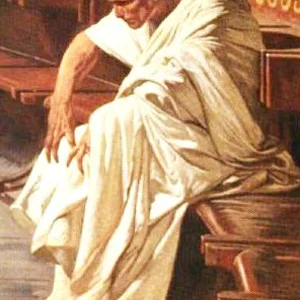
Catiline
107 av. J.-C. — 61 av. J.-C.
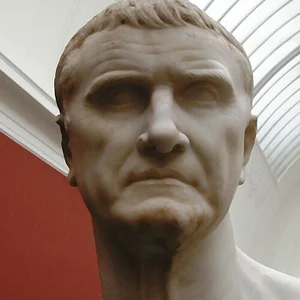
Crassus
114 av. J.-C. — 52 av. J.-C.
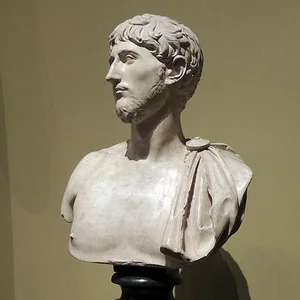
Lepidus
89 av. J.-C. — 12 av. J.-C.
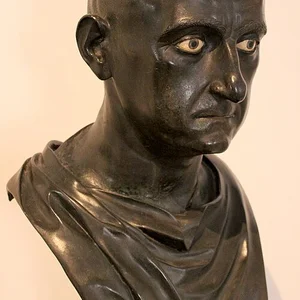
Scipio Africanus
234 av. J.-C. — 182 av. J.-C.
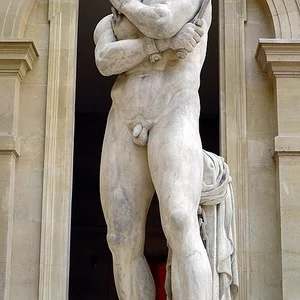
Spartacus
102 av. J.-C. — 70 av. J.-C.
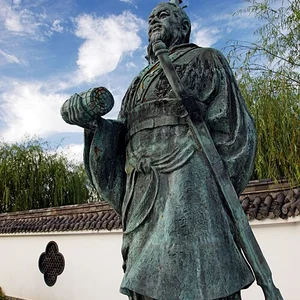
Sun Tzu
543 av. J.-C. — 495 av. J.-C.