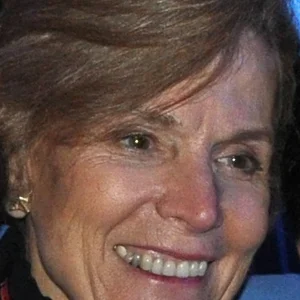

American oceanographer and explorer, Sylvia Earle set a solo dive record in 1979 at a depth of 381 meters. A pioneer of deep-sea exploration, she has led numerous expeditions and advocates tirelessly for ocean protection.
Sylvia Earle(1935 — ?)
Sylvia Earle
États-Unis
10 min read
Frequently asked questions
Famous Quotes
« No ocean, no life. No blue, no green.»
« I wish you would use all means at your disposal to create protected areas for the ocean.»
Key Facts
- Born on August 30, 1935, in Gibbstown, New Jersey (United States)
- In 1979, set a world record for a solo dive in an atmospheric diving suit at a depth of 381 meters off the coast of Hawaii
- First woman to lead NOAA (National Oceanic and Atmospheric Administration), from 1990 to 1992
- Has spent more than 7,000 hours underwater over the course of her career
- Founder of Mission Blue, an organization dedicated to establishing marine protected areas
Works & Achievements
Earle led the first all-female team to live in an underwater habitat, spending 14 days at 15 meters depth off the Virgin Islands. The expedition revealed hundreds of previously unknown species and behaviors, marking a historic first for women in marine research.
A record-breaking dive off Hawaii in a JIM atmospheric diving suit, with Earle walking alone on the ocean floor. This world record remains unbroken and stands as the most iconic achievement of her career as an explorer.
A landmark work blending autobiography with a scientific warning about the state of the oceans, which became a manifesto for the marine cause. Earle describes the dramatic changes she witnessed over forty years of diving and calls for urgent awareness.
A company specializing in the design of crewed submersibles and deep-sea robots, co-founded by Earle to put technology at the service of marine science. The vehicles developed have enabled hundreds of expeditions for institutions such as NOAA and National Geographic.
A book for general audiences in which Earle explains how the health of the oceans determines the survival of humanity, accompanying the launch of Mission Blue. Translated into several languages, it helped bring the marine cause to audiences beyond the scientific community.
An initiative founded after the TED Prize to create a global network of priority marine protected areas known as Hope Spots, now covering more than 150 sites. The organization brings together scientists, filmmakers, and policymakers around ocean conservation.
Anecdotes
In 1979, Sylvia Earle descended to a depth of 381 meters off the coast of Hawaii wearing a rigid atmospheric suit called a JIM suit, attached to a submarine before walking alone across the ocean floor. She spent two and a half hours in the near-total darkness of the deep sea, surrounded by bioluminescent creatures, setting a world record for untethered solo diving that has never been matched.
In 1970, Sylvia Earle led the Tektite II team, the first all-female team to live in an underwater habitat for two weeks off the coast of the U.S. Virgin Islands. Upon surfacing, the five scientists were received at the White House — yet Earle noted with irony that journalists were far more interested in their manicures than in their scientific discoveries.
In 1998, Time magazine named her the first-ever "Hero for the Planet" in the publication's history and gave her the nickname "Her Deepness." The title reflected global recognition of her commitment to raising awareness about the destruction of marine ecosystems, which she compared to cutting down a forest that no one has ever taken the time to explore.
In 2009, at the TED Prize ceremony, Sylvia Earle made a wish that would mobilize thousands of people around the world: to create a global network of priority marine protected areas known as "Hope Spots." She shared that the oceans, which were healthy when she began her career, are now gravely threatened by overfishing, pollution, and climate change.
As a child, Sylvia Earle was knocked down by a wave at the beach and, rather than being frightened, was filled with wonder at the ocean. That fascination never left her: over the course of her career she accumulated more than 7,000 hours of diving — the equivalent of nearly a year spent underwater — and led more than a hundred scientific expeditions to every corner of the globe.
Primary Sources
We have assumed that what we take from the ocean and what we put into the ocean doesn't really matter. But it does matter. Everything we do has consequences.
No ocean, no life. No blue, no green. No ocean, no us.
I wish you would use all means at your disposal — films, expeditions, the web, new submarines — to ignite public support for a global network of marine protected areas, hope spots large enough to save and restore the ocean, the blue heart of the planet.
Every time I slip into the ocean, it's like going home. The sea is the source of all life on Earth, and without it, none of us would exist.
More than half of the oxygen we breathe comes from the sea. Most of the water in the clouds over the continents originates from the ocean. Yet we treat it as if it were expendable.
Key Places
Birthplace of Sylvia Earle, born here on August 30, 1935. Her family later moved to Florida, where young Sylvia first encountered the ocean and developed a lasting fascination with the marine world.
The marine laboratory where Sylvia Earle earned her doctorate in marine botany in 1966, specializing in Gulf of Mexico algae. This center of excellence was the cradle of her scientific career.
Site of the Tektite II expedition in 1970, where Sylvia Earle led the first all-female team to live in an underwater habitat for two weeks. This location marks a founding milestone in her career and in the recognition of women in oceanographic research.
Site of Sylvia Earle's record-breaking dive to a depth of 381 meters in 1979, wearing a JIM suit. She walked alone on the ocean floor for two and a half hours, setting a world record that remains unbroken to this day.
The U.S. federal agency where Sylvia Earle served as Chief Scientist from 1990 to 1992, the first woman ever to hold the position. This role gave her a national platform to champion ocean protection.
A central area of study throughout Earle's career, from her doctoral thesis on algae to her advocacy following the Deepwater Horizon platform disaster in 2010. She led numerous expeditions there and has been a tireless advocate for its protection.
Typical Objects

A rigid suit made of aluminum and magnesium that maintains an internal pressure of one atmosphere regardless of depth, used by Earle to set her record at 381 meters in 1979. It allowed manual work on the seabed with no risk of narcosis or decompression sickness, but weighed approximately 270 kg and severely restricted movement.

Diving equipment consisting of compressed air tanks and a regulator, which Sylvia Earle has mastered since the age of sixteen. She has accumulated more than 7,000 hours of diving with this equipment, using it for her scientific research on marine algae and later for hundreds of exploration expeditions.

A single-seat submarine with a 360° transparent acrylic cockpit, designed to explore depths of up to 1,000 meters and developed by DOER Marine, the company co-founded by Earle. Its transparent dome provided total visibility and made it possible to observe species and behaviors never previously documented.

An essential tool on all of Earle's expeditions for documenting marine biodiversity and bringing it to the attention of the wider public. Her photographs published in National Geographic played a central role in raising global awareness about ocean conservation.

A specialized notepad designed for taking notes underwater, used by Earle to record her scientific observations during dives. These notes fed into hundreds of scientific articles and several landmark books on marine biology.

A pressurized metal structure installed 15 meters below the surface off the U.S. Virgin Islands, where Sylvia Earle and her team lived and worked for 14 days in 1970. This habitat foreshadowed future underwater research stations and allowed extended dives without daily ascents to the surface.
School Curriculum
Vocabulary & Tags
Key Vocabulary
Tags
Daily Life
Morning
During an ocean expedition, Sylvia Earle rises at dawn to take advantage of the best underwater visibility conditions. She puts on her diving suit, meticulously checks her equipment with her team, then descends into the water before the heat of the day clouds its clarity. She can spend two to three hours underwater, waterproof notebook in hand, observing and photographing marine species.
Afternoon
Back aboard the research vessel, she spends the afternoon recording her observations in scientific notebooks and discussing the collected data with the team. She analyzes collected samples, reviews the morning's photographs, and plans the next day's diving schedule. Between expeditions, she writes articles, gives lectures, or meets with policymakers to advocate for marine protection.
Evening
Evenings on board are often devoted to group screenings of the day's films and photographs, allowing the whole team to share discoveries. Earle writes in her personal logbook — separate from her scientific notes — and turns in early to be ready for the next morning's dive at first light.
Food
At sea, meals are typical of research vessels: simple, nourishing, and suited to intense physical work. Earle eats lightly before each dive to avoid any discomfort underwater. She has gradually adopted a largely vegetarian diet, consistent with her ecological convictions and her respect for marine life.
Clothing
When diving, Earle wears a wetsuit or drysuit depending on water temperature, along with mask, fins, and tanks. During her 1979 record dive, she was encased in the heavy, rigid JIM suit, which weighed around 270 kg and required several technicians to help her put it on. Out of the water, she dresses simply and functionally, favoring practical attire aboard research vessels.
Housing
Most of Earle's active life is spent aboard oceanographic ships, in cramped cabins shared with the scientific team. During the Tektite II expedition, she lived for 14 days in a narrow underwater habitat at 15 meters depth, sleeping in plastic bunks. On land, she lives in California, but considers the sea her true home.
Historical Timeline
Period Vocabulary
Liens externes & ressources
Références
Œuvres
Expédition Tektite II (habitat sous-marin)
1970
Record de plongée en immersion libre à 381 mètres (combinaison JIM)
1979
Sea Change: A Message of the Oceans
1995
DOER Marine — submersibles d'exploration
1992
The World Is Blue: How Our Fate and the Ocean's Are One
2009
Mission Blue — réseau mondial de Hope Spots
2009