
Tabitha Babbitt (1779-1853) was an American inventor and a member of the Shaker community in Harvard, Massachusetts. She is credited with inventing the circular saw adapted for sawmills, as well as improvements to cut nails and carding teeth.
Tabitha Babbitt(1779 — 1853)
Tabitha Babbitt
États-Unis
5 min read
Frequently asked questions
Key Facts
- Born in 1779 in Hardwick, Massachusetts, within the Shaker society
- Around 1810-1813, designed a circular saw to make the men's work at the sawmill easier
- Brought improvements to the manufacturing process for cut nails
- Out of Shaker religious conviction, never filed a patent for her inventions
- Died in 1853 in Harvard, Massachusetts
Works & Achievements
An invention traditionally credited to her: a round blade cutting continuously, which transformed work in sawmills and remains her most famous contribution.
A process associated with her name for producing machine-cut nails more efficiently — more uniform and cheaper than forged nails.
An improvement in the manufacture of the metal teeth used to card wool, a key step in preparing textiles.
She is credited with refinements to the community's spinning equipment, in the practical spirit of Shaker inventions.
Anecdotes
Around 1813, in the Shaker community of Harvard (Massachusetts), Tabitha Babbitt is said to have watched two men struggling to cut a log with a pit saw: the straight blade only cut on the forward stroke and wasted all the effort of the return stroke. She had the idea of a round blade that would cut continuously as it spun. To test her hunch, she attached a notched metal disc to her spinning wheel.
The Shakers refused on religious principle to file patents: a good idea was seen as a gift to be shared with all of humanity, not a source of personal profit. This is why Tabitha Babbitt never made any money nor received official recognition for the circular saw, and why her name long remained in obscurity.
Tabitha Babbitt is also credited with improvements to machine-cut nails (faster to produce than nails forged one by one by hand) and to wool carding. In a community where manual labor was valued, a woman could be a recognized inventor.
The Shaker motto was “Hands to work, hearts to God”: for them, making a useful object well was a form of prayer. This mindset explains why this small community produced so many practical inventions, from the flat broom to the washing machine.
The attribution of the circular saw to Tabitha Babbitt is famous in the United States but remains debated by historians: circular saws already existed in Europe at the end of the 18th century. Her story is a good illustration of how hard it is to attribute an invention to a single person.
Primary Sources
The archives of the Shaker “family” of Harvard preserve the names of the sisters and brothers and the memory of their work in the community's workshops and sawmills.
According to the account passed down by the community, a sister from Harvard devised a circular blade to saw more efficiently than the pit saw, which only cut in one direction.
The cemetery of the Shaker community of Harvard preserves the memory of its members, including Tabitha Babbitt, who died in 1853.
Key Places
Small rural town in Massachusetts where Tabitha Babbitt is said to have been born in 1779.
Religious community where Tabitha Babbitt lived, worked in the workshops, and designed the circular saw. It is also the place of her death in 1853.
Burial ground for members of the Harvard Shaker community, where Tabitha Babbitt rests.
New England state, cradle of the emerging American textile industry, where Tabitha Babbitt spent her entire life.
Typical Objects

A round, toothed blade spinning at high speed that cuts wood continuously instead of cutting in only one direction. This is the invention that made **Tabitha Babbitt** famous.

A long, straight saw worked by two people to cut logs into planks. It only cut on the forward stroke, which inspired the idea of the circular blade.

A machine for spinning wool or flax, driven by a wheel. It was reportedly on her spinning wheel that **Tabitha Babbitt** mounted a toothed disc to test her circular blade.
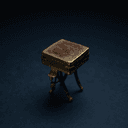
Nails machine-cut from strips of metal, faster to produce than nails forged one by one. **Tabitha Babbitt** is associated with an improvement in how they were made.
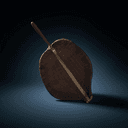
Plates set with small metal teeth used to untangle and align wool fibers before spinning. **Tabitha Babbitt** is said to have improved the making of these teeth.
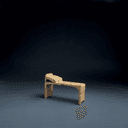
Plain, sturdy, and unadorned furniture, typical of Shaker craftsmanship where usefulness comes before decoration.
School Curriculum
Vocabulary & Tags
Key Vocabulary
Tags
Daily Life
Morning
The Shaker day began early, at the sound of a bell. After a time of collective prayer, everyone went to their workshop: the sisters spun, wove, sewed, or worked in the kitchen, while Tabitha tended to the spinning wheel and the tools.
Afternoon
The afternoon was devoted to manual work, considered a form of prayer. It was during these workshop hours, while seeking to better perform the tasks of daily life, that the community's practical inventions were born.
Evening
The evening brought the Shaker “family” together for the meal, then for moments of song, religious gathering, and the ritual dance that gave the “Shakers” (the “tremblers”) their nickname.
Food
The diet was simple and came from the community's farms and gardens: vegetables, fruit, grains, dairy products, and herbs. The Shakers were renowned for the quality of their seeds and preserves.
Clothing
The clothing was plain, without ornament or jewelry: a long dress, a shawl, and a bonnet for the sisters. The simplicity of the garments reflected the community's ideal of equality and humility.
Housing
The Shakers lived in large communal houses (“dwelling houses”), with separate dormitories and staircases for men and women, for the community practiced celibacy. The buildings were clean, orderly, and functional.
Historical Timeline
Period Vocabulary
Liens externes & ressources
Références
Œuvres
Scie circulaire pour scierie
vers 1813
Amélioration des clous coupés
début du XIXe siècle
Perfectionnement des dents de cardage
début du XIXe siècle
Améliorations du filage au rouet
début du XIXe siècle