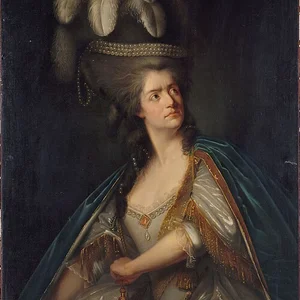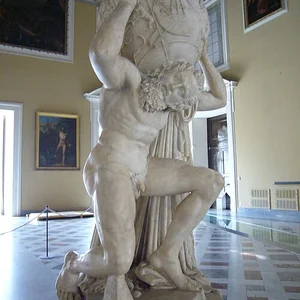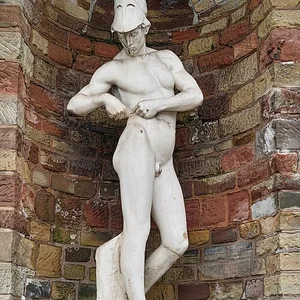

Telemachus is the son of Odysseus and Penelope in Greek mythology. A young man at the time of his father's return to Ithaca, he sets out to search for him and then helps him eliminate the suitors besieging his mother.
Telemachus
Telemachus
6 min read
Frequently asked questions
Key Facts
- Son of Odysseus, king of Ithaca, and Penelope, still a child when his father leaves for the Trojan War
- Books I to IV of the Odyssey (the “Telemachy”) recount his departure in search of his father, to Pylos at Nestor's court and to Sparta at Menelaus's court
- Guided by the goddess Athena, who takes on the appearance of Mentor to advise him
- Helps Odysseus slaughter Penelope's suitors upon the latter's return to Ithaca
- Central hero of Fénelon's “The Adventures of Telemachus” (1699), a major work of French classical literature
Works & Achievements
Homeric account of Telemachus's coming-of-age journey; in it he becomes the hero of what amounts to a coming-of-age novel before the genre existed.
Telemachus's first public address, in which he dares to summon the people and denounce the suitors: his founding act as a free man.
Alongside his father, Telemachus takes part in eliminating the suitors and restoring order in the house of Odysseus.
A major educational novel of French literature that extends the myth and makes Telemachus a model of the wise and virtuous prince.
Various legends give him a marriage to Circe or to Nausicaa, a sign of the character's richness in Greek mythology.
Anecdotes
When Odysseus left for the Trojan War, Telemachus was only an infant. According to one tradition, Odysseus feigned madness to avoid being drafted, but the cunning Palamedes placed baby Telemachus in front of Odysseus's plough: forced to stop so as not to kill his son, Odysseus revealed that he was not mad and had to go off to war.
In the Odyssey, Athena takes on the appearance of Mentor, an old friend of Odysseus, to guide and advise Telemachus. It is from this character that we get our word “mentor,” which today means an experienced guide or counselor.
The first four books of the Odyssey recount Telemachus's journeys to Pylos and then to Sparta in search of news of his father: this part is called the “Telemachy.” It is the story of a shy adolescent's transformation into a courageous young man.
When Odysseus finally returns to Ithaca disguised as a beggar, Telemachus is the first to learn his true identity. Father and son, reunited after twenty years, plot together to slaughter the suitors who are devouring the household's wealth.
In 1699, the French writer Fénelon published “The Adventures of Telemachus,” an educational novel written for the grandson of Louis XIV. The work, which subtly criticized the king's absolutism, earned its author the disgrace of Louis XIV.
Primary Sources
Among them, godlike Telemachus was the first to speak... “I mean to go to Pylos and to Sparta to learn of my father's return.”
Telemachus summons the assembly of the Achaeans of Ithaca and rebukes the suitors for plundering the house of his absent father.
Odysseus makes himself known to his son: “I am your father, for whom you grieve and endure so much suffering.”
Calypso could not be consoled at the departure of Odysseus. In her grief, she felt unhappy to be immortal.
Key Places
Island in the Ionian Sea, kingdom of Odysseus, where Telemachus grows up and defends the family home against the suitors.
City in Messenia ruled by old Nestor; Telemachus travels there to seek news of his father.
Kingdom of Menelaus and Helen, in Laconia, where Telemachus is welcomed and learns that Odysseus is held captive by the nymph Calypso.
The megaron where the suitors' banquet is held and where, alongside Odysseus, the final slaughter takes place during the trial of the bow.
Humble dwelling where Odysseus, disguised as a beggar, reveals himself to his son Telemachus upon his return.
Typical Objects

Weapon of the young warrior that Telemachus grabs as he leaves the palace. A symbol of his entry into the adult world and his assertion of authority.

A great bow that only Odysseus can string; Telemachus himself tries to bend it before the final fight against the suitors. An instrument of recognition and revenge.

A vessel lent by the young men of Ithaca that Telemachus secretly fits out to sail to Pylos and Sparta. It marks his first act of heroic independence.

A staff handed to the speaker who addresses the assembly of Ithaca; Telemachus takes hold of it to denounce the suitors. An emblem of the right to speak and of power.

Precious tableware used during the banquets of hospitality offered to Telemachus by Nestor and Menelaus. Sharing wine seals the bonds of friendship between hosts and guests.

Garments given to Telemachus by his hosts according to the rules of Greek hospitality (xenia). Welcome gifts attest to the traveller's rank.
School Curriculum
Vocabulary & Tags
Key Vocabulary
Daily Life
Morning
A young prince of Ithaca, Telemachus rises at dawn, fastens his sandals, and girds on his sword like a warrior. He leaves his chamber to summon the heralds or to make his way to the assembly of the Achaeans.
Afternoon
His days are divided between overseeing the family's herds and estates, practicing hunting and the handling of weapons, and the long voyages by sea during his quest to Pylos and Sparta.
Evening
In the evening, he reluctantly attends the rowdy banquets of the suitors in the great hall, listens to the bard sing of the heroes' exploits, and watches over his mother Penelope.
Food
The Homeric diet rests on barley bread, roasted meat of beef, mutton, and pork at sacrifices, cheese, olives, and wine mixed with water served from kraters.
Clothing
Telemachus wears a linen tunic (chiton) belted at the waist and a woolen cloak (chlamys) thrown over the shoulder, sandals on his feet, and receives fine garments as gifts from his hosts.
Housing
He lives in the palace of Odysseus, a vast dwelling organized around the megaron, the great hall with its central hearth, surrounded by wine stores, chambers, and a courtyard where guests are welcomed.
Historical Timeline
Period Vocabulary
Liens externes & ressources
Références
Œuvres
La Télémachie (Odyssée, chants I-IV)
VIIIe siècle av. J.-C.
Discours devant l'assemblée d'Ithaque
Grèce antique légendaire
Massacre des prétendants
Grèce antique légendaire
Les Aventures de Télémaque (Fénelon)
1699
Tradition post-homérique de Télémaque
Antiquité