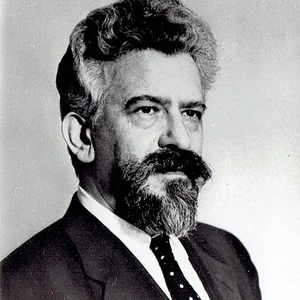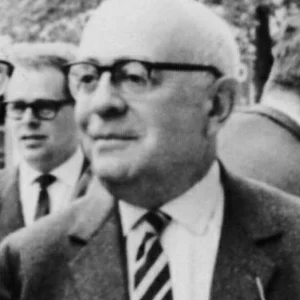

German philosopher, sociologist, and musicologist, a major figure of the Frankfurt School and of Critical Theory. Together with Max Horkheimer, he analyzed the mechanisms of domination in modern societies and put forward a radical critique of mass culture.
Theodor Adorno(1903 — 1969)
Theodor W. Adorno
États-Unis, Suisse, Autriche, Allemagne, Empire allemand
6 min read
Frequently asked questions
Famous Quotes
« To write poetry after Auschwitz is barbaric.»
« Wrong life cannot be lived rightly.»
Key Facts
- Born in 1903 in Frankfurt am Main into a well-to-do Jewish family
- Member of the Institute for Social Research (Frankfurt School) from the 1930s onward
- Exiled to the United States during the Nazi era, he published Dialectic of Enlightenment (1947) with Max Horkheimer
- Author of Minima Moralia (1951) and Aesthetic Theory (posthumous, 1970)
- Died in 1969 in Switzerland, after the student protests of 1968 that had deeply shaken him
Works & Achievements
A founding work of Critical Theory, which examines how the reason of the Enlightenment could end up giving rise to modern barbarism.
A major essay in musicology setting Schoenberg, deemed progressive, against Stravinsky, accused of regression.
A collection of aphorisms written in exile, in which Adorno meditates on everyday life damaged by modern society.
A vast sociological investigation seeking to understand the psychological mechanisms behind fascism and antisemitism.
Adorno's central philosophical work, which rejects closed systems and defends a critical thinking of the non-identical.
A famous radio lecture asserting that the foremost task of education is to prevent the return of barbarism.
An unfinished reflection on modern art as the last possible refuge of a critical truth in the face of society.
Anecdotes
Adorno was a child prodigy at the piano. Before becoming a philosopher, he went to study composition in Vienna under **Alban Berg**, hoping for a career in avant-garde music. Throughout his life he kept composing and wrote about Beethoven, Mahler and Schönberg.
His real name was **Theodor Ludwig Wiesengrund**. When he emigrated to the United States to flee the Nazis, he put forward his mother's Italian name, “Adorno”, in place of his Jewish paternal surname “Wiesengrund”, often reduced to the single initial “W.”.
In exile in California, Adorno mingled with other famous German refugees such as the writer **Thomas Mann**. He even advised Mann on the musical passages of his novel *Doctor Faustus*, explaining the twelve-tone technique in detail.
In 1969, female students from the protest movement interrupted his lecture by climbing onto the platform bare-breasted to provoke him: this was the “breast action”. Deeply shaken, Adorno died a few months later of a heart attack while on holiday in Switzerland.
Together with Horkheimer, Adorno coined an expression that has remained famous: “the culture industry”. According to them, films, radio and popular songs are manufactured like factory products to lull the critical minds of their audiences.
Primary Sources
The culture industry delivers as desirable and useful goods what man needs in order to reproduce himself, and which serves only to bind him more firmly to the existing order.
Wrong life cannot be lived rightly.
To write poetry after Auschwitz is barbaric.
The premier demand upon all education is that Auschwitz not happen again.
Key Places
Adorno's birthplace and home of the Frankfurt School, where he taught after the war. The center of German Critical Theory.
The Austrian capital where the young Adorno studied composition under Alban Berg, within the circle of the Second Viennese School.
The first stage of Adorno's exile after the Nazis came to power, where he continued his research from 1934 onward.
Adorno's place of exile in the United States, where he wrote “Dialectic of Enlightenment” with Horkheimer amid the colony of German émigrés.
The city where the Institute for Social Research had taken refuge and which Adorno joined in 1938 to work on music and radio.
A resort in the Swiss Alps where Adorno, on holiday, died of a heart attack in August 1969.
Typical Objects
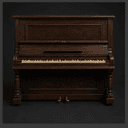
A central instrument in Adorno's life; he was an accomplished pianist and composer. On it he worked out his analyses of Beethoven, Mahler, and Schoenberg.
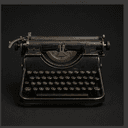
The philosopher's everyday tool for drafting his essays, aphorisms, and lectures. Adorno was a prolific writer with a demanding style.
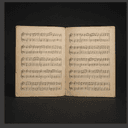
The medium of Adorno's musical thought, which he deciphered and critiqued meticulously. The music of the Second Viennese School was at the heart of his reflections.
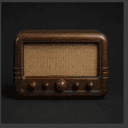
An emblematic object of the “culture industry” that Adorno studied in the United States as part of a project on broadcast music.
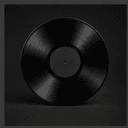
A symbol of the industrial reproduction of music, which Adorno criticized: the work of art turned into a commodity consumed in series.
A literary form dear to Adorno, made of brief, cutting fragments as in *Minima Moralia*. A way of thinking in flashes rather than in systems.
School Curriculum
Vocabulary & Tags
Key Vocabulary
Tags
Daily Life
Morning
Adorno worked mostly at home, in his Frankfurt apartment surrounded by books and musical scores. Mornings were devoted to reading and writing, often at the piano to check a musical analysis.
Afternoon
In the afternoon, he taught his courses and seminars at the university, which were very popular with students. He also took part in the work of the Institute for Social Research, holding long discussions with his colleagues.
Evening
Evenings combined concerts, intellectual discussions, and writing. Adorno gladly spent time with musicians and writers, and loved to debate late into the night.
Food
A well-off city dweller of the 20th century, Adorno shared the bourgeois European diet of his time. While in exile in the United States, he often missed the cuisine and customs of old Europe.
Clothing
Adorno wore the sober suit and tie of the mid-20th-century German academic. His neat appearance reflected his bourgeois background and his standing as a professor.
Housing
He lived in comfortable urban apartments, in Frankfurt as well as in exile in New York and California. His home was that of an intellectual: overflowing with books, journals, and a piano.