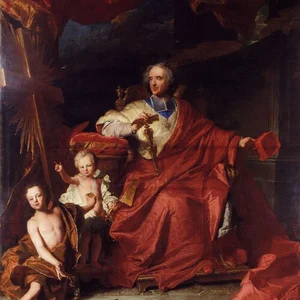

Theodosius I was the last emperor to rule over the entire Roman Empire, both East and West. He made Nicene Christianity the official religion of the Empire through the Edict of Thessalonica in 380 and banned pagan worship.
Theodosius I
Flavius Theodosius (Theodosius I, known as “the Great”)
5 min read
Frequently asked questions
Key Facts
- Proclaimed emperor of the East in 379 by Gratian after the defeat at Adrianople (378)
- Edict of Thessalonica (380): made Nicene Christianity the official religion of the Empire
- Convened the Council of Constantinople (381), which reaffirmed the Nicene Creed
- Permanently banned pagan worship and abolished the ancient Olympic Games (392-393)
- Upon his death in 395, divided the Empire between his sons Arcadius (East) and Honorius (West), a division that became permanent
Works & Achievements
Decree making Nicene Christianity the official religion of the Roman Empire, the foundation of Christian Europe.
Ecumenical council that reaffirmed the Nicene Creed and durably established the dogma of the Trinity.
Laws banning sacrifices and visits to temples, marking the official end of state paganism.
Treaty settling the Goths as a federated people within the Empire, a major turning point in the integration of the “barbarians.”
The last reunification of the entire Roman Empire under a single ruler, presented as a Christian triumph.
Military and diplomatic stabilization of the Danube frontier after the collapse of 378.
Anecdotes
In 390, after the population of Thessalonica lynched a Gothic general, Theodosius ordered a massacre in the city's hippodrome as reprisal: several thousand spectators were killed. The bishop of Milan, Ambrose, then refused to give him communion and forced him to do public penance — a rare case of an emperor bowing before the Church.
Theodosius was not destined for the throne: he had withdrawn to his estates in Spain after his father fell from favor. It was the emperor Gratian who recalled him in 379 to entrust him with the East, ravaged by the Goths after the disaster at Adrianople.
Through the Edict of Thessalonica in 380, Theodosius established Nicene Christianity as the state religion and branded those who followed other beliefs as “senseless and insane.” It was under his reign that pagan sacrifices were banned and, it is said, the ancient Olympic Games suspended.
In 394, at the Battle of the Frigidus River against the usurper Eugenius, tradition holds that a violent wind (the “bora”) rose up and drove the enemy army's arrows and javelins back upon them, which Christians interpreted as a miracle in favor of Theodosius.
At his death in 395, Theodosius divided the Empire between his two sons: Arcadius received the East and Honorius the West. This division was never undone: he was the last to rule alone over the entire Roman Empire.
Primary Sources
It is our will that all the peoples ruled by the moderation of our clemency shall practice the religion which the divine Apostle Peter transmitted to the Romans.
I exhort you, I beg you, I urge you, I warn you; for it grieves me that you, who were a model of piety, did not recoil in horror at the death of so many innocent people.
You have restored peace to the Empire after the storm and raised up the State shaken by so many defeats.
The emperor, moved by the rebukes of Bishop Ambrose, laid aside the imperial insignia and did public penance in the church.
Key Places
Town in Hispania considered to be the birthplace of Theodosius, in the province of Gallaecia.
Capital of the Roman East where Theodosius established his residence and presided over the Council of 381.
Macedonian city where the edict of 380 was promulgated and where the massacre of 390 took place.
Site of the decisive battle of 394 where Theodosius defeated the usurper Eugenius and reunified the Empire.
Imperial capital of the West where Bishop Ambrose held his see and where Theodosius died in 395.
Liens externes & ressources
Références
Œuvres
Édit de Thessalonique (Cunctos populos)
380
Convocation du concile de Constantinople
381
Édits antipaïens
391-392
Foedus avec les Goths
382
Victoire du Frigidus
394
Pacification de l'Orient après Andrinople
379-382