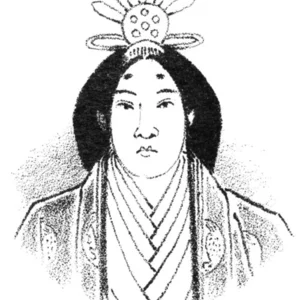

Byzantine princess, she married Emperor Otto II in 972, becoming Empress of the Holy Roman Empire. After her husband's death in 983, she served as regent on behalf of their son Otto III until her own death in 991, governing with authority and introducing Byzantine influence to the Ottonian court.
Theophanu
Theophanu
Empire byzantin
9 min read
Frequently asked questions
Key Facts
- Around 960: born in Constantinople, into the Byzantine imperial family
- 972: married Emperor Otto II in Rome, sealing a diplomatic alliance between Byzantium and the Holy Roman Empire
- 983: death of Otto II — she assumed the regency for their son Otto III, aged 3
- 983–991: governed the Holy Roman Empire with firmness, preserving the unity of the realm against the great lords
- 991: died at Nijmegen (in present-day Netherlands), at around 30 years of age
Works & Achievements
Ruling in the name of her son Otto III for eight years, Theophanu maintained the unity of the Empire, held in check the ambitions of rival princes, and preserved the alliance with the papacy. Her regency is considered among the most stable and best conducted of the western Middle Ages.
Through her presence at court, Theophanu introduced Byzantine arts, ceremonies, craftsmen, and manuscripts into Germanic territory, directly contributing to the flourishing of the "Ottonian renaissance." Her influence can be traced in the illuminated manuscripts, ivories, and goldsmithing of the late tenth century.
Theophanu made several journeys to Italy to consolidate imperial authority over Rome, renew alliances with Lombard lords, and maintain balanced relations with the papacy. She negotiated with a skill acknowledged by contemporary chroniclers.
The dozens of diplomas and charters issued in the name of Otto III during her regency constitute a major historical source for the history of the Empire. Some, signed in her own name with the masculine title of *imperator*, bear witness to her sovereign conception of government.
Anecdotes
The exact origin of Theophano remains an enigma for historians: presented as a Byzantine princess at her marriage to Otto II in 972, she was probably not the daughter of an emperor but the niece of Basileus John I Tzimiskes. This disappointed the Ottonian delegation, which had hoped for a porphyrogenneta — a princess “born in the purple” — but Otto I ultimately accepted the union for diplomatic reasons.
At the sudden death of Otto II in Rome in 983, Theophano had to defend the regency against Henry the Quarrelsome, Duke of Bavaria, who seized the young Otto III, then three years old. Through a skillful alliance with Archbishop Willigis of Mainz and her mother-in-law Adelaide of Italy, she recovered her son and established herself as regent, foiling the ambitions of the rebellious duke.
In an unprecedented act in the medieval West, Theophano signed certain imperial charters with the masculine title “Theophanu gratia divina imperator augustus,” claiming the full weight of sovereign power without any concession to her female status. This deliberate gesture, inherited from the Byzantine tradition in which women could rule in their own name, reflects her lofty conception of regental authority.
An ivory carved panel, now housed at the Musée de Cluny in Paris, depicts Otto II and Theophano crowned by Christ himself, side by side and of equal stature. This hybrid work blends Byzantine iconography with Ottonian art, and illustrates better than any other document the exceptional position of Theophano — a sovereign in her own right, not merely a self-effacing consort.
Theophano introduced many Byzantine customs unknown in the West to the Ottonian court: daily bathing, court ceremonies strictly codified according to Constantinople's protocol, Greek craftsmen and illuminators, and the use of purple ink reserved for emperors. These practices fascinated and scandalized certain Germanic chroniclers in equal measure, who viewed them as an Eastern influence they deemed suspect.
Primary Sources
Theophanu vero imperatrix, strenue et sapienter regens, filium suum Ottonem tertium sub tutela sua servavit, regnum pace ac iustitia gubernans donec ipsa obiit.
Ego Theophanu gratia divina imperator augustus. In nomine sancte et individue trinitatis, nos filii nostri Ottonis tercii imperatoris nomine hoc privilegium concedimus.
Anno DCCCCLXXXIII. Otto imperator obiit Romae. Theophanu imperatrix regni gubernacula suscepit pro filio suo Ottone puero. Anno DCCCCLXXXXI Theophanu imperatrix obiit.
Anno dominicae incarnationis DCCCCLXXII. Otto imperator Romam profectus est, ibique Theophanum Graecam in coniugem accepit et imperatricem coronavit, dotavit eamque honorifice cum ea Romam rediit.
Interventu et petitione dilectae genetricis nostrae Theophanu imperatricis augustae... cuius consilio ac providentia regnum nostrum regitur.
Key Places
Capital of the Byzantine Empire and birthplace of Theophanu, where she received the aristocratic, linguistic, and cultural education that made her an ambassador of the Greek world in the West.
Site of Theophanu's marriage and coronation in 972, celebrated by Pope John XIII. This event symbolized the diplomatic alliance between the Ottonian Empire and Byzantium, and the recognition of the empress by the Roman Church.
A royal abbey and favored residence of the Ottonian dynasty, Quedlinburg was one of the centers of power from which Theophanu exercised her regency and convened the great imperial assemblies.
The former Carolingian capital and symbolic coronation site of the Germanic emperors, Aachen was one of the poles of the itinerant court where Theophanu resided and held court during the regency.
An Ottonian imperial palace on the Waal, Nijmegen was where Theophanu died in June 991, bringing eight years of regency to an end; she resided there during her administrative travels through the northern territories of the Empire.
Typical Objects

This carved ivory diptych depicts Theophano and Otto II side by side, crowned by Christ, following a typically Byzantine iconography. It bears witness to the co-ruler status Theophano claimed, and to the artistic fusion between Byzantium and the Ottonian Empire.

Silk fabrics dyed in imperial purple, embroidered with gold thread in patterns of eagles and medallions, were the hallmark of Byzantine rulers. Theophano brought them with her upon her marriage, introducing to the West this oriental luxury previously unknown at the Ottonian court.

Theophano signed several official acts of regency in red or purple ink, a practice inherited from the Byzantine chancery and reserved for emperors alone. These documents, preserved in German archives, attest to the reality and full extent of her sovereign authority.

During official ceremonies, Theophano wore the insignia of Ottonian imperial power — crown, scepter, and orb adorned with a cross. Her use of these emblems of sovereignty as a reigning woman was a remarkable exception in the medieval West.

Theophano brought with her icons painted in the Eastern Orthodox tradition, objects of personal devotion quite foreign to Latin Roman piety. Their presence in her apartments helped spread Byzantine artistic sensibility and spirituality throughout the Germanic palaces.

Theophano’s court saw illuminated manuscripts circulate, produced using Byzantine techniques and blending Greek and Latin texts. These books contributed to the intellectual and artistic renaissance known as the “Ottonian” Renaissance, of which Theophano was one of the key inspirations.
School Curriculum
Vocabulary & Tags
Key Vocabulary
Daily Life
Morning
Théophano began her day with prayers according to Greek customs before her Byzantine icons, before attending the Latin office as empress of the Roman Church. She then bathed daily, a practice inherited from Byzantium that astonished her Germanic contemporaries, who were unaccustomed to such ritual hygiene.
Afternoon
Afternoons were devoted to affairs of state: receiving the great lords of the kingdom, deliberating with archbishops and counselors, and signing imperial diplomas. She also personally oversaw the education of her son Otto III, teaching him Greek and the customs of the Byzantine court.
Evening
Court evenings followed a codified protocol inspired by Byzantine ceremonies: ordered banquets, music, and readings of sacred texts or chronicles in Latin and Greek. Théophano expressed her dual cultural identity, blending Eastern traditions with Germanic customs to consolidate her prestige.
Food
The imperial table offered a variety of dishes — roasted meats, fish, vegetables, and fruits — served on gold and silver tableware according to a strict order of service. Théophano introduced Oriental spices — pepper, cinnamon, saffron, and cloves — then exceedingly rare luxury goods in the West, marking the distinction of the Ottonian court.
Clothing
Théophano wore robes of purple or scarlet silk embroidered with gold in patterns of eagles and medallions, in the Byzantine imperial fashion. During ceremonies, she donned the lôros — a band of precious fabric worn draped as a sash — and a diadem encrusted with pearls and precious stones, the insignia of imperial rank in Constantinople.
Housing
The Ottonian court was itinerant: Théophano stayed in turn at the palaces of Quedlinburg, Aachen, Frankfurt, and Nijmegen — complexes of stone and timber buildings organized around an aula palatina (ceremonial hall). She had icons, silk hangings, and Byzantine liturgical objects arranged in each residence, creating a space poised halfway between Germania and Constantinople.
Historical Timeline
Period Vocabulary
Liens externes & ressources
Références
Œuvres
Régence de l'Empire ottonien
983-991
Diffusion de la culture byzantine en Occident
972-991
Diplomatie impériale en Italie
983-990
Corpus de diplômes impériaux (actes de régence)
983-991