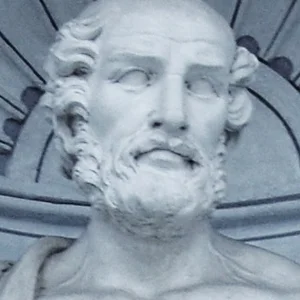

Greek philosopher and scholar, successor to Aristotle as head of the Lyceum in Athens. Considered the father of botany, he systematized the study of plants and continued his master's encyclopedic work.
Theophrastus(370 av. J.-C. — 286 av. J.-C.)
Theophrastus
Athènes
8 min read
Frequently asked questions
Famous Quotes
« Time is the most precious of expenditures.»
« Roots are to plants what the mouth is to animals.»
Key Facts
- Born around 370 BC in Eresus, on the island of Lesbos
- A disciple of Aristotle, he took over the Lyceum in Athens upon Aristotle's death in 322 BC
- Authored Enquiry into Plants and On the Causes of Plants, the founding works of scientific botany
- Author of Characters, portraits of moral types that would go on to influence European literature
- Died around 286 BC after leading the Lyceum for 35 years
Works & Achievements
In nine books, Theophrastus describes and classifies more than five hundred plant species according to their morphology, habitat, and uses. This foundational work earned him the title of "father of botany" and served as a scientific reference until the 17th century.
A companion to the Historia Plantarum, this six-book work analyzes the mechanisms of plant growth, reproduction, and decay. It also covers the medicinal and aromatic properties of plants.
A collection of thirty satirical portraits of universal human types (the miser, the flatterer, the coward, the chatterbox...). This literary work had a considerable influence on Greek and Latin comedy, and later on modern authors such as La Bruyère.
The first mineralogical treatise of antiquity, it classifies and describes stones, metals, and minerals according to their physical properties. It is the only scientific work by Theophrastus, alongside his botanical treatises, to have survived intact.
A physical treatise examining the nature of fire, its properties, and its various manifestations. It reflects Theophrastus's encyclopedic ambition to continue the Aristotelian project of understanding the entirety of the natural world.
Anecdotes
Theophrastus was not actually his real name: he was born Tyrtamus. It was Aristotle himself who supposedly gave him the nickname Theophrastus, meaning 'one who speaks divinely,' so impressed was he by his student's eloquence. That nickname became the name by which he would be remembered throughout history.
Under Theophrastus's leadership, the Lyceum in Athens reached exceptional prominence: it is said to have gathered as many as two thousand students — a remarkable number for the ancient world. Among them were scholars, philosophers, and even future political leaders who came from across the Greek world.
In his Enquiry into Plants, Theophrastus describes more than five hundred plant species, classifying them with rigorous method. He already distinguished plants by their mode of reproduction, their habitat, and their medicinal uses, laying the foundations of scientific botany that would not truly be surpassed until the seventeenth century.
Theophrastus also authored Characters, a collection of satirical portraits of human types: the miser, the flatterer, the chatterbox, the coward... This slim volume directly influenced writers such as La Bruyère in the seventeenth century and remains surprisingly modern in its depiction of human failings.
According to Diogenes Laërtius, Theophrastus died around the age of 85, lamenting that life was too short. He is said to have remarked, in essence, that one has barely begun to understand the things that truly matter when death arrives. He bequeathed his books and the Lyceum's garden to his disciples — a testament to his lifelong devotion to the study of nature.
Primary Sources
"The parts of plants are either general, common to all, or particular to each. By general parts I mean the root, the stem, the branch, the twig, the leaf, the flower, the fruit."
"The generation of plants occurs either spontaneously, or from a seed, or from a root, or from a branch, or from a piece of wood, or from a small cutting."
"Flattery is a way of behaving that consists in paying someone honors that are dishonorable to him. The flatterer says, walking alongside him: 'Do you see how people look at you? That happens to no one else in the city.'"
"Among the substances that the earth produces, some are composed of water, such as metals: gold, silver, and others; the rest are composed of earth. The most noble class of the latter is that of precious stones."
"Fire, of all the elements, is the one that most needs fuel and consumes the most of it; without nourishment it is extinguished at once, whereas the other elements subsist on their own."
Key Places
Theophrastus's birthplace, on the western coast of Lesbos. It was on this island, rich in varied Mediterranean vegetation, that he developed his first naturalistic observations alongside Aristotle.
Founded by Aristotle in 335 BCE in a gymnasium dedicated to Apollo Lykeios, the Lyceum was directed by Theophrastus for thirty-five years. Its botanical garden, bequeathed by Aristotle to Theophrastus, was a unique site for scientific observation.
A city in Asia Minor where Aristotle settled after the death of Plato. Theophrastus joined him there and began a collaboration that would last their entire lives, the two men conducting their first natural investigations together.
The main city of the island of Lesbos, where Aristotle and Theophrastus carried out in-depth biological and botanical observations before moving to Athens. The island's natural environment profoundly inspired Theophrastus's scientific work.
Liens externes & ressources
Références
Œuvres
Historia Plantarum (Recherches sur les plantes)
vers 300 av. J.-C.
De Causis Plantarum (Les Causes des plantes)
vers 300 av. J.-C.
Les Caractères (Characteres ethikoi)
vers 319 av. J.-C.
Des pierres (De lapidibus)
vers 300 av. J.-C.
De igne (Du feu)
vers 300 av. J.-C.
See also
Related Characters
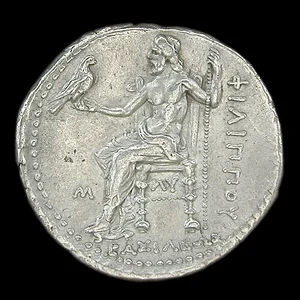
Alexander II of Macedon
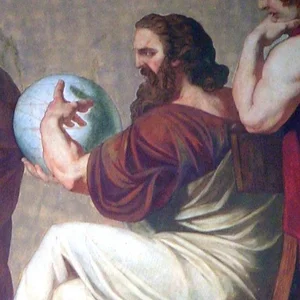
Anaxagoras of Clazomenae
499 av. J.-C. — 427 av. J.-C.
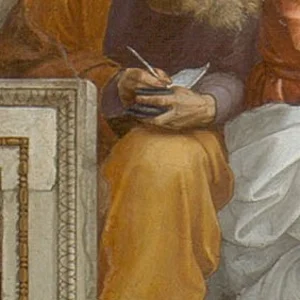
Anaximander
609 av. J.-C. — 545 av. J.-C.
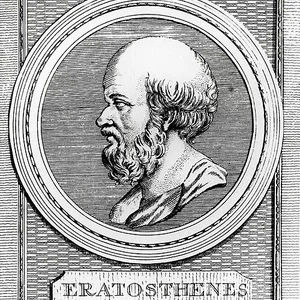
Eratosthenes
275 av. J.-C. — 193 av. J.-C.
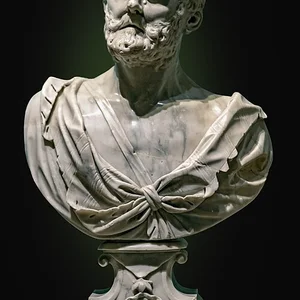
Heraclitus
534 av. J.-C. — 470 av. J.-C.
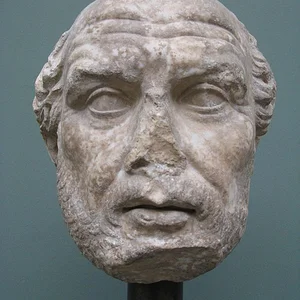
Phidias
499 av. J.-C. — 429 av. J.-C.