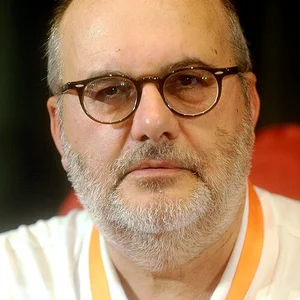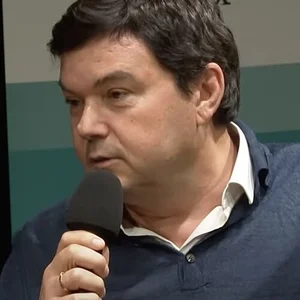

Thomas Piketty is a French economist born in 1971, a specialist in economic inequality and wealth distribution. A director of studies at the EHESS and a professor at the Paris School of Economics, he is renowned worldwide for his work on capital and inequality.
Thomas Piketty(1971 — ?)
Thomas Piketty
France
6 min read
Frequently asked questions
Famous Quotes
« When the rate of return on capital significantly exceeds the growth rate of output and income over the long run, capitalism automatically generates unsustainable inequalities.»
Key Facts
- Born on 7 May 1971 in Clichy
- Published *Capital in the Twenty-First Century* in 2013, a global bestseller translated into more than 40 languages
- Co-founder of the Paris School of Economics in 2006
- Published *Capital and Ideology* in 2019, extending his analysis of inequality
- Contributes to the World Inequality Database
Works & Achievements
A pioneering work reconstructing a century of income inequality from tax archives. It lays the foundations for all of his later work.
A short reference handbook presenting the mechanisms of inequality and redistribution. Regularly reissued and widely used in teaching.
His most famous work, translated into dozens of languages. Backed by data, it shows the tendency of capital to concentrate and proposes a global wealth tax.
A vast historical and global survey of how societies justify their inequalities. In it he defends the idea of “participatory socialism.”
An accessible and optimistic synthesis of his work, showing that the march toward equality is a long-term historical reality.
A collective project bringing together global data on incomes and wealth. An open tool used by researchers and journalists around the world.
Anecdotes
In 2014, the English translation of his book *Capital in the Twenty-First Century* became an unexpected global bestseller: a hefty economics book of nearly 700 pages sold more than two million copies and topped Amazon's sales charts, which is extremely rare for an academic work.
Piketty brilliantly passed the entrance exam for the **École normale supérieure** and then defended his doctoral thesis on inequality at just **22 years old**. He went on to teach at the prestigious **MIT** in the United States, but returned to France soon after, disappointed by an American economics he found too abstract and disconnected from history.
In **2015**, he turned down the **Légion d'honneur**, France's highest distinction, which was due to be awarded to him. He declared that it is not a government's role to decide who is honorable, and that he would prefer the State to focus on reviving growth.
To write his books, Piketty and his colleagues reconstructed enormous databases from tax archives sometimes dating back to the 18th century, in particular income tax and inheritance records. This painstaking work on figures sometimes more than two centuries old is what gives his conclusions their strength.
His famous formula “r > g” (the return on capital is greater than growth) became so well known that it was printed on t-shirts and mugs, turning a mathematical inequality into the symbol of a worldwide social debate.
Primary Sources
When the rate of return on capital significantly exceeds the growth rate of output and income over the long run [...], capitalism automatically generates arbitrary and unsustainable inequalities that radically undermine the meritocratic values on which democratic societies are based.
Every human society must justify its inequalities: unless reasons for them are found, the whole political and social edifice stands in danger of collapse.
A pioneering study reconstructing, from tax archives, the share of top incomes in France's national income over nearly a century.
The movement toward equality is a struggle that has been waged since the end of the eighteenth century, and it has already happened: the march toward equality is a historical reality.
Key Places
A town in the Paris suburbs where Thomas Piketty was born in 1971.
Prestigious grande école where Piketty studied mathematics and economics. A training ground for the French intellectual elite.
Leading American university where Piketty taught economics in the early 1990s before returning to France.
A research institution he helped found in 2007 and went on to lead. It is his main place of work.
Parisian institution where Piketty is a director of studies. There he conducts his research on the history of inequality.
Typical Objects

Vast series of figures reconstructed from income and inheritance tax records spanning several centuries. They form the raw material of his research on inequality.

A hefty work of nearly 700 pages published in 2013. Having become a global best-seller, it made Piketty known far beyond the academic world.

Visual representations showing how the share of wealth held by the richest has evolved. They make trends spanning two centuries visible.

Computing tools essential for processing millions of tax records. The work of a modern economist relies heavily on these automated calculations.

A mathematical inequality meaning that the return on capital exceeds economic growth. Having become a symbol, it sums up his thesis on rising inequality.

Regular opinion pieces published in newspapers such as Le Monde. In them Piketty takes part in the public debate on taxation and social justice.
School Curriculum
Vocabulary & Tags
Key Vocabulary
Daily Life
Morning
Like many researchers, Piketty devotes his mornings to intellectual work: reading articles, analyzing data, and writing. Coffee and checking the newspapers are part of the ritual.
Afternoon
His afternoons are split between lectures and seminars at the Paris School of Economics or the EHESS, and meetings with his colleagues and doctoral students. He also exchanges emails with researchers from all over the world.
Evening
His evenings may be taken up by conferences, media appearances, or writing op-eds. Like any academic in the public eye, he alternates between public life and family life.
Food
His diet is that of a present-day Parisian, with nothing particularly noteworthy about it. Varied meals, restaurants with colleagues during conferences, and university canteens.
Clothing
He dresses simply and casually, typical of the academic world: a shirt and jacket, usually without a tie. A plain outfit, far from the strict suits of the financiers he studies.
Housing
He lives in Paris, close to his places of work. An urban apartment like those occupied by the capital's academic researchers.
Historical Timeline
Period Vocabulary
Liens externes & ressources
Références
Œuvres
Les hauts revenus en France au XXe siècle
2001
L'économie des inégalités
1997
Le Capital au XXIe siècle
2013
Capital et idéologie
2019
Une brève histoire de l'égalité
2021
Co-fondation de la base de données World Inequality Database (WID)
2011