 flip
flipMead of Ásgard's Feasts
Mead of Ásgard's Feasts
Why this dish? In Norse tales, mead is the drink of gods and heroes: the poet knows that the 'mead of poetry' grants the gift of verse, and in Valhalla warriors drink endlessly. At Thor's table, one raises the mead-horn to toast the Æsir and seal oaths.
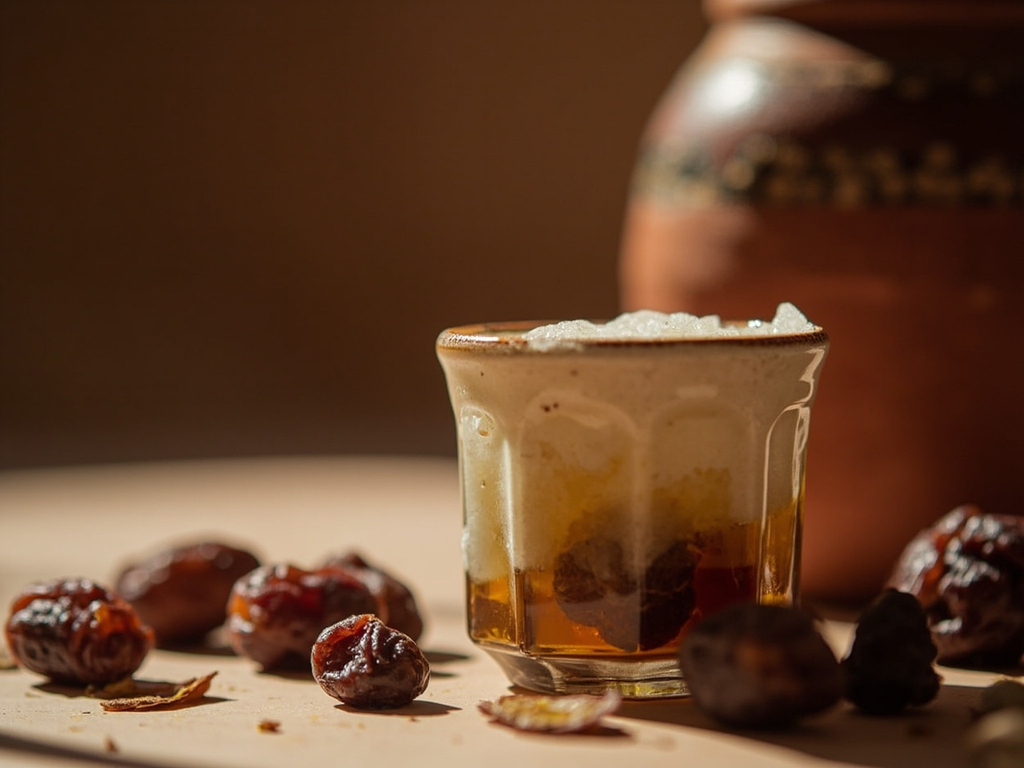
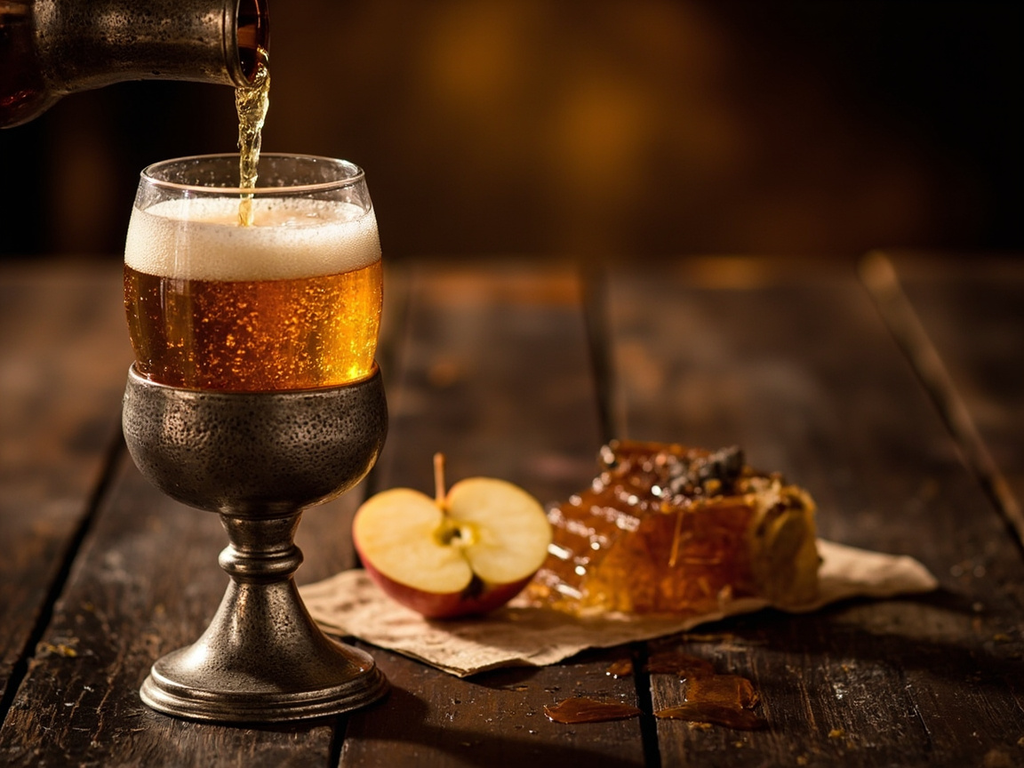
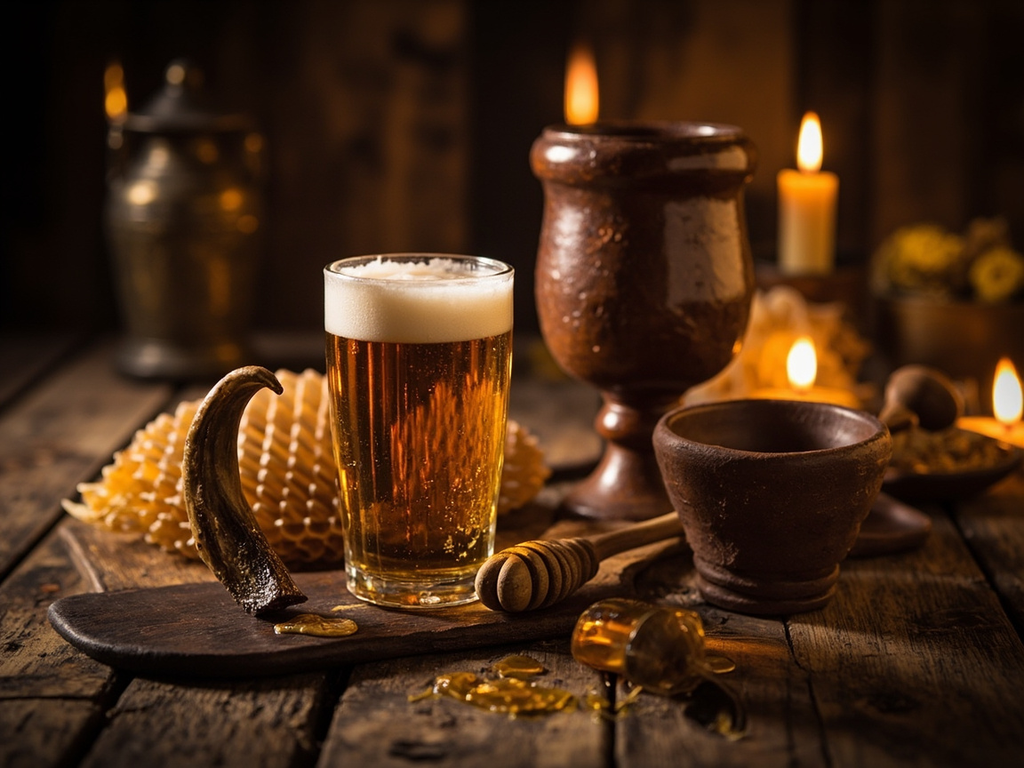
The oldest fermented drink of the North: honey diluted in water and fermented until it becomes a golden, sweet, wine-like beverage. Here, a simple home version, flavored with juniper berries.
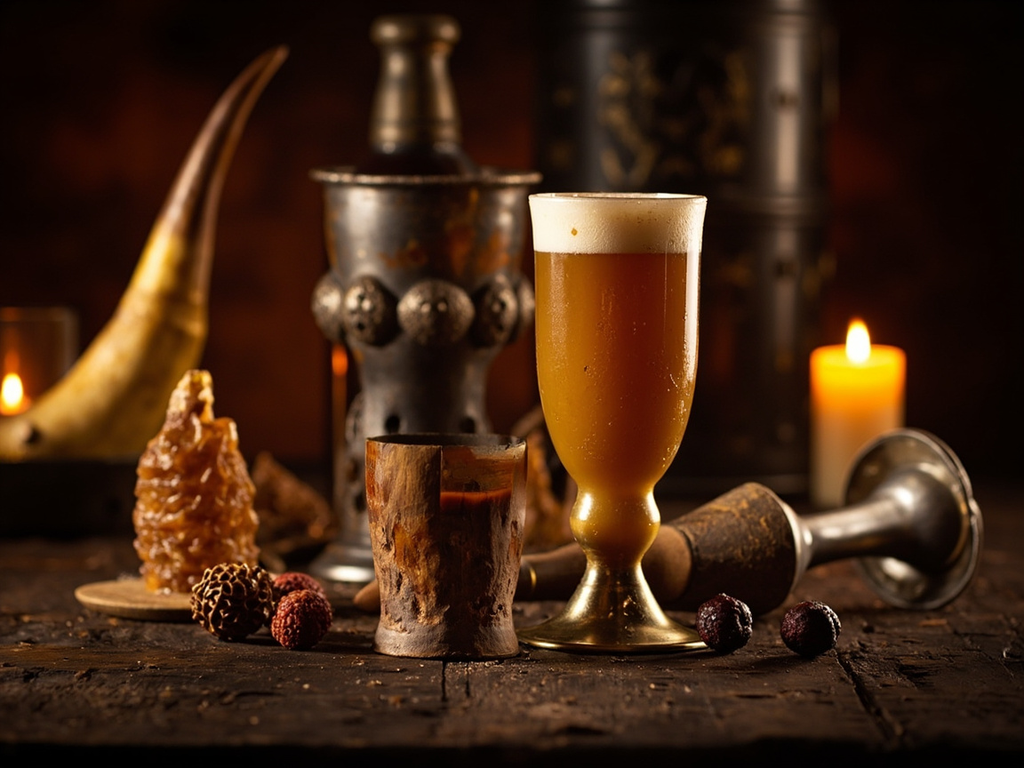
Raise the horn, mortal, and do not set it down empty! This is the mjöðr, the mead: nothing but forest honey drowned in clear water, which awakens on its own and bubbles like a storm on the march. In Valhalla they drink without ever emptying the horn, and he who tastes it sometimes feels poet's words come to him. Drink to the health of the Æsir, and may the thunder be kind to you!
- •Wild honey — about one third of the water volume (fermentable sugar)
- •Spring water — the bulk of the volume (base)
- •Juniper berries — a small handful (flavoring (optional))
- •Wild yeasts — naturally present (spontaneous fermentation)
Mead of Ásgard's Feasts
The oldest fermented drink of the North: honey diluted in water and fermented until it becomes a golden, sweet, wine-like beverage. Here, a simple home version, flavored with juniper berries.
Why this dish? In Norse tales, mead is the drink of gods and heroes: the poet knows that the 'mead of poetry' grants the gift of verse, and in Valhalla warriors drink endlessly. At Thor's table, one raises the mead-horn to toast the Æsir and seal oaths.
Raise the horn, mortal, and do not set it down empty! This is the mjöðr, the mead: nothing but forest honey drowned in clear water, which awakens on its own and bubbles like a storm on the march. In Valhalla they drink without ever emptying the horn, and he who tastes it sometimes feels poet's words come to him. Drink to the health of the Æsir, and may the thunder be kind to you!
Ingredients (period version)
- Wild honey — about one third of the water volume (fermentable sugar)
- Spring water — the bulk of the volume (base)
- Juniper berries — a small handful (flavoring (optional))
- Wild yeasts — naturally present (spontaneous fermentation)
Ingredients
- Honey — 400 g (fermentable sugar)
- Spring water — 1.5 L (base)
- Juniper berries — 1 tbsp (flavoring (optional))
- Yeast (beer or champagne) — 1 packet (3-5 g) (controlled fermentation)
- Juice of half a lemon — 30 ml (balance (optional))
Method
- Gently warm the water (do not boil) and dissolve the honey in it. Let cool to room temperature.
- Pour into a clean demijohn, add the juniper berries and lemon juice.
- Pitch the yeast, fit an airlock, and ferment away from light for 2 to 4 weeks.
- When bubbling stops, siphon off the clear liquid, leaving the sediment behind.
- Bottle and age in a cool place for a few weeks before serving chilled, from a horn or glass.
- Note: alcoholic beverage — for adults only; for children, serve a non-fermented honey-juniper infusion.
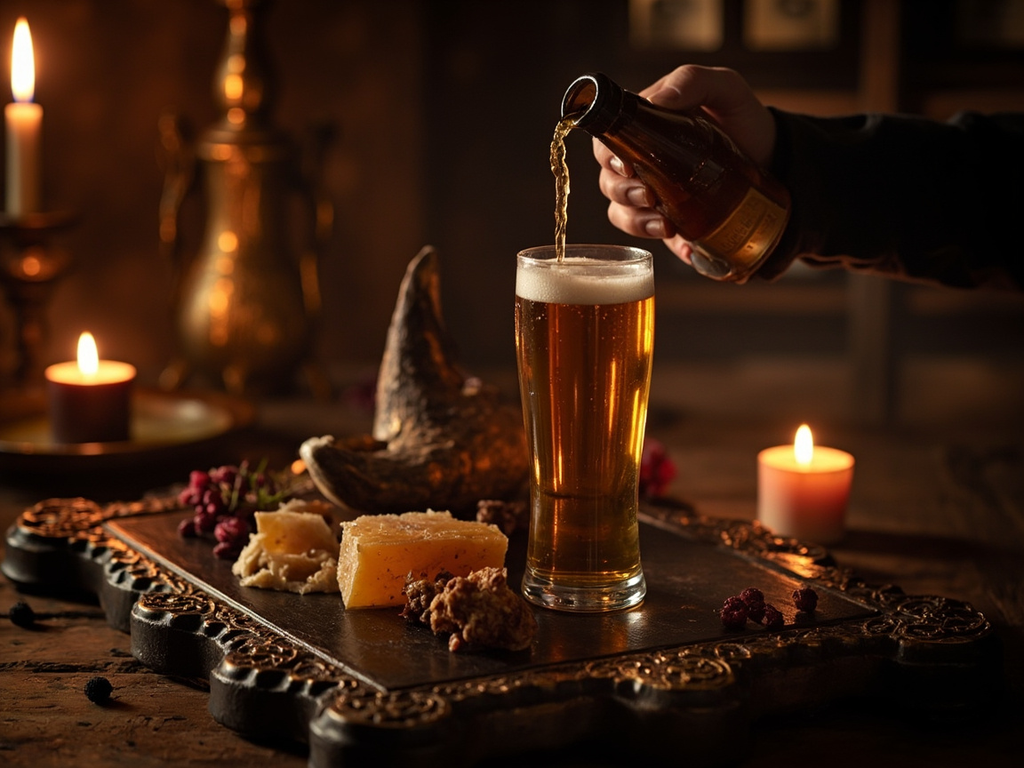
How it was made : Mead is one of the oldest fermented beverages in Northern Europe, predating hopped beer. In the Viking Age, fermentation relied on wild yeasts present in honey and the air. The drink, shared from a horn in the hall, had a strong social and sacred dimension: toasts (minni) honored gods and ancestors.
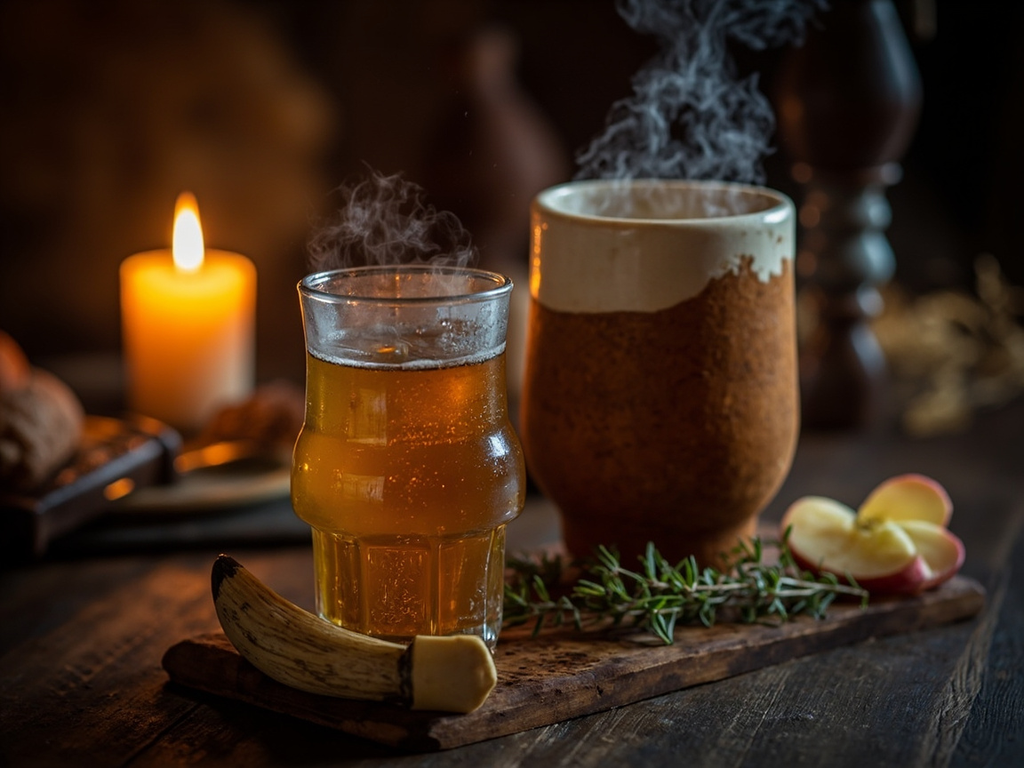
The contemporary twist : Serve over ice in a horn or a pewter cup, with a juniper berry floating on top, for a 'Valhalla-style' toast.
Sources : Snorri Sturluson, Edda (Skáldskaparmál), 13th century — the mead of poetry · Patrick E. McGovern, Uncorking the Past: The Quest for Wine, Beer, and Other Alcoholic Beverages, 2009
Thor · Charactorium