 flip
flipKoumiss — Fermented Mare's Milk
Koumiss — Fermented Mare's Milk
Why this dish? Koumiss is the sacred drink of the steppe nomads, inseparable from Mongol and Turkic identity. William of Rubruck, envoy of Saint Louis to the Mongol court in the 13th century, left a detailed description. For Tokhtamysh, offering koumiss was as much a political gesture as a social one — refusing a khan's cup was a mortal offense.
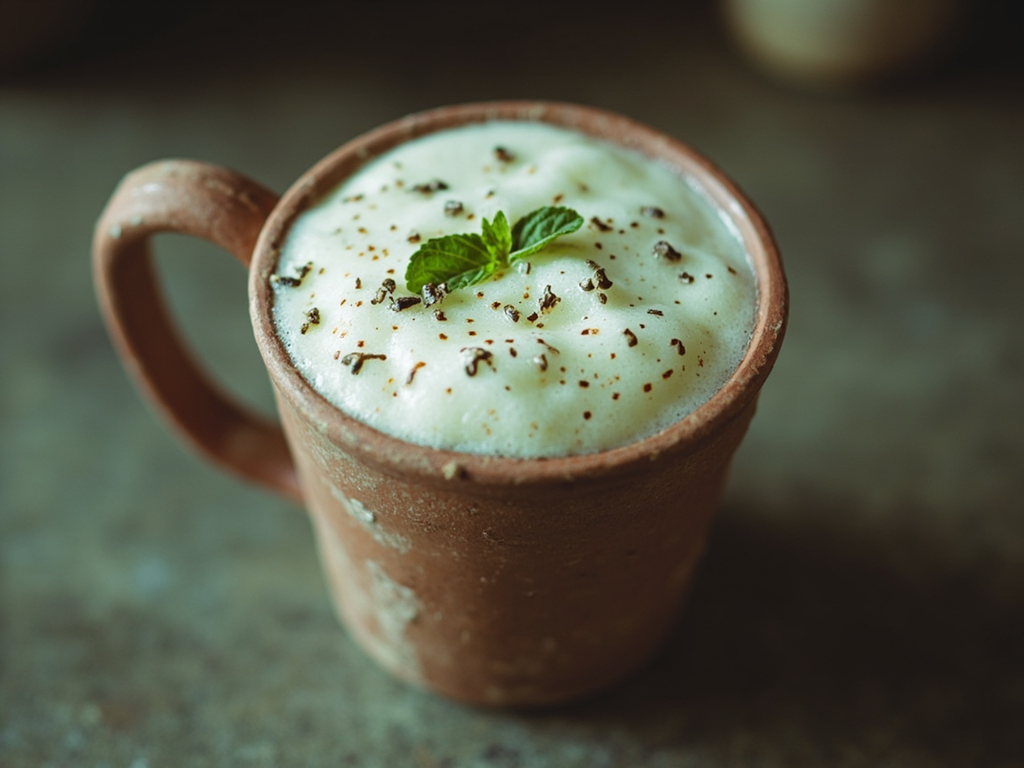
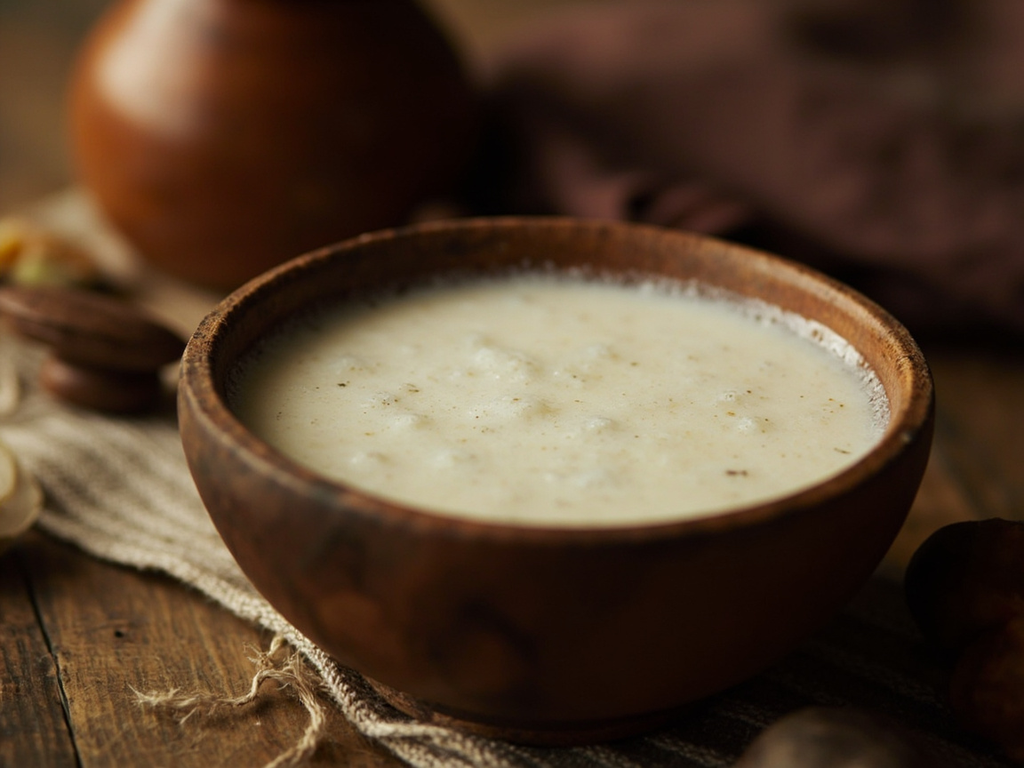
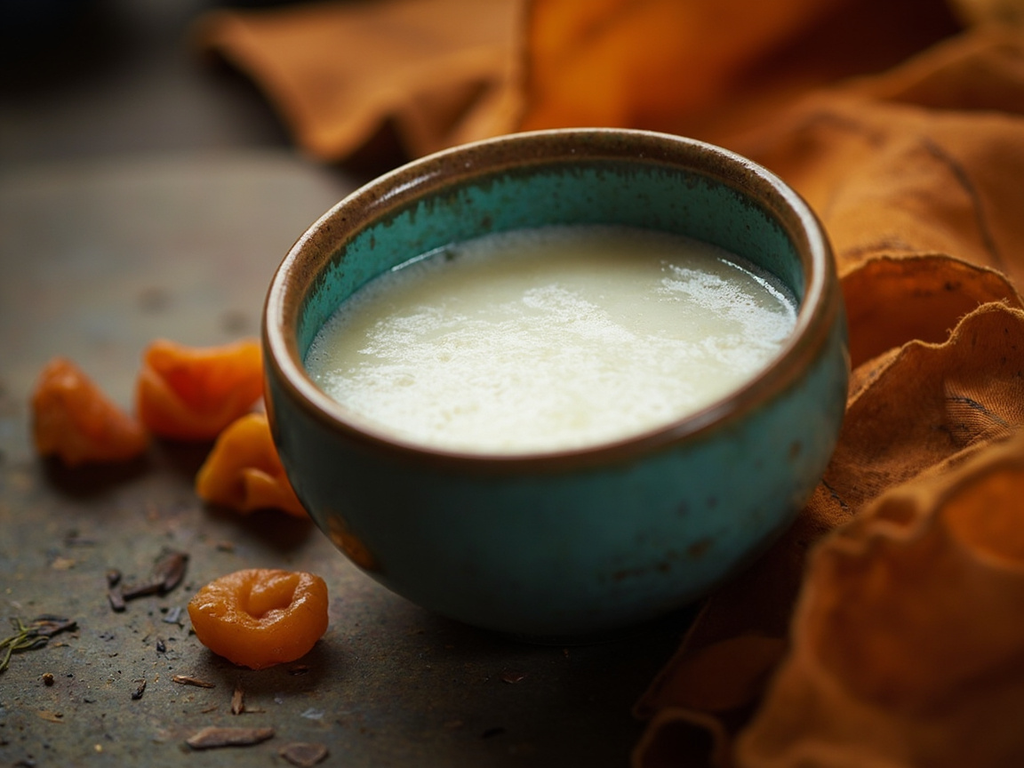
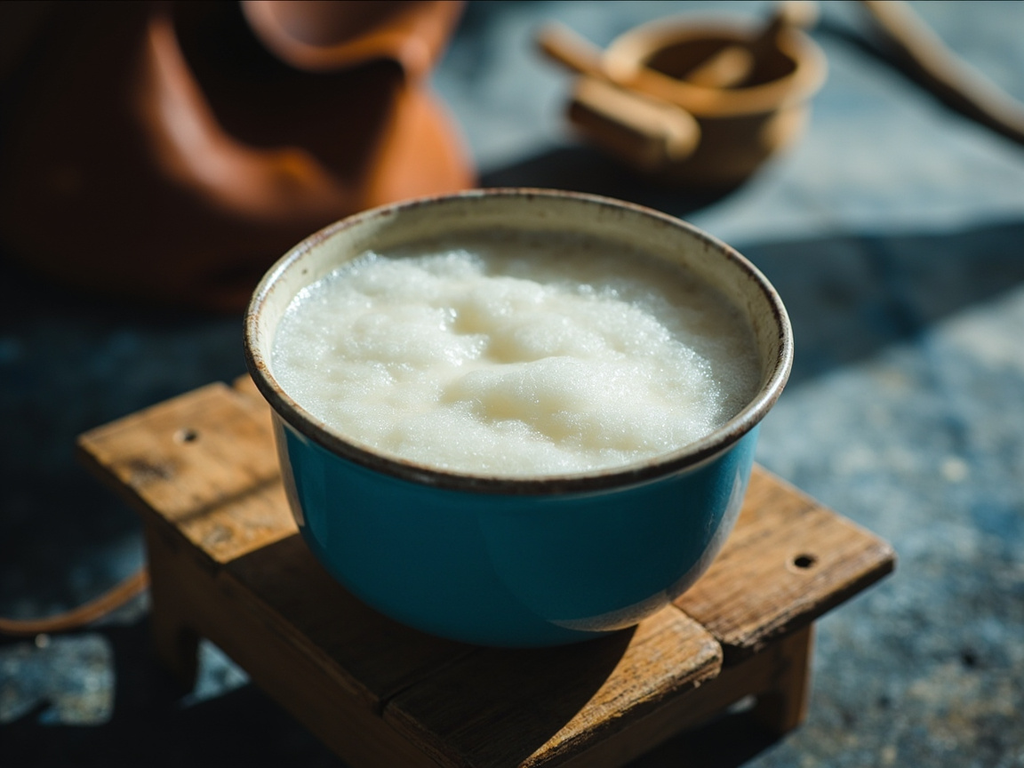
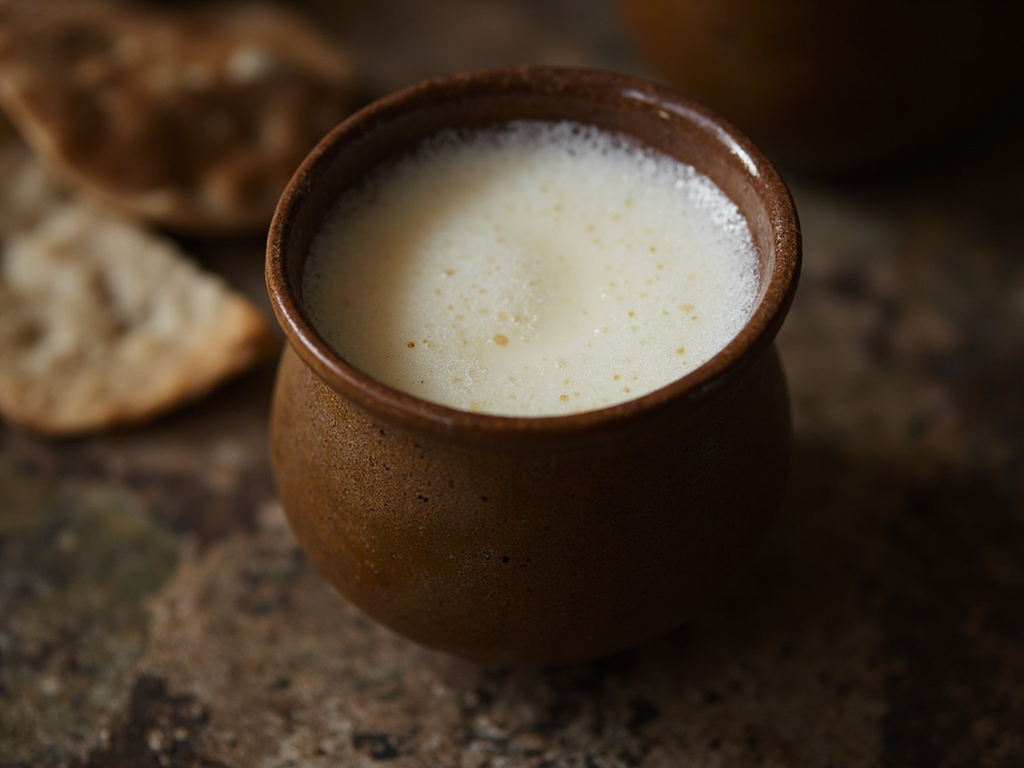
A slightly fizzy and tangy drink obtained by fermenting mare's milk in a leather bag. Lightly alcoholic (2-3%), milky and refreshing, it has a unique taste between liquid yogurt and light cider. The modern adaptation uses cow's milk fermented with kefir.
Koumiss is the white blood of the steppe. My ancestors already drank it when Genghis Khan rode westward, and I drink it every morning from my silver cup before mounting my horse. Do you see that leather bag hanging at the entrance of my yurt? Every man who passes must beat it — that is the rule. The more you beat it, the more the koumiss sings. The day I took Moscow, my horsemen had each drunk three bags before dawn. It puts fire in the veins and calm in the head.
- •Fresh mare's milk — a full leather bag (Fermentation base)
- •Koumiss starter (kor) — one ladle from previous batch (Ferment)
Koumiss — Fermented Mare's Milk
A slightly fizzy and tangy drink obtained by fermenting mare's milk in a leather bag. Lightly alcoholic (2-3%), milky and refreshing, it has a unique taste between liquid yogurt and light cider. The modern adaptation uses cow's milk fermented with kefir.
Why this dish? Koumiss is the sacred drink of the steppe nomads, inseparable from Mongol and Turkic identity. William of Rubruck, envoy of Saint Louis to the Mongol court in the 13th century, left a detailed description. For Tokhtamysh, offering koumiss was as much a political gesture as a social one — refusing a khan's cup was a mortal offense.
Koumiss is the white blood of the steppe. My ancestors already drank it when Genghis Khan rode westward, and I drink it every morning from my silver cup before mounting my horse. Do you see that leather bag hanging at the entrance of my yurt? Every man who passes must beat it — that is the rule. The more you beat it, the more the koumiss sings. The day I took Moscow, my horsemen had each drunk three bags before dawn. It puts fire in the veins and calm in the head.
Ingredients (period version)
- Fresh mare's milk — a full leather bag (Fermentation base)
- Koumiss starter (kor) — one ladle from previous batch (Ferment)
Ingredients
- Whole cow's milk (raw preferred) — 1 liter (Base)
- Milk kefir grains — 2 tbsp (Ferment (substitute))
- Liquid honey — 1 tsp (optional) (Sweeten acidity)
Method
- Warm the milk to about 30 °C (warm to the touch, not hot).
- Add the kefir grains, stir gently, pour into a wide-mouth glass jar.
- Cover with a cloth and let ferment at room temperature (20-25 °C) for 24 to 48 hours, stirring vigorously 3-4 times a day to mimic the beating of the leather bag.
- When the liquid is slightly fizzy, tangy, and the whey begins to separate, strain out the kefir grains through a sieve.
- Add honey if desired. Transfer to a sealed bottle and refrigerate.
- Serve very cold in small bowls. Consume within 3 days.
How it was made : Koumiss is documented by many medieval travelers: William of Rubruck (1253) describes in detail its preparation in Mongol camps, noting that the leather bag (saba/torsuk) hung at the yurt entrance had to be beaten by each visitor. Ibn Battuta (14th century) also mentions this drink among the Turks of the Golden Horde. True koumiss can only be made with mare's milk, naturally richer in lactose than cow's milk, allowing a stronger alcoholic fermentation.
The contemporary twist : Serve the kefir-koumiss in a small turned wooden bowl, with a lime zest and a rye straw — a steppe "koumiss bar" version.
Sources : Guillaume de Rubrouck, « Voyage dans l'Empire mongol », 1253 (trad. Claude et René Kappler, Payot, 1985) · Ibn Battûta, « Rihla », XIVe siècle (trad. Defremery & Sanguinetti)
Tokhtamysh · Charactorium