 flip
flipRoasted Venison with Cameline Sauce
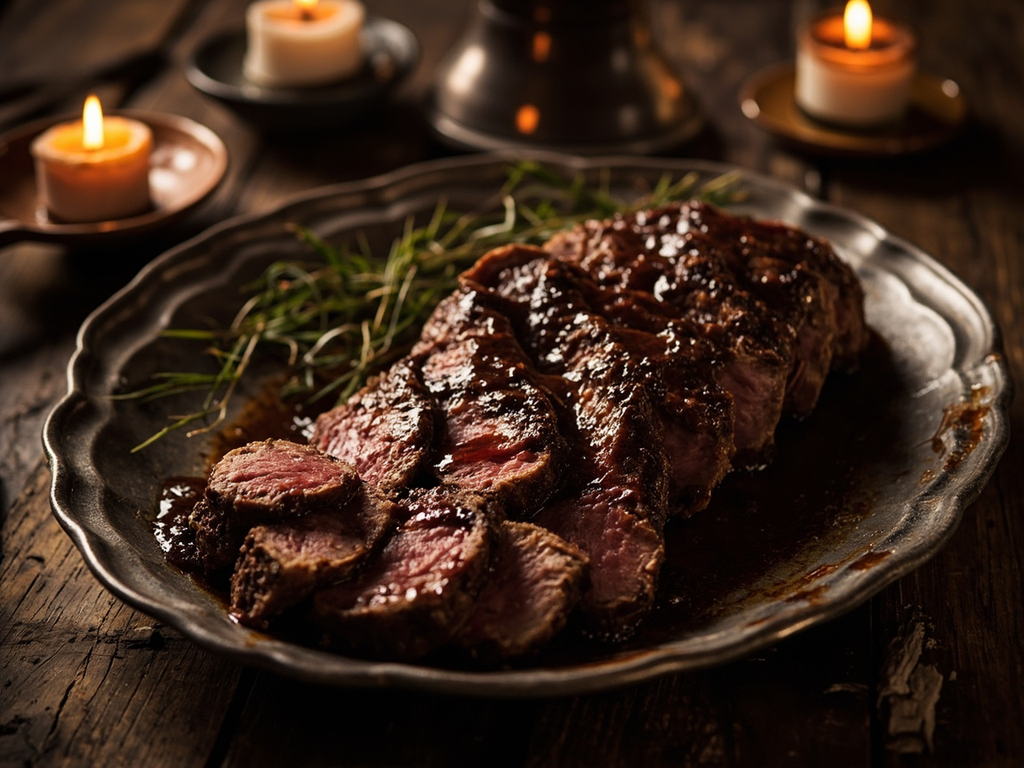
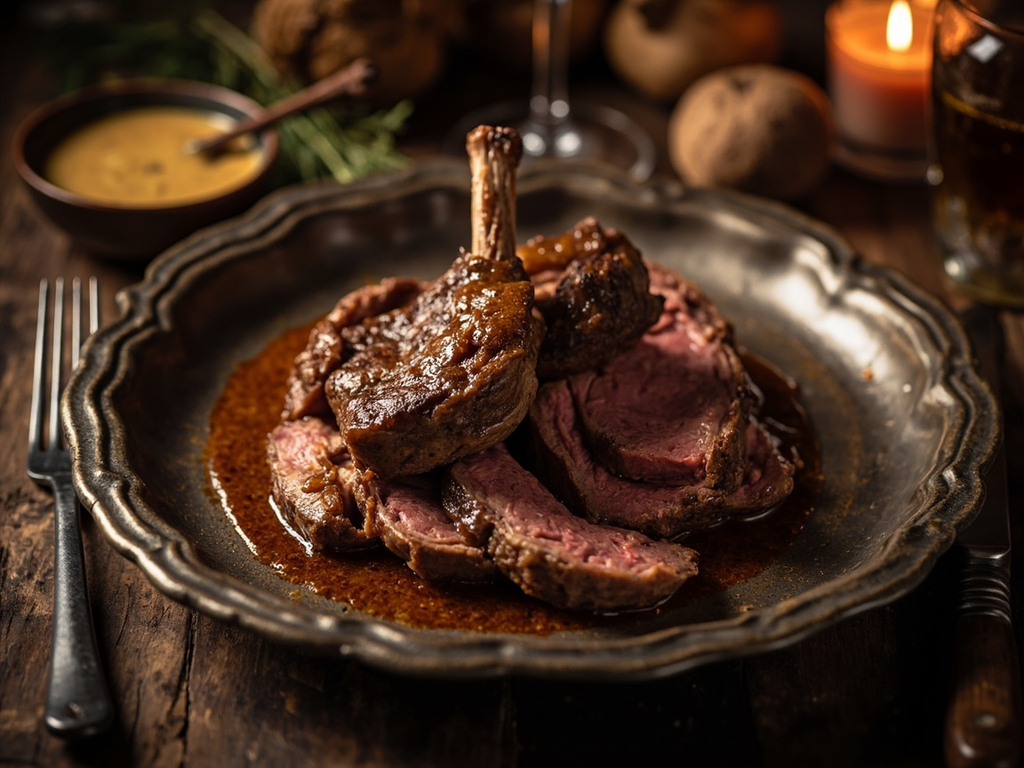
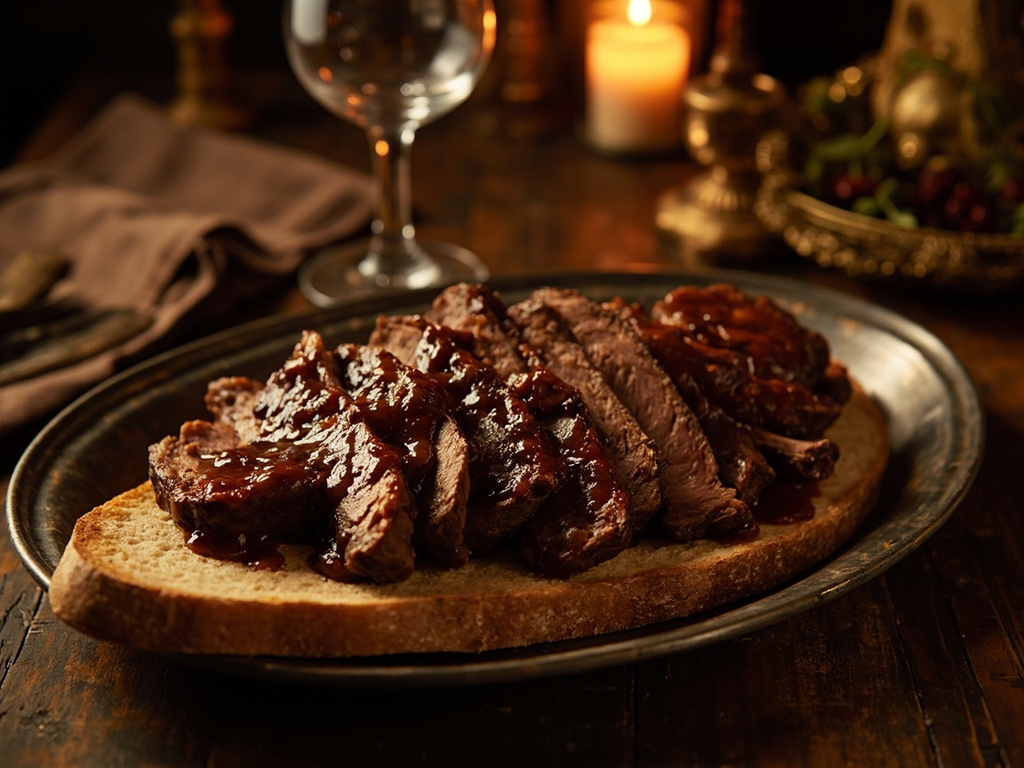
Roasted Venison with Cameline Sauce
Why this dish? Tristan is a high-ranking knight at the court of King Mark of Cornwall, at Tintagel. During great royal feasts, roasted game — the fruit of noble hunting — took center stage on the table, napped with cameline sauce, the most prized sauce of the Middle Ages.
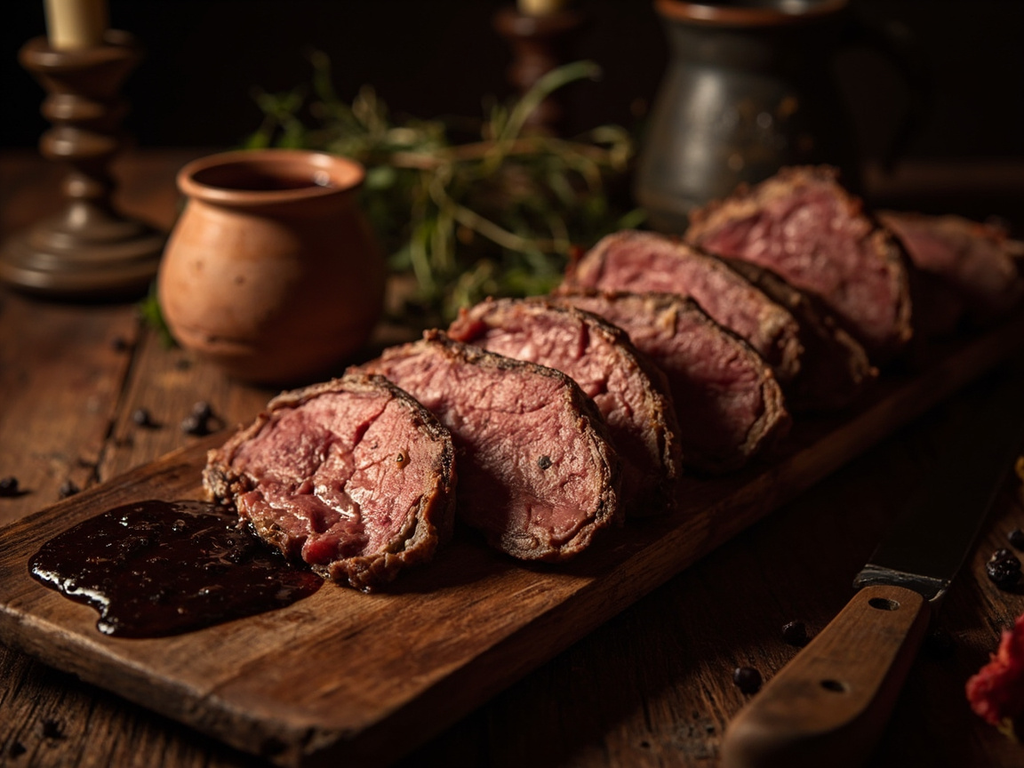
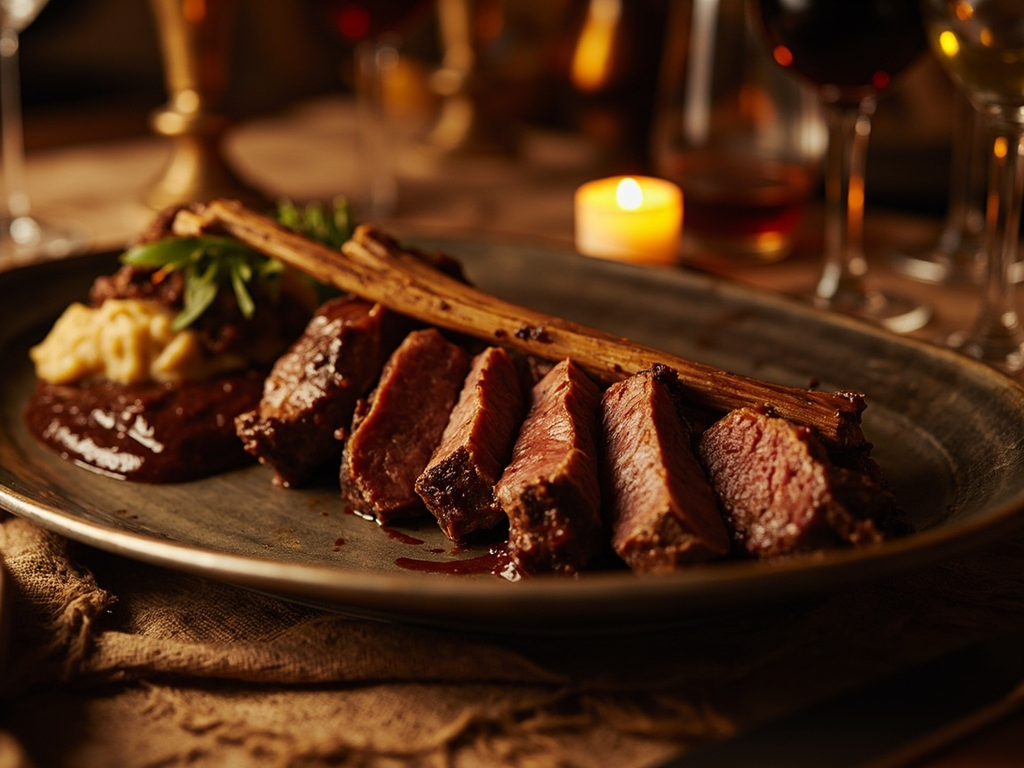
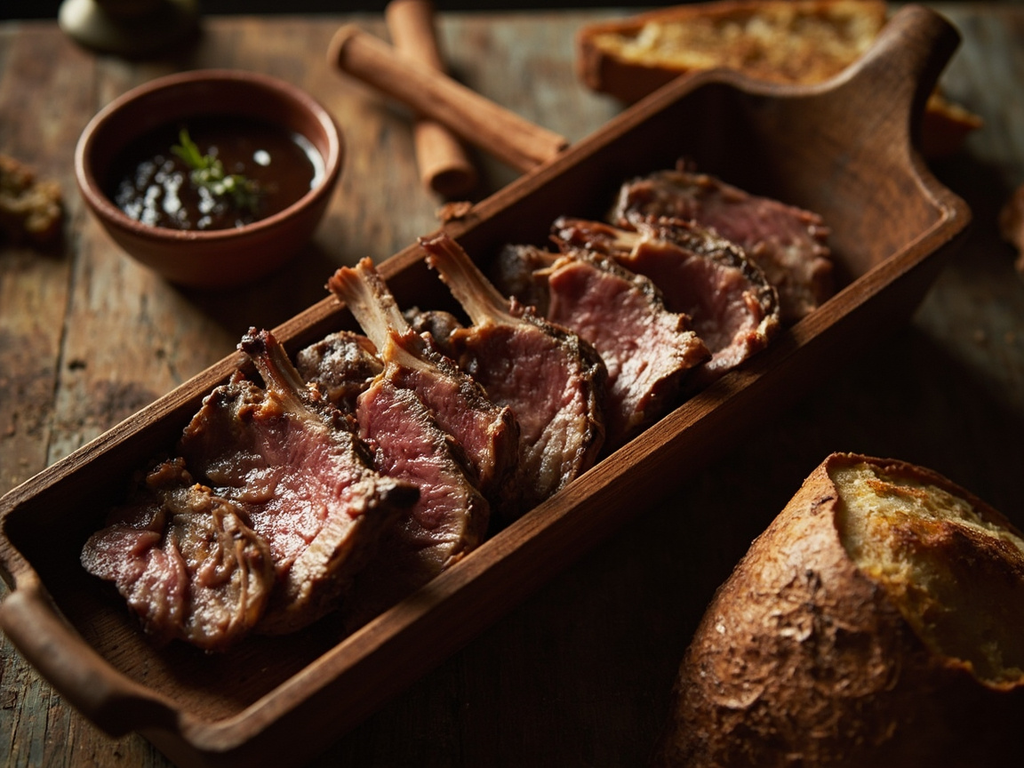
A haunch of roe deer or venison, roasted and served with the famous cameline sauce: a cold coulis of cinnamon, ginger, and vinegar, thickened with toasted breadcrumbs. Sweet-and-sour and deeply spiced, it is the sauce of grand lordly tables.
At the court of my uncle King Mark, when the horn sounded the return from the hunt, no feast was worthy without steaming venison placed on the trencher. I tell you as a knight: you roast the haunch of the stag on the spit, slowly, then bathe it in cameline — that dark, piquant sauce where cinnamon marries vinegar and toasted bread. Dip your meat in it, and you will taste what the brave tasted at the table of Tintagel.
- •Haunch of venison (stag or roe deer) — a fine piece (meat)
- •Lard — as needed (cooking fat)
- •Toasted bread — a few slices (sauce thickener)
- •Vinegar — to taste (acidity)
- •Cinnamon, ginger, cloves — generously (spices)
- •Salt — to taste (seasoning)
Roasted Venison with Cameline Sauce
A haunch of roe deer or venison, roasted and served with the famous cameline sauce: a cold coulis of cinnamon, ginger, and vinegar, thickened with toasted breadcrumbs. Sweet-and-sour and deeply spiced, it is the sauce of grand lordly tables.
Why this dish? Tristan is a high-ranking knight at the court of King Mark of Cornwall, at Tintagel. During great royal feasts, roasted game — the fruit of noble hunting — took center stage on the table, napped with cameline sauce, the most prized sauce of the Middle Ages.
At the court of my uncle King Mark, when the horn sounded the return from the hunt, no feast was worthy without steaming venison placed on the trencher. I tell you as a knight: you roast the haunch of the stag on the spit, slowly, then bathe it in cameline — that dark, piquant sauce where cinnamon marries vinegar and toasted bread. Dip your meat in it, and you will taste what the brave tasted at the table of Tintagel.
Ingredients (period version)
- Haunch of venison (stag or roe deer) — a fine piece (meat)
- Lard — as needed (cooking fat)
- Toasted bread — a few slices (sauce thickener)
- Vinegar — to taste (acidity)
- Cinnamon, ginger, cloves — generously (spices)
- Salt — to taste (seasoning)
Ingredients
- Roast venison or roe deer (or lamb leg as substitute) — 1 kg (meat)
- Oil or butter — 2 tbsp (cooking)
- Rustic toasted bread — 2 slices (thickener)
- Red wine vinegar — 5 tbsp (acidity)
- Ground cinnamon — 1 tsp (master spice)
- Ground ginger — 1/2 tsp (warmth)
- Ground cloves — 1 pinch (aroma)
- Salt — to taste (seasoning)
Method
- Salt the venison and roast it in the oven (approx. 180°C) to your preferred doneness; let rest.
- For the cameline: soak the toasted bread in vinegar and a little water until softened.
- Blend the bread with cinnamon, ginger, cloves, and salt to obtain a smooth, fluid sauce.
- Adjust acidity with vinegar and spice to taste; the sauce is served COLD.
- Slice the meat and nap with cameline, or serve the sauce separately in a bowl.
How it was made : Cameline sauce (from 'cinnamon') is one of the best-documented sauces of the Middle Ages: it was thickened with breadcrumbs, never with cooked flour, and served cold. Game was a prestige meat reserved for the nobility, who alone had the right to hunt.
The contemporary twist : Drizzle the cameline in a swoosh on the plate and scatter a few toasted breadcrumbs for crunch: a medieval sauce that could pass for a bistronomy creation.
Sources : Le Viandier de Taillevent (14th c.) · Le Ménagier de Paris (c. 1393)
Tristan and Iseult · Charactorium