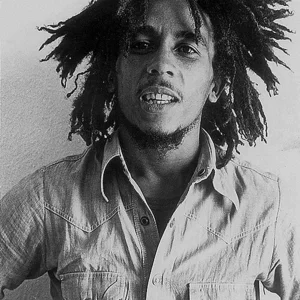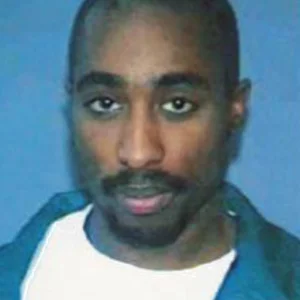

An American rapper, songwriter, and actor, Tupac Shakur is one of the major figures of West Coast hip-hop. His socially conscious lyrics about racial inequality and urban violence left a lasting mark on popular culture. He was shot and killed in Las Vegas in 1996, at the age of 25.
Tupac Shakur(1971 — 1996)
Tupac Shakur
États-Unis
5 min read
Frequently asked questions
Famous Quotes
« Reality is wrong. Dreams are for real.»
Key Facts
- Born on June 16, 1971, in New York (Harlem)
- Released his first solo album 2Pacalypse Now in 1991
- All Eyez on Me, a successful double album, released in 1996
- Shot and killed on September 13, 1996, in Las Vegas
- Over 75 million records sold worldwide, inducted into the Rock and Roll Hall of Fame in 2017
Works & Achievements
Debut solo album, laying the foundations of a social and political rap denouncing poverty and police violence.
Introspective album that topped the sales charts, recorded while Tupac was in prison.
A song that became a classic, a moving tribute to his mother despite their hardships.
Flagship double album on the Death Row label, a huge commercial success of 1990s rap.
Album released under the alias Makaveli shortly after his death, with a dark and prophetic atmosphere.
Posthumous track that became an anthem about racial inequality and the hope for social change.
Tupac's first major film role, revealing his acting talent to critical acclaim.
Anecdotes
The name Tupac comes from Túpac Amaru II, an Indigenous Peruvian leader who rose up against the Spanish in the 18th century. His mother, a Black Panther activist, chose the name to root her son in a history of resistance.
As a teenager, Tupac studied at the Baltimore School for the Arts, where he took classes in theater, dance, and even poetry and ballet. There he recited Shakespeare, far from the image of the street rapper he would later become associated with.
In 1995, Tupac recorded part of his album “Me Against the World” while he was in prison. The album became the number-one seller in the United States while its creator was behind bars, a first in the history of music.
Tupac was a passionate reader: in prison, he devoured works by Machiavelli, Sun Tzu, and history books. His reading of Machiavelli would inspire his alias “Makaveli,” used on his final album.
His death in 1996, following a shooting in Las Vegas, was never solved. The absence of a culprit and the release of numerous posthumous albums fueled rumors for years claiming that he was still alive.
Primary Sources
And even as a crack fiend, mama, you always was a black queen, mama — a tribute to his mother despite her struggles with drugs.
I see no changes, wake up in the morning and I ask myself: is life worth living, should I blast myself? — a bitter reflection on racial inequality.
In it, Tupac explains his vision of “Thug Life,” which he defines as an acronym denouncing the vicious cycle of poverty passed down to the children of poor neighborhoods.
Did you hear about the rose that grew from a crack in the concrete? — a metaphor for resilience born of adversity, written by Tupac as a teenager.
Key Places
New York neighborhood where Tupac was born in 1971, at the heart of an urban America scarred by inequality.
Art school where the teenage Tupac studied theater, dance, and poetry, shaping his artistic sensibility.
City in the San Francisco Bay Area where Tupac settled as a teenager and began his music career.
Capital of the West Coast where Tupac signed with Death Row Records and recorded his greatest hits.
City where Tupac was shot on September 7, 1996, and where he died six days later.
Prison where Tupac was incarcerated in 1995, a period during which his album reached number one on the sales charts.