 flip
flipFestive Mead, Offering to the Gods
Festive Mead, Offering to the Gods
Why this dish? Before battle, the Arverni chief pours a portion to the gods to seek their favor. Mead, the golden drink of honey, is the noble beverage of great occasions—offered to the sky and shared to seal a war oath.
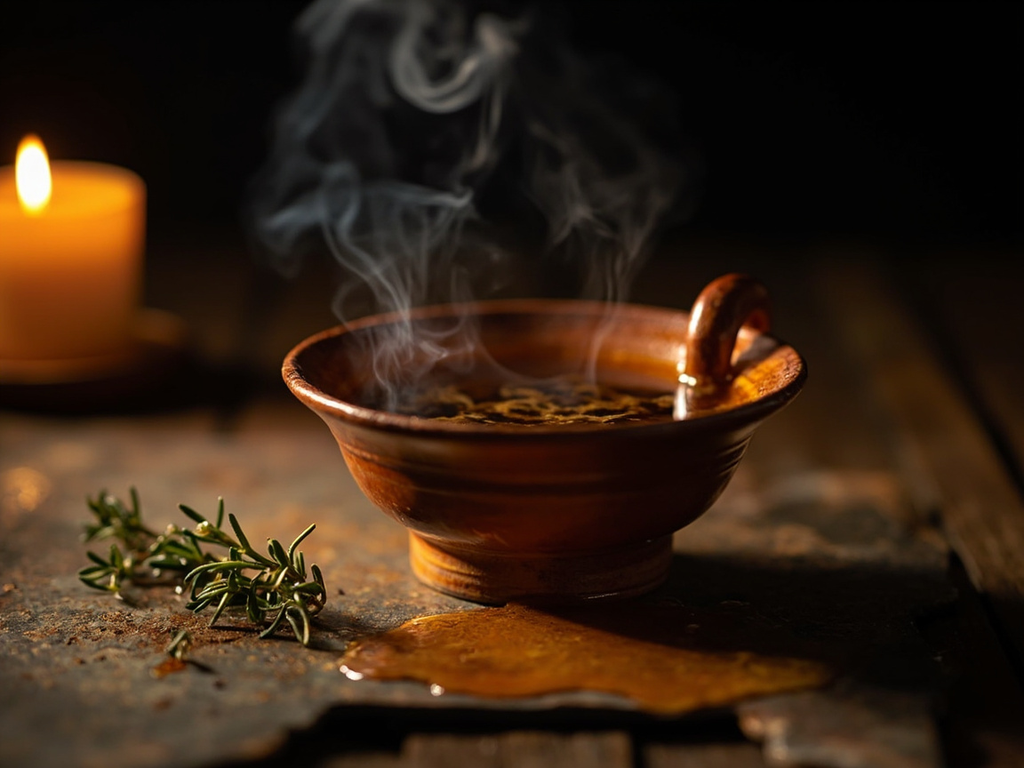
A fermented drink of honey and water, golden and sweet, aged a few weeks. A prestige and ritual beverage, of which a portion was poured to the earth as an offering before drinking.
Before leading my warriors into combat, I first pour the first cup to the earth—for no Arverni drinks before the gods. This mead we draw from the honey of our forests, mixed with pure water and left to ripen until it gains its strength. Inspired by what our fathers did, I do not give you their sacred words, which are not spoken aloud. But drink after me, stranger: may what is sweet to the mouth make our alliance as strong as the golden torque around my neck.
- •Honey — a large part (fermentable sugar)
- •Spring water — three to four parts (base)
- •Scented herbs (thyme, mugwort) — a sprig (flavor (optional))
Festive Mead, Offering to the Gods
A fermented drink of honey and water, golden and sweet, aged a few weeks. A prestige and ritual beverage, of which a portion was poured to the earth as an offering before drinking.
Why this dish? Before battle, the Arverni chief pours a portion to the gods to seek their favor. Mead, the golden drink of honey, is the noble beverage of great occasions—offered to the sky and shared to seal a war oath.
Before leading my warriors into combat, I first pour the first cup to the earth—for no Arverni drinks before the gods. This mead we draw from the honey of our forests, mixed with pure water and left to ripen until it gains its strength. Inspired by what our fathers did, I do not give you their sacred words, which are not spoken aloud. But drink after me, stranger: may what is sweet to the mouth make our alliance as strong as the golden torque around my neck.
Ingredients (period version)
- Honey — a large part (fermentable sugar)
- Spring water — three to four parts (base)
- Scented herbs (thyme, mugwort) — a sprig (flavor (optional))
Ingredients
- Honey — 300 g per liter of water (fermentable sugar)
- Water — 1 liter (base)
- Yeast (mead or wine yeast) — per dosage (fermentation)
- Thyme or mugwort — 1 sprig (flavor (optional))
Method
- Dissolve the honey in warm (not boiling) water until fully dissolved; add herbs if desired.
- Pour into a clean container, add yeast, and close with an airlock (or a tight cloth).
- Ferment away from light for 3 to 6 weeks, until bubbling subsides.
- Rack gently to separate sediment, then age a few more weeks to mellow.
- Serve chilled in small cups, after—according to the evoked rite—symbolically pouring a first portion. (For adults only.)
How it was made : Mead (honey wine) is attested among many ancient peoples, including the Celts, for whom honey was the only sweetener. Libations—pouring a portion of drink to the gods before drinking—were a widespread ritual practice. Out of respect, this is an inspired evocation, not a reproduction of a specific religious rite.
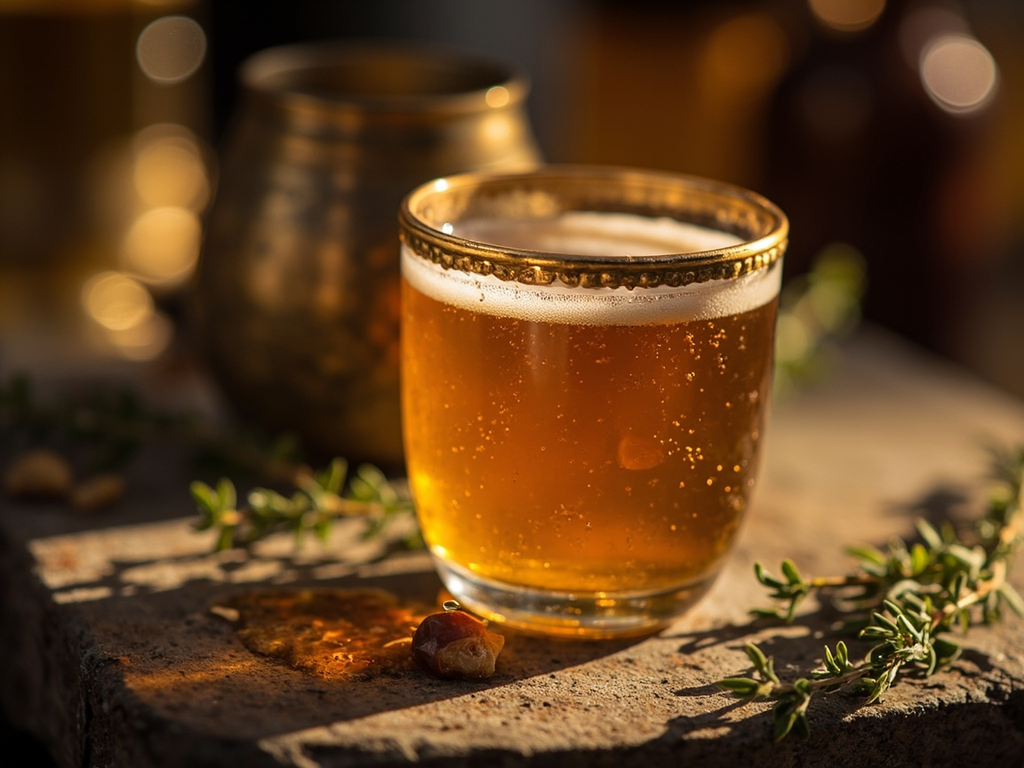
The contemporary twist : Served in a golden cup with a honey rim, named 'the gods' share' on the meal slate.
Sources : Pytheas and ancient authors on Celtic fermented drinks · Pliny the Elder, Natural History (use of honey)
Vercingetorix · Charactorium