 flip
flipOinomeli, honeyed wine for libations
Oinomeli, honeyed wine for libations
Why this dish? Perseus owed his victory over Medusa solely to the gods: Athena lent him her mirror-shield, Hermes his winged sandals and harpe. Before every undertaking and at the threshold of every feast, the hero poured a libation and mixed his wine with honey to thank his Olympian protectors. This drink is his gesture of gratitude.
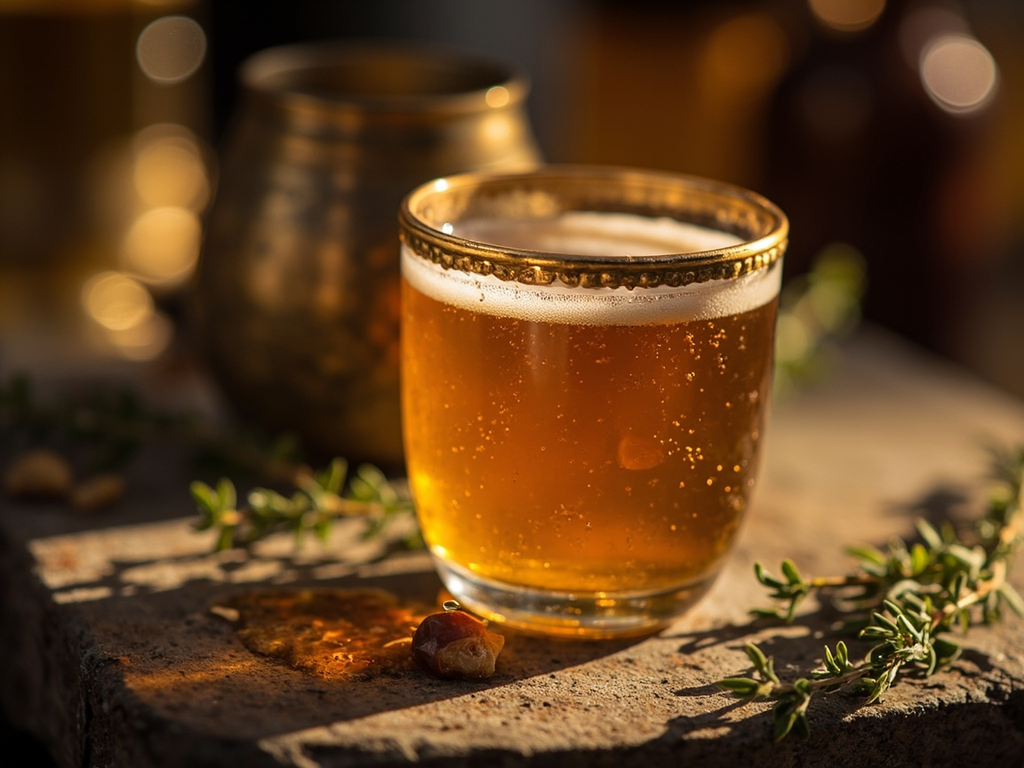
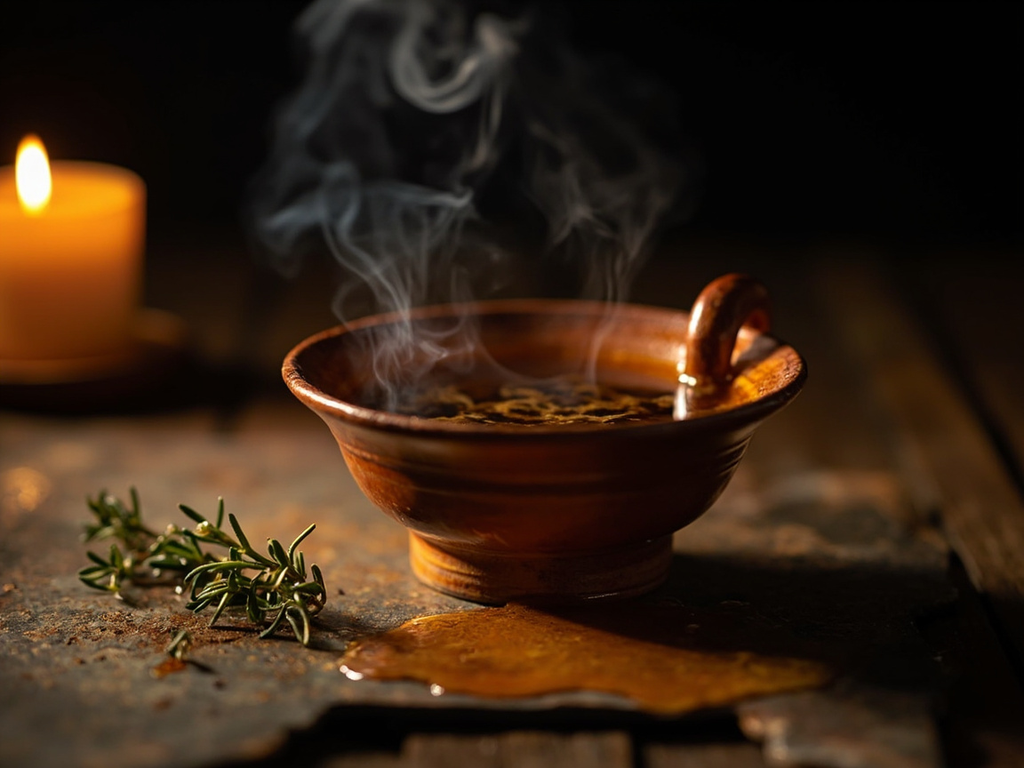
A sweet wine softened with honey and scented with herbs, warmed then diluted with water according to Greek custom. A few drops are first poured on the ground for the gods, before drinking. A drink of gratitude, never drunk neat.
Before raising the cup to my lips, stranger, I always spill a few drops on the ground—for a man who forgets the gods who armed him is an ingrate doomed to fall. Here is how I do it: I warm the wine, melt the thyme honey into it until it sings, then cut it with water, for drinking neat is the way of barbarians, not Greeks. To Athena, who held out her shield polished like a mirror; to Hermes, who shod my feet with the wind. Drink now, and may your path be guarded.
- •Sweet wine — one measure (base)
- •Thyme honey — to taste (sweetener)
- •Water — two to three measures (dilution)
- •Thyme or cinnamon (cassia) — a hint (herb)
Oinomeli, honeyed wine for libations
A sweet wine softened with honey and scented with herbs, warmed then diluted with water according to Greek custom. A few drops are first poured on the ground for the gods, before drinking. A drink of gratitude, never drunk neat.
Why this dish? Perseus owed his victory over Medusa solely to the gods: Athena lent him her mirror-shield, Hermes his winged sandals and harpe. Before every undertaking and at the threshold of every feast, the hero poured a libation and mixed his wine with honey to thank his Olympian protectors. This drink is his gesture of gratitude.
Before raising the cup to my lips, stranger, I always spill a few drops on the ground—for a man who forgets the gods who armed him is an ingrate doomed to fall. Here is how I do it: I warm the wine, melt the thyme honey into it until it sings, then cut it with water, for drinking neat is the way of barbarians, not Greeks. To Athena, who held out her shield polished like a mirror; to Hermes, who shod my feet with the wind. Drink now, and may your path be guarded.
Ingredients (period version)
- Sweet wine — one measure (base)
- Thyme honey — to taste (sweetener)
- Water — two to three measures (dilution)
- Thyme or cinnamon (cassia) — a hint (herb)
Ingredients
- Sweet red wine or dessert wine (or grape juice for non-alcoholic version) — 250 ml (base)
- Thyme honey — 2 tbsp (sweetener)
- Water — 250 to 350 ml (dilution)
- Fresh thyme or cinnamon stick — 1 sprig or 1 stick (herb)
Method
- Gently heat the wine (or grape juice) without boiling.
- Add the honey and stir until fully dissolved.
- Add the thyme sprig or cinnamon stick and let infuse off the heat for 5 minutes.
- Dilute with warm water to taste (the Greeks greatly extended their wine).
- First pour a few drops as a symbolic offering, then serve warm in cups.
How it was made : The Greeks never drank wine neat, considered a barbarian custom: they diluted it with water in a large vessel, the krater. Honeyed wine (oinomeli) and libations poured to the gods before drinking were daily gestures of the symposion.
The contemporary twist : For a family and school-friendly version, replace the wine with warm grape juice with honey and thyme: a “heroes’ wine” everyone can share.
Sources : Andrew Dalby, Siren Feasts (1996) · Athenaeus of Naucratis, Deipnosophistae (on diluted wine and symposion)
Perseus · Charactorium