 flip
flipKuchikami no Ki — Rice Sake of the Spirits
Kuchikami no Ki — Rice Sake of the Spirits
Why this dish? Himiko ruled through the kido, the way of the spirits — a shamanic magic. Rice sake was the central offering to the kami: it was presented to the spirits, then shared during naorai to commune with them. This drink was the very instrument of the shaman-queen's spiritual power.
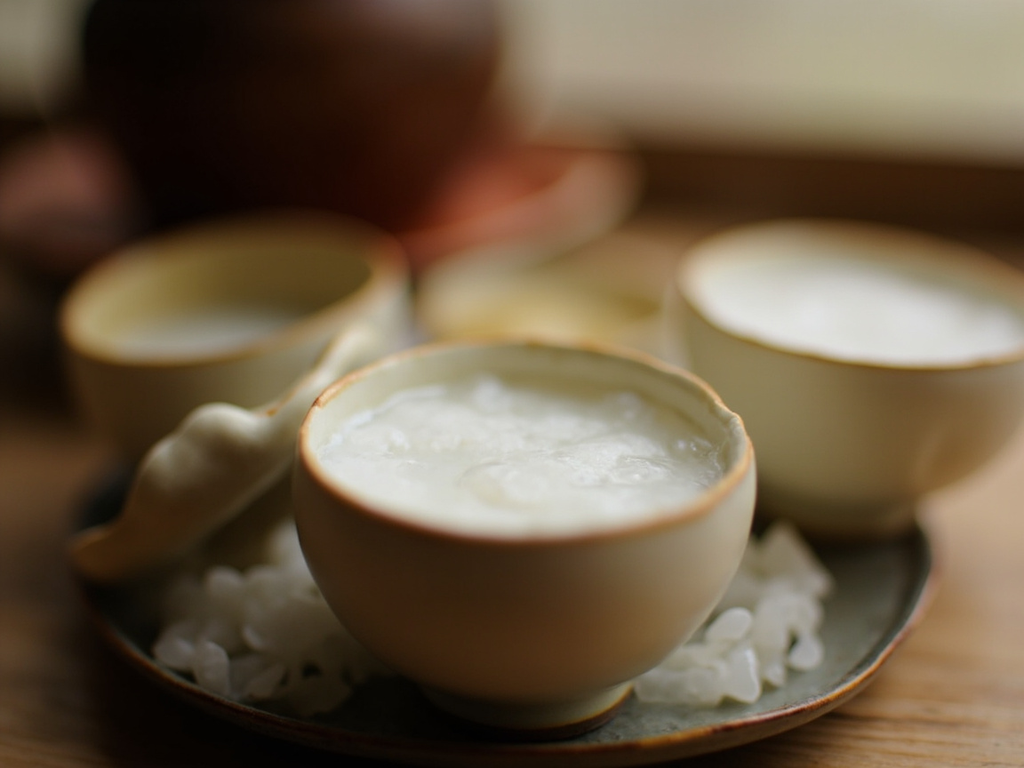
A fermented rice drink, cloudy and sweet-tart, slightly effervescent. Ancestor of sake, kuchikami no sake ("chewed sake") was traditionally started with saliva — here evoked with a modern, safe method. Milky, tangy taste, mildly sweet.
Know that this drink is not made to quench the thirst of ordinary men. The maidens devoted to the spirits prepared the rice according to ancient rites, then we let it ripen in the jar until it bubbled on its own, as if animated by an invisible breath. That breath is divine. I present it first to the kami; only then do we drink it together, and then the boundaries between your world and theirs fade away. Drink with respect.
- •Steamed rice — a large bowl (fermentable sugar)
- •Natural ferment (ancient starter rite) — according to tradition (fermentation trigger)
- •Pure spring water — as needed (fermentation medium)
Kuchikami no Ki — Rice Sake of the Spirits
A fermented rice drink, cloudy and sweet-tart, slightly effervescent. Ancestor of sake, kuchikami no sake ("chewed sake") was traditionally started with saliva — here evoked with a modern, safe method. Milky, tangy taste, mildly sweet.
Why this dish? Himiko ruled through the kido, the way of the spirits — a shamanic magic. Rice sake was the central offering to the kami: it was presented to the spirits, then shared during naorai to commune with them. This drink was the very instrument of the shaman-queen's spiritual power.
Know that this drink is not made to quench the thirst of ordinary men. The maidens devoted to the spirits prepared the rice according to ancient rites, then we let it ripen in the jar until it bubbled on its own, as if animated by an invisible breath. That breath is divine. I present it first to the kami; only then do we drink it together, and then the boundaries between your world and theirs fade away. Drink with respect.
Ingredients (period version)
- Steamed rice — a large bowl (fermentable sugar)
- Natural ferment (ancient starter rite) — according to tradition (fermentation trigger)
- Pure spring water — as needed (fermentation medium)
Ingredients
- Cooked short-grain rice (or glutinous rice) — 300 g cooked (fermentable sugar)
- Kōji (rice inoculated with Aspergillus oryzae, available at Japanese grocery stores) — 100 g (saccharification (replaces saliva starter))
- Spring water — 500 ml (fermentation medium)
- Yeast (optional, or let the wild fermentation of kōji proceed) — 1 pinch (mild alcoholic fermentation)
Method
- Steam the rice and let it cool to body temperature (never hot, as that would kill the ferments).
- Mix the warm rice with the crumbled kōji and spring water in a clean, scalded jar.
- Cover with a cloth and let ferment at room temperature (20-25°C) for 3 to 5 days, stirring each day with a clean spoon.
- The mixture becomes cloudy, sweet then tangy and slightly effervescent: this is fermented amazake, a mild relative of sake.
- Strain if desired and serve chilled, in small ceramic cups. NB: for a non-alcoholic version, stop early (sweet amazake); prolonged fermentation produces alcohol — for adults only.
How it was made : The oldest Japanese sake was kuchikami no sake: people chewed cooked rice, whose salivary enzymes converted starch to sugar, before letting it ferment in a jar. This task was often entrusted to young priestesses, intimately linking sake to the sacred and to female shamanic power — like that of Himiko. The modern kōji method is a hygienic, safe adaptation of this principle.
The contemporary twist : Served chilled as a non-alcoholic amazake in a magatama-shaped cup, garnished with a grating of fresh ginger — a "spirit rice milk" that young and old can share.
Sources : Ishige, Naomichi — The History and Culture of Japanese Food (Routledge, 2001) — origins of sake · Wei Zhi (Gishi Wajinden), 3rd century — mention of the Wa people's taste for fermented drinks
Himiko · Charactorium