 flip
flipSpelt Porridge with Bacon and Herbs
Spelt Porridge with Bacon and Herbs
Why this dish? Even a chief who unites the Gaulish tribes begins his days like all his people: with the cereal porridge that nourishes warriors before the march. It is the belly of the Arverni armies encamped at Gergovia.
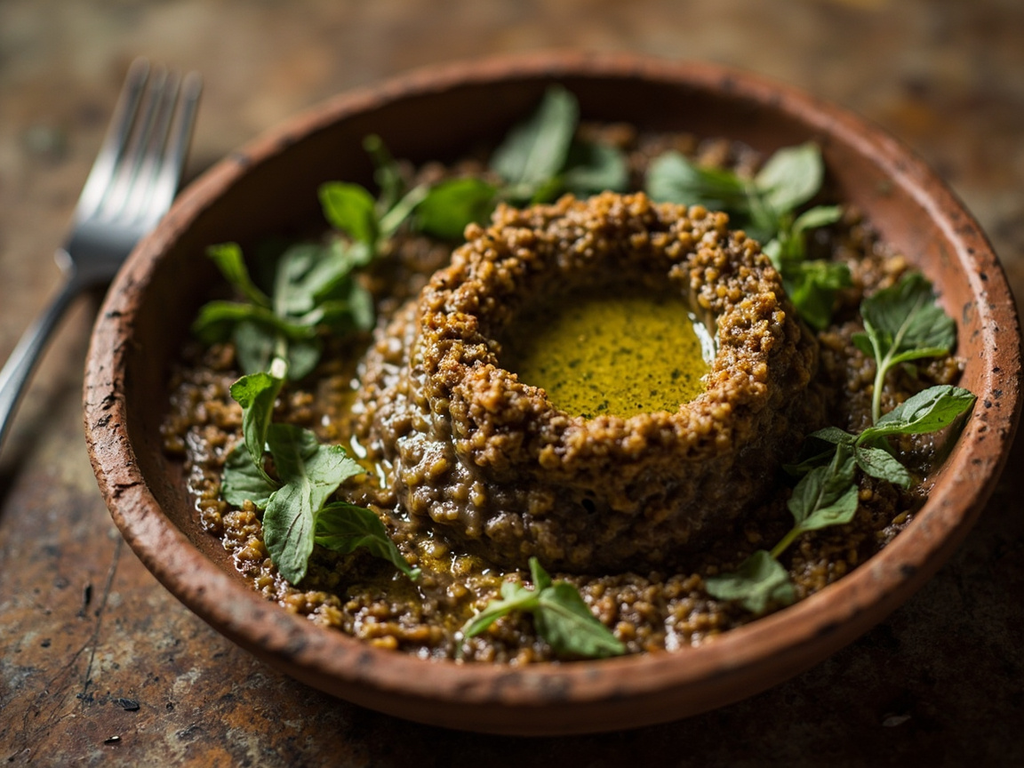
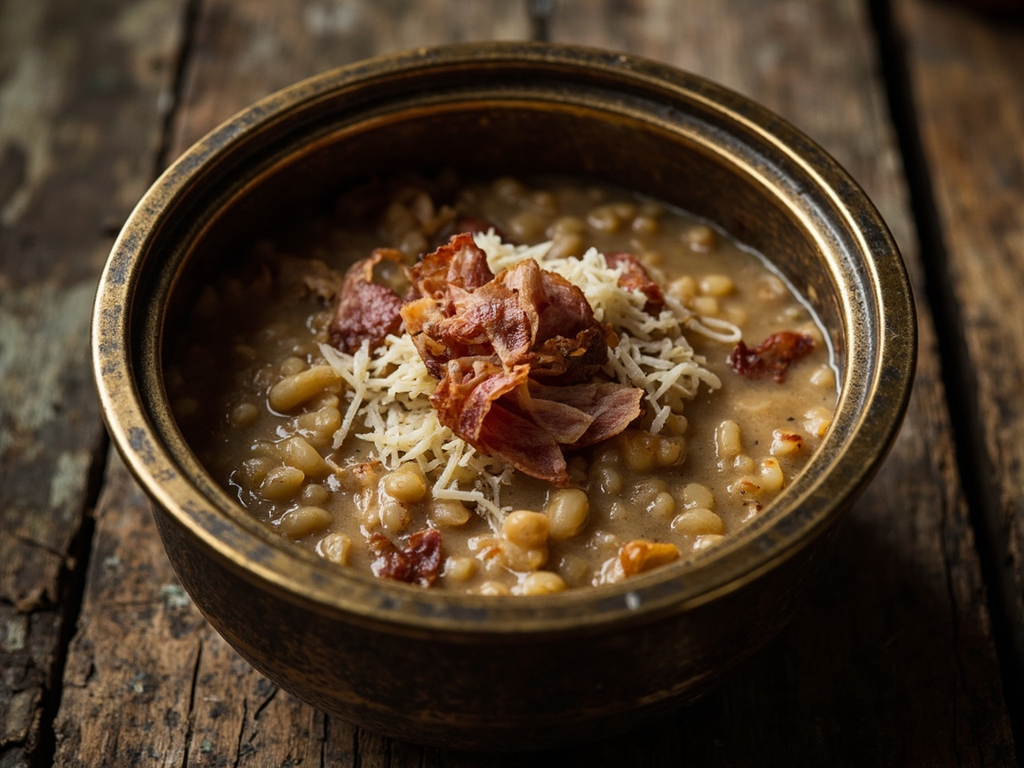
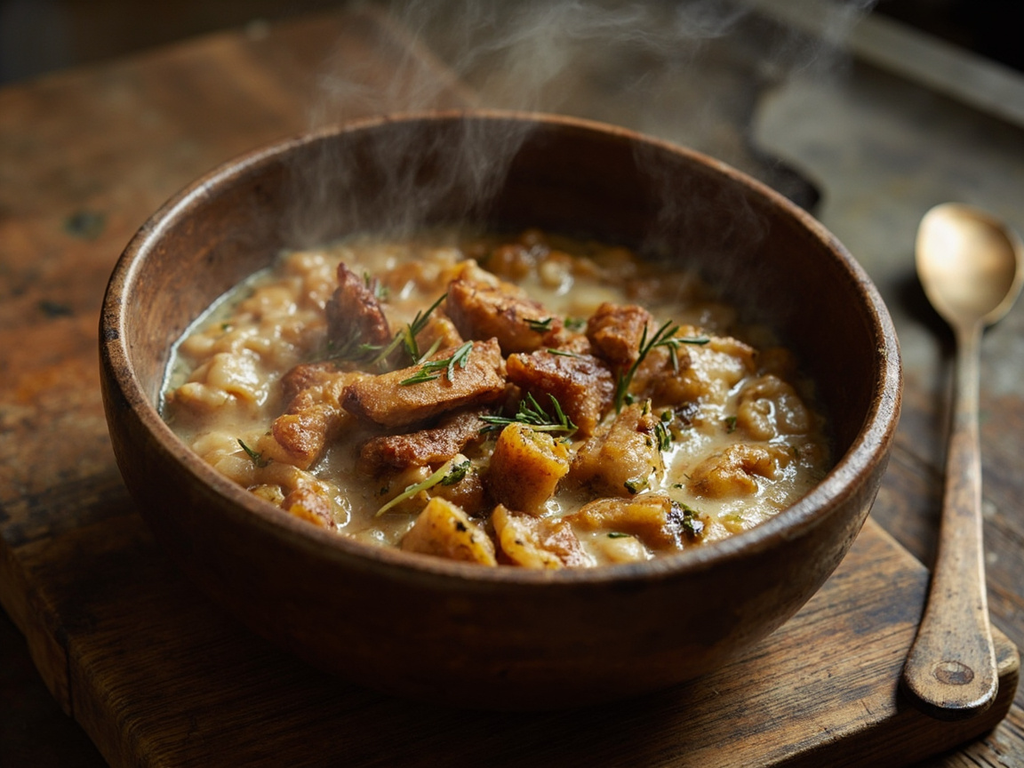
A nourishing porridge of spelt (or barley) slowly cooked in broth, enriched with melted bacon, onion, and wild herbs. The everyday dish, simple, warm, and fortifying, that keeps you going before battle.
Before day breaks over the camp, this is what they serve you, stranger, in a wooden bowl: the porridge of our grains, thickened just right, with a piece of melted bacon in it. Expect no luxury here—a warrior marching on Gergovia wants warmth in his belly, not frills. My mother would throw in onion and herbs from our meadows, and believe me, a man who has eaten his porridge stands strong until evening. It is the grain that holds Gaul together, as much as iron.
- •Spelt (or hulled barley) — two handfuls per mouth (base cereal)
- •Salted pork belly — a good piece (fat and flavor)
- •Onion — as desired (aromatic)
- •Wild herbs (lovage, savory, ramsons) — a good pinch (flavor)
- •Salt — to taste (seasoning)
Spelt Porridge with Bacon and Herbs
A nourishing porridge of spelt (or barley) slowly cooked in broth, enriched with melted bacon, onion, and wild herbs. The everyday dish, simple, warm, and fortifying, that keeps you going before battle.
Why this dish? Even a chief who unites the Gaulish tribes begins his days like all his people: with the cereal porridge that nourishes warriors before the march. It is the belly of the Arverni armies encamped at Gergovia.
Before day breaks over the camp, this is what they serve you, stranger, in a wooden bowl: the porridge of our grains, thickened just right, with a piece of melted bacon in it. Expect no luxury here—a warrior marching on Gergovia wants warmth in his belly, not frills. My mother would throw in onion and herbs from our meadows, and believe me, a man who has eaten his porridge stands strong until evening. It is the grain that holds Gaul together, as much as iron.
Ingredients (period version)
- Spelt (or hulled barley) — two handfuls per mouth (base cereal)
- Salted pork belly — a good piece (fat and flavor)
- Onion — as desired (aromatic)
- Wild herbs (lovage, savory, ramsons) — a good pinch (flavor)
- Salt — to taste (seasoning)
Ingredients
- Hulled spelt (or pearl barley) — 200 g (base cereal)
- Smoked lardons — 120 g (fat and flavor)
- Onion — 1 large (aromatic)
- Broth (or water) — 1 liter (cooking liquid)
- Savory and lovage (or celery stalk) — 1 tbsp chopped (flavor)
- Salt — to taste (seasoning)
Method
- In a pot, dry-render the lardons until golden and the fat is released.
- Add the chopped onion and let it soften for a few minutes.
- Pour in the spelt, stir to coat, then add the broth.
- Simmer over low heat for 40–50 minutes, stirring occasionally, until thick and creamy.
- Stir in the herbs at the end, season with salt, and serve very hot in a bowl.
How it was made : Gaulish diet relied on cereals (spelt, barley, millet) consumed as porridge (puls) far more often than bread. Salted pork, the pride of the Gauls, provided the fat that enriched these daily preparations. Cooking was done in bronze cauldrons suspended over the hearth.
The contemporary twist : Serve it risotto-style, creamy, finished with a shaving of aged Cantal cheese—a nod to Auvergne, the land of the Arverni.
Sources : Strabo, Geography, IV (Gaulish diet) · Posidonius, quoted by Athenaeus, The Deipnosophists, IV
Vercingetorix · Charactorium