 flip
flipFrench Toast with Dark Bread
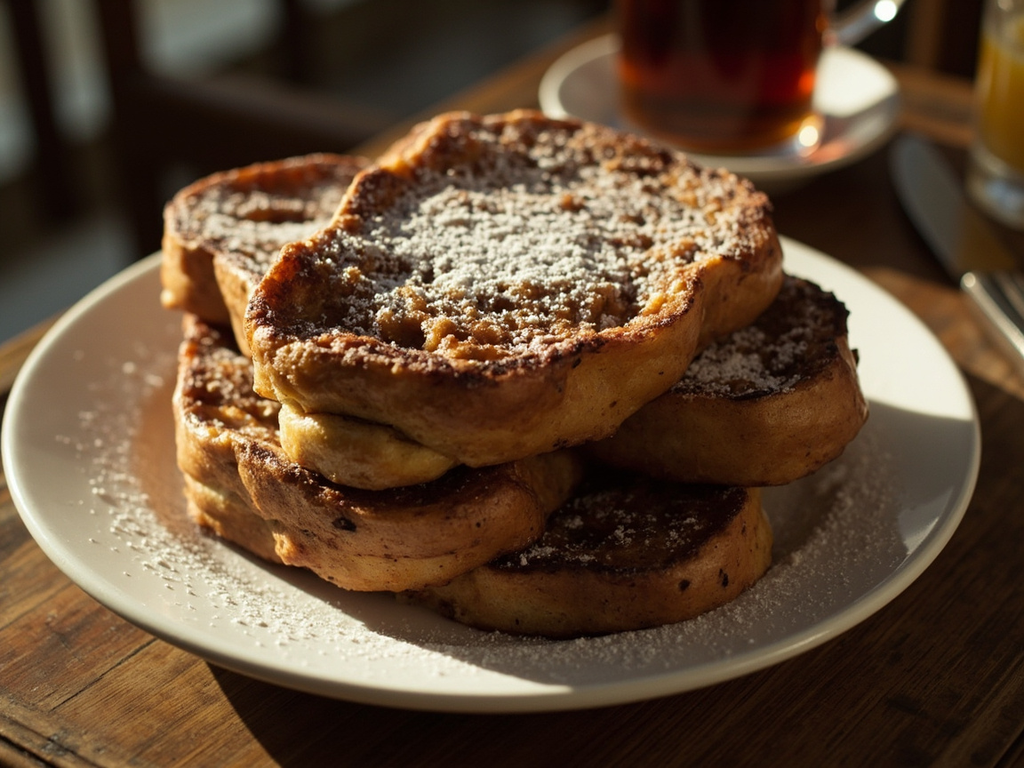
French Toast with Dark Bread
Why this dish? Dark bread, rationed by ticket, is too precious to waste a crumb. When it goes stale, it is revived as a Sunday treat — the kind of improvised little luxury that marks, in a life of deprivation like Vercors's, the passage from an ordinary day to a festive one.
Stale dark bread soaked in a little egg and milk, pan-fried golden and dusted with the last pinch of sugar. The dessert of lean times, where nothing is thrown away and the slightest sweetness is celebrated.
We threw nothing away, especially not bread, which we paid for with a ticket and an endless queue at the baker's. On Sundays, I would gather the hard slices from the week, let them drink up a little beaten egg and the bit of milk the dairy woman allowed me, then fry them golden in a dab of fat. A pinch of sugar on top — the last from the packet — and there was the feast. My friends claimed that nothing in all Paris was better than those golden slices. We laughed, and we knew well that it was hunger that made them so good.
- •Stale dark bread — a few slices (base, recovery)
- •Egg — one, if the ticket allows (golden binder)
- •Milk — a splash (soaking)
- •Sugar — a precious pinch (sweetness)
- •Fat — a dab (cooking)
French Toast with Dark Bread
Stale dark bread soaked in a little egg and milk, pan-fried golden and dusted with the last pinch of sugar. The dessert of lean times, where nothing is thrown away and the slightest sweetness is celebrated.
Why this dish? Dark bread, rationed by ticket, is too precious to waste a crumb. When it goes stale, it is revived as a Sunday treat — the kind of improvised little luxury that marks, in a life of deprivation like Vercors's, the passage from an ordinary day to a festive one.
We threw nothing away, especially not bread, which we paid for with a ticket and an endless queue at the baker's. On Sundays, I would gather the hard slices from the week, let them drink up a little beaten egg and the bit of milk the dairy woman allowed me, then fry them golden in a dab of fat. A pinch of sugar on top — the last from the packet — and there was the feast. My friends claimed that nothing in all Paris was better than those golden slices. We laughed, and we knew well that it was hunger that made them so good.
Ingredients (period version)
- Stale dark bread — a few slices (base, recovery)
- Egg — one, if the ticket allows (golden binder)
- Milk — a splash (soaking)
- Sugar — a precious pinch (sweetness)
- Fat — a dab (cooking)
Ingredients
- Stale rye or whole-wheat bread — 4 slices (base)
- Egg — 2 (binder)
- Milk — 200 ml (soaking)
- Sugar — 2 tbsp (sweetness)
- Butter — 20 g (golden cooking)
- Cinnamon or zest (optional) — 1 pinch (flavor)
Method
- Beat the eggs with the milk and one spoonful of sugar (and cinnamon if using).
- Dip each slice of dark bread in the mixture for 1 to 2 minutes per side, until soaked but not falling apart.
- Melt the butter in a pan over medium heat.
- Fry the slices for 2 to 3 minutes on each side until golden brown.
- Sprinkle with the remaining sugar and serve immediately, very hot.
How it was made : French toast — literally bread that would have been 'lost' if thrown away — is a very old anti-waste recipe, which became precious under the Occupation when bread was rationed and often made from poor flour. The pinch of sugar, a rare commodity, made it a true festive dessert.
The contemporary twist : With a sourdough rye bread, a dash of orange blossom water, and a drizzle of honey, this 'lean times' French toast holds its own against any brunch.
Vercors · Charactorium