Vitellius(15 — 69)
Vitellius
Rome antique
7 min read
Aulus Vitellius was the eighth Roman emperor, proclaimed by the legions of Germania in 69 AD. His reign lasted only a few months before he was overthrown and killed by the supporters of Vespasian. He embodies the instability of the Year of the Four Emperors.
Frequently asked questions
Key Facts
- Proclaimed emperor by the legions of Lower and Upper Germania in January 69 AD
- His troops defeated those of Otho at the First Battle of Bedriacum (April 69), opening his path to Rome
- Vespasian was proclaimed emperor by the legions of the East in the summer of 69, triggering a new civil war
- Defeated at the Second Battle of Bedriacum (October 69), he was killed in Rome in December 69 AD
- Third of the four emperors of the year 69, after Galba and Otho, before Vespasian
Works & Achievements
Backed by the powerful armies of the Rhine, Vitellius became one of the major claimants in the civil war, illustrating the decisive role of the legions in choosing emperors.
Won by his generals Caecina and Valens against Otho, this battle opened his road to power and his recognition by the Senate.
Vitellius officially took hold of imperial power, accompanied by lavish festivities and banquets that marked his short reign.
He disbanded the Praetorian cohorts loyal to Otho and replaced them with soldiers from his Germanic legions, thus securing a devoted personal guard.
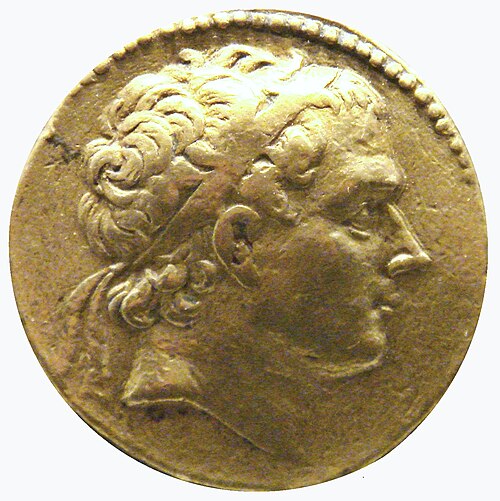
Gold and silver coins were struck in his name to establish his legitimacy and spread his image throughout the Empire.
Anecdotes
Vitellius had never sought power: it was the legions of Germania who proclaimed him emperor in January 69, just as he had arrived to take command of them. His father, Lucius Vitellius, had nonetheless been consul three times, one of the highest offices in Rome.
The historian Suetonius recounts that Vitellius was a glutton of legendary proportions: he reportedly held four banquets a day. His most famous dish, nicknamed “the Shield of Minerva,” combined the livers of rare fish, the brains of pheasants and peacocks, the tongues of flamingos and the milt of lampreys—ingredients brought from the four corners of the Empire.
After the bloody Battle of Bedriacum, Vitellius visited the field strewn with unburied Roman corpses. To his companions, sickened by the stench, he is said to have remarked coldly that a dead enemy smelled good, and a dead fellow citizen even better—a phrase that has endured as the symbol of his indifferent cruelty.
A skilled courtier, Vitellius had managed to please four emperors in succession: he shared chariot races with Caligula, games of dice with Claudius and a passion for music with Nero. He adapted to each man's tastes to climb the hierarchy.
His end was terrible: in December 69, Vespasian's soldiers dragged him half-naked through the streets of Rome, tortured him near the Gemonian Stairs where the bodies of the condemned were displayed, then threw his corpse into the Tiber. His reign had lasted only eight months.
Primary Sources
He was a slave above all to two vices, gluttony and cruelty. He always ate three meals a day, sometimes four: breakfast, dinner, supper, and a final revel, and he managed them all by making himself vomit.
He was dragged, his hands bound behind his back, his clothing in tatters, across the Forum, amid the jeers of the crowd, without a single tear to soften the disgrace of his end.
Gazing upon the battlefield of Bedriacum forty days after the fight, amid the mutilated bodies and the earth stained with blood, Vitellius did not turn his eyes away in horror.
Proclaimed by the armies of Germania, he owed his rise solely to the favor of the soldiers and not to his own merits; thus his power rested on a fragile foundation.
Key Places
Capital of Germania Inferior where Vitellius was proclaimed emperor by his legions in January 69. The starting point of his march on Rome.
A settlement on the Po plain, near Cremona, the scene of the two decisive battles of the Year of the Four Emperors. The first gave power to Vitellius, the second took it away from him.
A city in northern Italy near which Vitellius's army was crushed by the Flavians in October 69. The city was then sacked and burned.
A great city of Gaul through which Vitellius passed during his advance toward Italy, receiving the homage of the cities and the allegiance of the troops.
Capital of the Empire where Vitellius reigned briefly, then was captured, tortured near the Gemonian Stairs and killed in December 69; his body was thrown into the Tiber.