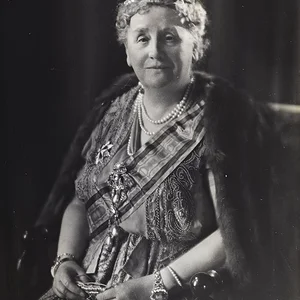

Queen of the Netherlands from 1890 to 1948, Wilhelmine embodied the national resistance during the Nazi occupation. Taking refuge in London, she led the government in exile and kept the morale of the Dutch people alive through her radio broadcasts.
Wilhelmine(1880 — 1962)
Wilhelmine of the Netherlands
Royaume des Pays-Bas
8 min read
Frequently asked questions
Famous Quotes
« I have never doubted for a single moment that we would emerge victorious from this war.»
Key Facts
- 1890: ascends to the throne at age 10 following the death of her father William III
- 1940: flees the occupied Netherlands and establishes a government in exile in London
- 1940–1945: broadcasts speeches on Radio Oranje to support the Dutch resistance
- 1948: abdicates in favor of her daughter Juliana after 58 years of reign
- Longest reign in the history of the Netherlands (1890–1948)
Works & Achievements
Broadcast weekly on the BBC, these Dutch-language speeches kept up the morale of the occupied people and asserted the legitimacy of the government in exile. They stand as one of the most remarkable examples of radio used as a tool of national resistance.
Wilhelmina coordinated the diplomatic and military efforts of the free Netherlands, maintaining relations with Allied governments and supporting the domestic resistance. Her role went far beyond that of a symbolic figurehead — she became a genuine strategic actor within the Allied coalition.
Upon returning to the Netherlands, Wilhelmina supported the early years of postwar reconstruction, backed the prosecution of collaborators, and worked toward restoring democratic institutions before her voluntary abdication.
Written after her abdication, these memoirs trace 58 years of reign and offer a rare account of exile, resistance, and a vision of modern constitutional monarchy committed to the defense of freedom.
Anecdotes
On **May 13, 1940**, three days after the German invasion of the Netherlands, Wilhelmine boarded a British destroyer bound for England. She had hoped to reach Flushing to rally her troops, but the military situation had become desperate. She settled in London, from where she would lead the Dutch resistance until the liberation.
From London, Wilhelmine addressed her people every week on Radio Oranje, broadcast by the BBC. Her speeches, often beginning with “Dutchmen!”, were secretly picked up by thousands of compatriots who risked their lives to hear their queen. Her voice became a symbol of hope for a people living under occupation.
Winston Churchill is credited with the famous remark about the heads of state in exile in London: “The only real man among them is that woman.” Wilhelmine was indeed known for her resolute and uncompromising character — she refused any accommodation with the Nazi occupier and urged her compatriots to resist to the last.
In **1948**, after **58 years** on the throne, Wilhelmine abdicated in favour of her daughter Juliana, citing exhaustion and age. It was the first voluntary abdication by a Dutch monarch. She retired to Het Loo Palace in Apeldoorn, where she lived simply, devoting her final years to gardening and painting.
Wilhelmine became Queen of the Netherlands at just ten years old, following the death of her father **William III** in **1890**. Too young to reign alone, she was placed under the regency of her mother Emma until she came of age in **1898**. Her remarkable longevity on the throne — **58 years** — makes her one of the longest-reigning monarchs in European history.
Primary Sources
People of the Netherlands! We are living through dark hours, but I am with you in thought and in heart. Keep your courage and your faith in our shared victory.
I lived through those years of exile as a wrenching ordeal, separated from my people yet bound to them by a shared determination to resist and to rise again in freedom.
I declare that I have never stopped believing in the final victory of right over might. I will continue to defend the cause of my people from abroad.
At last I set foot again on the soil of my homeland after long years of absence. My people have suffered, but they have resisted with exemplary dignity and courage. Together we will rebuild.
Key Places
Wilhelmine's main royal residence, this 17th-century baroque palace was her favourite home. After her abdication in 1948, she retired there and lived until her death in 1962.
The political capital of the Netherlands and Wilhelmine's birthplace in 1880, The Hague is home to Noordeinde Palace, the queen's official working residence during her years of reign.
The city of exile for Wilhelmine and her government from May 1940 to 1945. It was from the BBC studios in London that she broadcast her weekly speeches on Radio Oranje to occupied Netherlands.
The national capital where Wilhelmine's official coronation was held in 1898 and where the great celebrations of national liberation took place in May 1945.
The city bombed and largely destroyed by the Luftwaffe on 14 May 1940, forcing the Dutch surrender. This devastating bombardment hastened Wilhelmine's decision to go into exile and continue the fight from abroad.
Typical Objects

From the BBC's London studios, Wilhelmine used a microphone to broadcast her weekly speeches on Radio Oranje. These clandestine broadcasts represented a vital link between the queen in exile and her occupied people.

The Dutch crown, symbol of the Orange monarchy, was brought to London during the exile so it would not fall into Nazi hands. Keeping it outside the occupied territory symbolized the legitimacy of the government in exile.

Thousands of Dutch people risked arrest to listen to Radio Oranje on a clandestine receiver. These sets represented the fragile but essential link with the queen in exile and the truth about the war.

Wilhelmine and her government in exile exchanged encrypted telegrams with the domestic resistance networks. These documents allowed clandestine operations to be coordinated without the occupiers being able to decipher them.

Wilhelmine was a passionate amateur painter who practiced watercolor and oil painting throughout her life. After her abdication, she devoted much of her time to this art at her retreat in Het Loo.

Discreetly displaying the national colors or the dynastic orange was an act of resistance in occupied Netherlands. Wilhelmine made it the central symbol of her fight, broadcast from London over the airwaves.
School Curriculum
Vocabulary & Tags
Key Vocabulary
Daily Life
Morning
Wilhelmine rose early and began her day with prayer, true to her deep Protestant convictions. Even in exile in London, she kept a rigorous routine: reading diplomatic dispatches, reviewing the Allied press, and holding a morning meeting with members of her government-in-exile.
Afternoon
Her afternoons were devoted to diplomatic audiences and working meetings with the exiled Dutch ministers. She also prepared her radio broadcasts, which she wrote herself with great care, weighing every word to reach her compatriots while accounting for the constraints of clandestine transmission.
Evening
In the evenings, Wilhelmine would share a frugal meal with close companions or colleagues. She read widely — history, theology, politics — and sometimes spent her evenings painting, a passion cultivated since childhood and a genuine escape during the years of exile.
Food
Wilhelmine was known for her temperance at the table, preferring simple, unindulgent food, in stark contrast to the splendor expected of a sovereign. During her London exile, subject to British rationing restrictions, she insisted on receiving no preferential treatment compared to her hosts.
Clothing
Wilhelmine frequently wore sober, practical clothing, conspicuously rejecting sartorial luxury. She was often photographed in a plain coat or near-military attire during her travels. In her later years, she was perfectly happy to wear ordinary gardening clothes at her retreat at Het Loo.
Housing
Her principal residence was the Palace of Het Loo in Apeldoorn, a vast baroque château surrounded by parkland. During her exile (1940–1945), she lived in homes made available by the British government, including Stubbings House in Berkshire, with comfort decidedly modest relative to her rank — a way of life she herself championed.
Historical Timeline
Period Vocabulary
Liens externes & ressources
Références
Œuvres
Radio Oranje — discours radiodiffusés depuis Londres
1940-1945
Direction du gouvernement néerlandais en exil à Londres
1940-1945
Supervision de la reconstruction nationale et de l'épuration
1945-1948
Eenzaam maar niet alleen (Seule mais pas isolée) — Mémoires
1959