 flip
flipKelewele — Spicy Ginger Plantain Cubes
Kelewele — Spicy Ginger Plantain Cubes
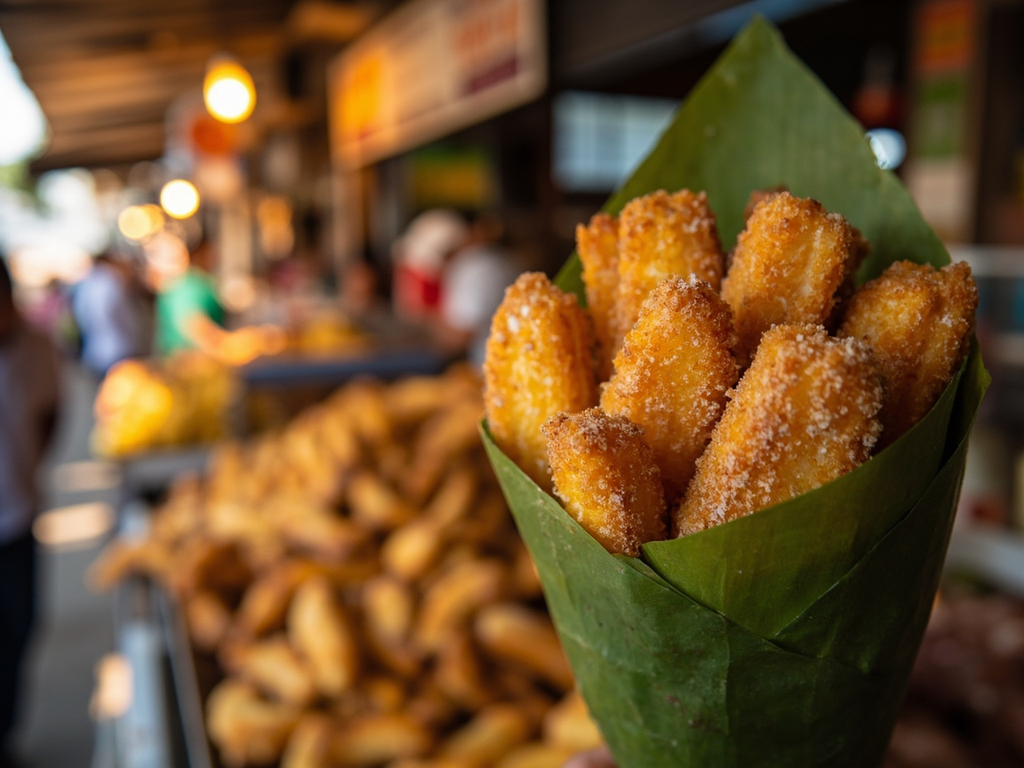
Why this dish? Plantain features in her known diet. On the markets of Kumasi she walked, these fried, spiced ripe plantain cubes were—and remain—the hot snack bought in a leaf cone, eaten on the go.
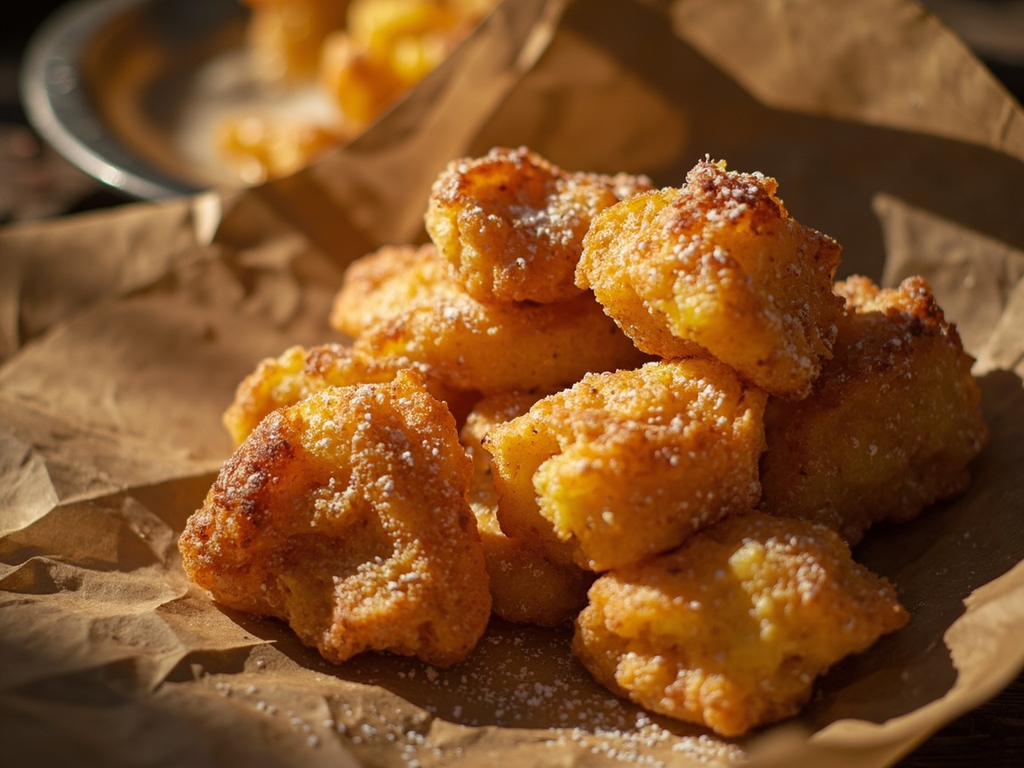
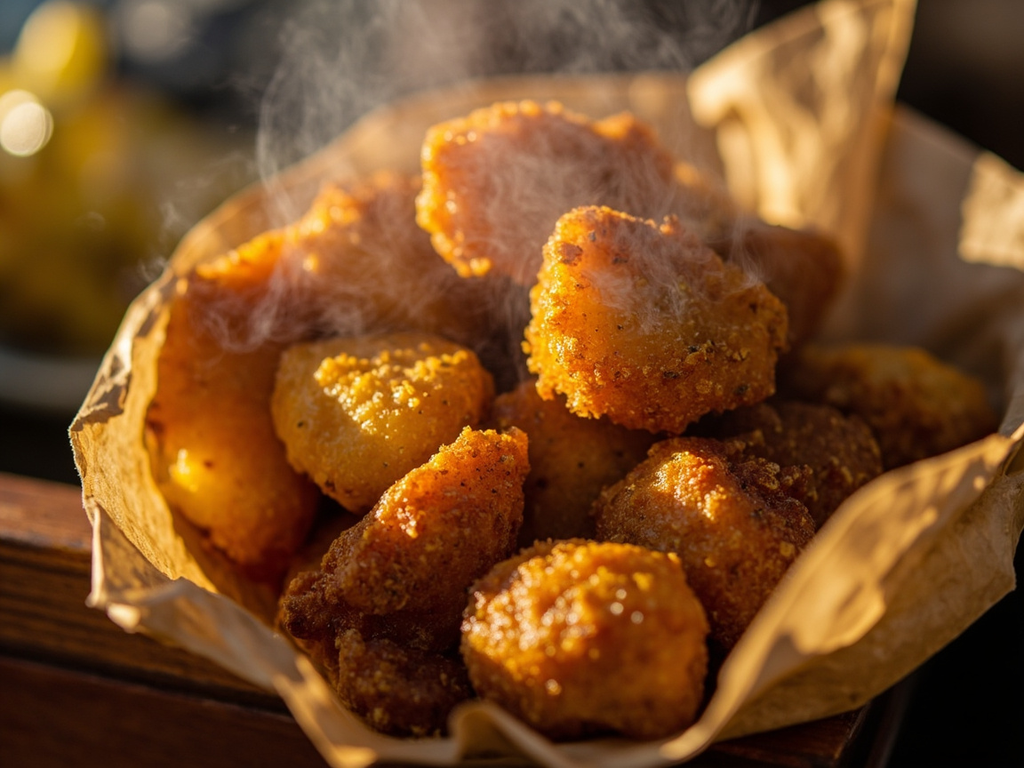
Small cubes of very ripe plantain, marinated in ginger, chili, and a hint of spices, then fried until caramelized. Sweet and soft inside, spicy and crispy outside—the contrast that made this snack famous.
When I crossed the great market of Kumasi, the smell caught me before I even saw the fire: the plantain browning and the ginger stinging the nose. They are cut when the skin is almost black—that is when they are sweet as honey—and rubbed with ginger and fire before being thrown into hot oil. It is the food of the road, held in the hand without sitting down. Beware: they say you take one bite, and already the cone is empty.
- •Very ripe plantains — a few (sweet base)
- •Fresh ginger — a good piece (fragrance)
- •Forest chili — to taste (heat)
- •Salt — a pinch (balance)
- •Palm oil or vegetable oil — for frying (cooking)
Kelewele — Spicy Ginger Plantain Cubes
Small cubes of very ripe plantain, marinated in ginger, chili, and a hint of spices, then fried until caramelized. Sweet and soft inside, spicy and crispy outside—the contrast that made this snack famous.
Why this dish? Plantain features in her known diet. On the markets of Kumasi she walked, these fried, spiced ripe plantain cubes were—and remain—the hot snack bought in a leaf cone, eaten on the go.
When I crossed the great market of Kumasi, the smell caught me before I even saw the fire: the plantain browning and the ginger stinging the nose. They are cut when the skin is almost black—that is when they are sweet as honey—and rubbed with ginger and fire before being thrown into hot oil. It is the food of the road, held in the hand without sitting down. Beware: they say you take one bite, and already the cone is empty.
Ingredients (period version)
- Very ripe plantains — a few (sweet base)
- Fresh ginger — a good piece (fragrance)
- Forest chili — to taste (heat)
- Salt — a pinch (balance)
- Palm oil or vegetable oil — for frying (cooking)
Ingredients
- Very ripe plantains (skin blackened) — 3 (sweet base)
- Fresh grated ginger — 2 tsp (fragrance)
- Chili powder or fresh chili — ½ to 1 tsp (heat)
- Aniseed/nutmeg (calabash nutmeg if available) — 1 pinch (signature spice)
- Salt — 1 pinch (balance)
- Oil for frying — to a depth of 2 cm (cooking)
Method
- Peel the ripe plantains and cut into 2 cm cubes or diamonds.
- Mix ginger, chili, spice, and salt in a bowl; roll the plantain cubes in the mixture to coat well.
- Let marinate for 10 minutes.
- Heat the oil and fry the cubes in batches until golden and caramelized.
- Drain on a cloth and serve hot, in a paper cone.
How it was made : Fried ripe plantain is a classic West African street snack; the exact spices of kelewele (ginger, chili, sometimes calabash nutmeg) vary by vendor. The codified form we know was fixed later, hence the status of "reconstruction": in Yaa Asantewaa's time, fried, spiced ripe plantain existed, but in freer forms.
The contemporary twist : Serve as appetizer skewers with a salty peanut dip—a gourmet bridge to the nkatenkwan soup.
Sources : Fran Osseo-Asare, Food Culture in Sub-Saharan Africa, Greenwood Press, 2005
Yaa Asantewaa · Charactorium