 flip
flipKontomire Abom — Cocoyam Leaf Stew with Red Oil
Kontomire Abom — Cocoyam Leaf Stew with Red Oil
Why this dish? Beyond feasts, a queen mother's table kept the green dishes of forest daily life. Kontomire, made from taro leaves, accompanied yam—a native starch of the Ashanti region mentioned in her known diet.
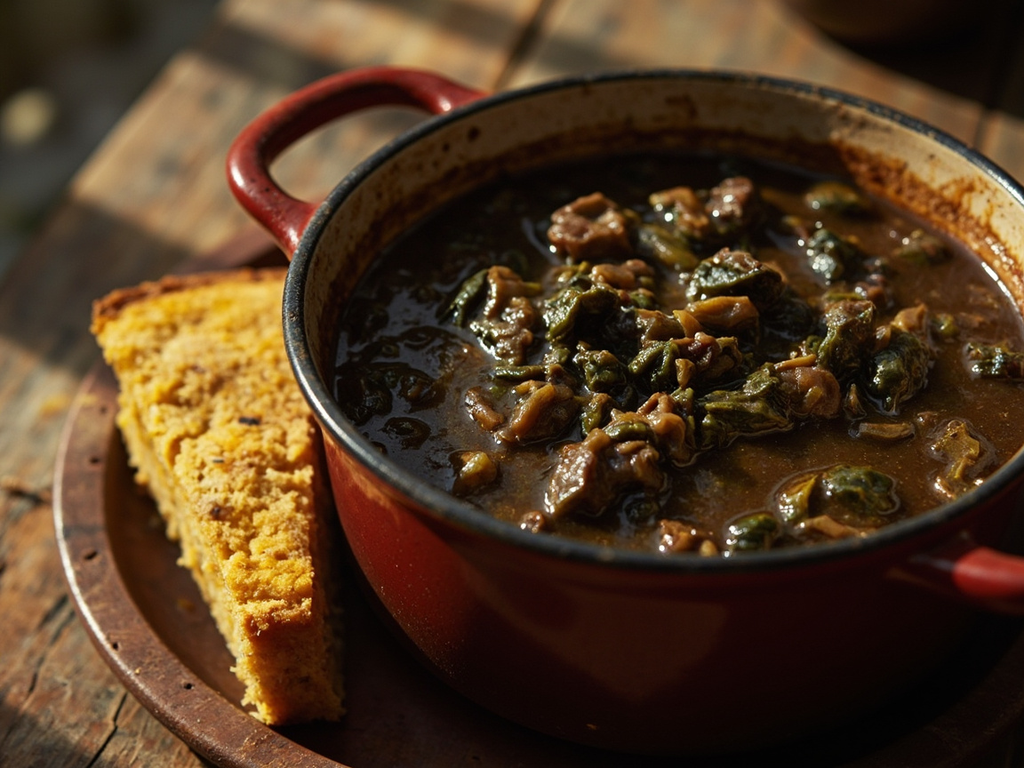
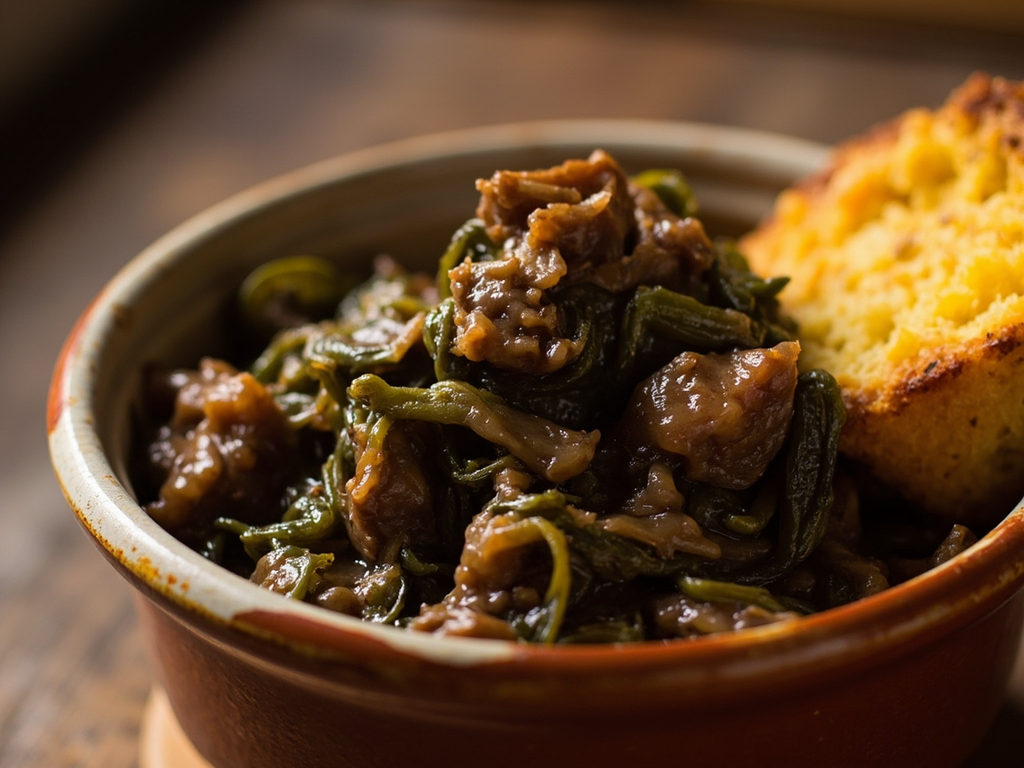
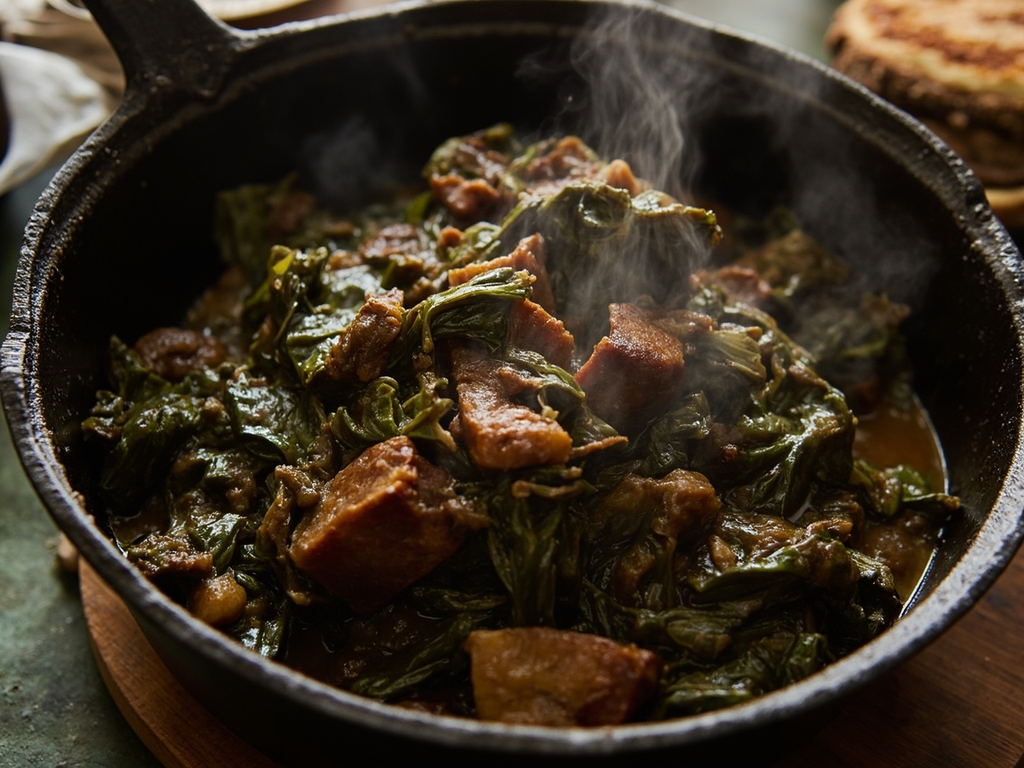
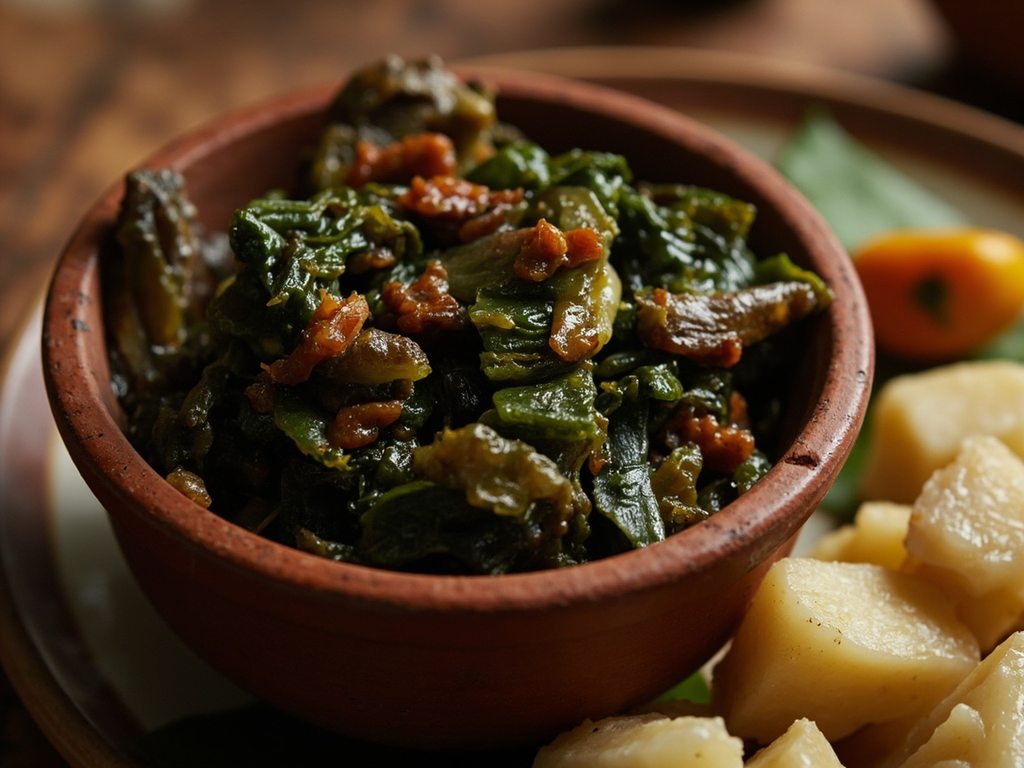
A dark green stew of melted cocoyam leaves, bound with red palm oil, onion, and a little smoked fish, with a slight vegetal bitterness. Eaten with pieces of warm boiled yam.
You think a queen eats only the flesh of beasts? Foolish idea. In the morning, when the dew is still on the kontomire leaves, my women pick them and crush them in the pot with the red oil of our palms. A hint of smoked fish, onion ground on the stone, and behold the quiet strength that holds a house upright. The bitterness of the leaf is like patience: you learn it, and then you love it.
- •Cocoyam leaves (kontomire) — a large armful (base vegetable)
- •Red palm oil — one ladle (binder and fragrance)
- •Crumbled smoked fish — one portion (umami)
- •Crushed onion and chili — to taste (aromatics)
- •Salt — as needed (seasoning)
- •Boiled yam — separately (accompanying starch)
Kontomire Abom — Cocoyam Leaf Stew with Red Oil
A dark green stew of melted cocoyam leaves, bound with red palm oil, onion, and a little smoked fish, with a slight vegetal bitterness. Eaten with pieces of warm boiled yam.
Why this dish? Beyond feasts, a queen mother's table kept the green dishes of forest daily life. Kontomire, made from taro leaves, accompanied yam—a native starch of the Ashanti region mentioned in her known diet.
You think a queen eats only the flesh of beasts? Foolish idea. In the morning, when the dew is still on the kontomire leaves, my women pick them and crush them in the pot with the red oil of our palms. A hint of smoked fish, onion ground on the stone, and behold the quiet strength that holds a house upright. The bitterness of the leaf is like patience: you learn it, and then you love it.
Ingredients (period version)
- Cocoyam leaves (kontomire) — a large armful (base vegetable)
- Red palm oil — one ladle (binder and fragrance)
- Crumbled smoked fish — one portion (umami)
- Crushed onion and chili — to taste (aromatics)
- Salt — as needed (seasoning)
- Boiled yam — separately (accompanying starch)
Ingredients
- Spinach or Swiss chard (if taro leaves unavailable) — 500 g (base vegetable)
- Red palm oil — 3 tbsp (binder and fragrance)
- Smoked mackerel or herring — 100 g, crumbled (umami)
- Onion — 1 (aromatic)
- Fresh chili — ½, seeds removed (mild heat)
- Salt — to taste (seasoning)
- Yam (or sweet potato/potato) — 600 g (boiled accompaniment)
Method
- Wash and chop the leaves, blanch for 2 minutes, then drain, pressing out water.
- Gently heat the red palm oil, sweat the chopped onion and chili.
- Add the crumbled smoked fish, then the leaves, and stew covered for 8–10 minutes.
- Salt and stir to coat well with red oil.
- Serve with peeled yam boiled in large chunks.
How it was made : Red palm oil was heated without smoking to preserve its color and aroma. Green leaves (kontomire, but also cassava leaves depending on region) were a daily vegetable in the Ashanti forest, and smoked fish from the coast traveled up trade routes to Kumasi.
The contemporary twist : Plate the kontomire as a quenelle on a slice of roasted yam, with a mirror of red oil.
Sources : Fran Osseo-Asare, Food Culture in Sub-Saharan Africa, Greenwood Press, 2005
Yaa Asantewaa · Charactorium