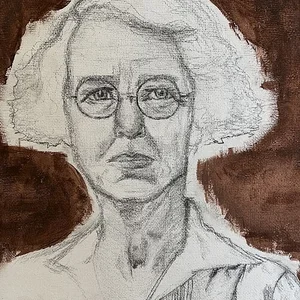

Ynes Mexia was a Mexican-American botanist and explorer. Beginning her scientific career at over 50 years old, she led botanical collecting expeditions across North and South America, gathering tens of thousands of plant specimens, including hundreds of species new to science.
Ynes Mexia(1870 — 1938)
Ynes Mexia
États-Unis, Mexique
5 min read
Frequently asked questions
Key Facts
- Born in 1870 in Washington, D.C., to a Mexican father and an American mother
- Begins her botany studies at the University of California, Berkeley around 1921, at over 50 years old
- Leads a two-year expedition through South America (1929-1932), traveling down the Amazon
- Collects roughly 150,000 botanical specimens over the course of her career, including about 500 species new to science
- Dies in 1938; several plant species bear her name (genus Mexianthus)
Works & Achievements
In thirteen years, Mexia assembled one of the largest individual plant collections of her time, distributed among the world's great herbaria.
Her collections revealed hundreds of species unknown to science; some fifty bear her name (e.g. Mimosa mexiae).
The botanist Townshend Brandegee named an entire genus of the aster family in her honor, marking the importance of her discoveries.
Nearly two and a half years of collecting along the Amazon and the Andes, bringing back tens of thousands of specimens from South America.
Article published in the Sierra Club Bulletin recounting her Mexican campaigns and bringing her work to the general public.
Account of her river expedition, a rare firsthand record of a female field scientist exploring the Amazon of the 1930s.
Anecdotes
Ynes Mexia only took up botany after the age of 50: in 1921, she enrolled as a student at the University of California, Berkeley. In barely thirteen years of work, she gathered around 150,000 plant specimens — a record for her time.
During her first major expedition to Mexico in 1925, she fell on steep terrain, injuring her hand and ribs, which cut the trip short. Far from stopping her, the accident only strengthened her determination to return to the field.
Between 1929 and 1932, she traveled up the Amazon River and its tributaries for nearly two and a half years, journeying by dugout canoe and sometimes living among local communities to reach areas never before botanized by scientists.
Her discoveries were so numerous that she is estimated to have collected around 500 new species, and some fifty plants bear her name today. The botanist Townshend Brandegee even named an entire genus in her honor: Mexianthus.
In 1928, she botanized as far as Mount McKinley National Park (Denali) in Alaska, proving that no climate — from the Ecuadorian jungle to the frozen tundra — could curb her passion for plant collecting.
Primary Sources
An account of her first collecting expeditions in Mexico, where she describes the mountain trails and the wealth of plant life she gathers there.
Mexía recounts her long river expedition, traveling by dugout canoe and facing the challenges of the Amazonian terrain encountered along the way.
A report on her camps and botanical collecting in Ecuador, on the slopes of the Andes near the equator.
Key Places
Neighborhood of the American capital where Ynes Mexia was born in 1870.
University where Mexia began her botany studies in 1921 and to which she attached her collections.
Site of her first major collecting expeditions starting in 1925, rich in new species.
Setting of her famous 1929-1932 expedition, which she traveled up by canoe for thousands of kilometers.
Icy region where she botanized in 1928, the opposite of the tropical forests she usually explored.
Typical Objects

Wooden frame and straps clamping sheets of blotting paper between which collected plant specimens are flattened and dried. An essential tool for any plant-collecting expedition.

Metal box carried on a shoulder strap, used to transport freshly picked plants without crushing them while walking.

Notebook and cards where the botanist records the location, date, altitude, and habitat of each specimen — data essential to the scientific value of a collection.

Small folding magnifying glass for examining in the field the details of a flower or leaf in order to identify the species.

Light craft used to travel up the Amazon and its tributaries, the only way to reach the most remote forest areas.

Rugged clothing, trousers and tall boots, adopted by Mexia to cross jungles and mountains — a bold choice for a woman of her time.
School Curriculum
Vocabulary & Tags
Key Vocabulary
Tags
Daily Life
Morning
On expedition, Mexia rose early to take advantage of the light and the cool air. She prepared her equipment — press, vasculum, notebook — before setting off to gather plants along the trails, often accompanied by local guides and porters.
Afternoon
The afternoon was devoted to intensive collecting: spotting, picking and labeling the plants while carefully noting their habitat. The terrain could be harsh — steep mountains, swamps or dense forest.
Evening
In the evening, back at camp, she pressed the specimens between sheets of paper and changed the damp blotters to prevent mold. She also wrote up her notes and sometimes letters or articles intended for the Sierra Club.
Food
In the field, her diet depended on local resources and the provisions she carried: rice, beans, tropical fruit, river fish in the Amazon. Frugality and adaptation were essential far from the cities.
Clothing
She adopted practical, hard-wearing attire — trousers, a sturdy shirt, a wide hat and high boots — an unconventional choice for a woman in the 1920s, but well suited to the jungle and the mountains.
Housing
Between expeditions, she lived in Berkeley, California, near the university. In the field, she stayed in a tent, in makeshift camps or with local families, as close as possible to the areas she wanted to explore.
Historical Timeline
Period Vocabulary
Liens externes & ressources
Références
Œuvres
Collection de près de 150 000 spécimens botaniques
1925-1938
Découverte d'environ 500 espèces nouvelles
1925-1938
Genre Mexianthus
1926
Expédition amazonienne (1929-1932)
1929-1932
Botanical Trails in Old Mexico
1929
Three Thousand Miles up the Amazon
1933