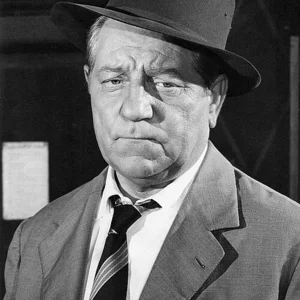
Fritz Lang (1890-1976) was an Austrian-born American filmmaker, pioneer of German Expressionist cinema and later of Hollywood film noir. His major works such as Metropolis and M left a profound mark on the history of cinema.
Fritz Lang(1890 — 1976)
Fritz Lang
États-Unis, Autriche, Allemagne
9 min read
Frequently asked questions
Famous Quotes
« Film is the greatest mirror of our time.»
« I don't make films for critics. I make them for the audience.»
Key Facts
- 1890: Born in Vienna, Austria
- 1927: Directed Metropolis, a landmark work in the history of science-fiction cinema
- 1931: Directed M, the first great German-language sound crime film
- 1933: Fled Germany following the rise of Nazism, refusing to work for Goebbels
- 1936-1956: Career in Hollywood, contributing to the development of American film noir
Works & Achievements
A two-part crime film portraying a brilliant manipulator who sows chaos throughout Weimar society. The film is read as a prophetic metaphor for the rise of dictatorships.
An epic two-part fresco adapted from Germanic mythology, shot with impressive formal mastery. A monumental work that confirmed Lang as the preeminent master of German cinema.
The undisputed masterpiece of silent cinema and a founding act of science-fiction filmmaking, Metropolis depicts a dystopian future city divided between an idle elite and workers enslaved to machines. Listed as a UNESCO World Heritage site in 2001.
Lang's first sound film, a portrait of a child murderer hunted by both the police and the criminal underworld across an anxious Berlin. Considered one of the ten greatest films in the history of cinema.
Lang's first American film, a denunciation of lynching and mob justice in the United States. It marks the beginning of his collaboration with Hollywood and his adaptation to American filmmaking.
A landmark psychological film noir starring Edward G. Robinson, which established the visual and narrative conventions of the genre — high-contrast lighting, the femme fatale, and the tragic fate of the ordinary hero.
The pinnacle of Lang's Hollywood noir output, this unsparing film exposes police corruption and the brutality of American society. Gloria Grahame and Glenn Ford deliver unforgettable performances.
Anecdotes
In March 1933, Nazi propaganda minister Joseph Goebbels summoned Fritz Lang to offer him the leadership of German cinema, despite his Jewish maternal heritage. Lang recounted that he left Berlin that very evening for Paris with all the money he could carry, leaving behind his home, his possessions, and his European career rather than serve the Hitler regime.
The filming of *Metropolis* (1927) was an organizational nightmare: Lang put thousands of extras through grueling conditions, submerging them in a tank of ice-cold water for hours at a time to capture the crowd scenes. The film devoured five million Reichsmarks and nearly bankrupted UFA Studios, the largest German studio of the era.
For *M* (1931), his first sound film, Lang drew inspiration from the real-life case of serial killer Peter Kürten, nicknamed the 'Vampire of Düsseldorf.' He spent weeks in police stations and with criminologists to make the film as realistic as possible — a documentary approach that was revolutionary for the time.
Lang was notorious for his authoritarian manner on set. He wore a distinctive monocle and would push his actors through dozens of takes until they were exhausted. Peter Lorre, who played the murderer in *M*, testified that Lang made him rehearse the arrest scene for days on end to capture the perfect expression of terror.
Having arrived in the United States in 1936 with little command of English, Lang had to start from scratch in Hollywood. He adapted his style to the American industry and largely shaped the codes of film noir — that dark, disenchanted genre that would go on to influence generations of filmmakers such as Alfred Hitchcock and Orson Welles.
Primary Sources
Goebbels notes in his diary that he received Fritz Lang and offered him the position of head of film production for the Reich. The entry confirms the meeting took place, which ultimately drove Lang into exile.
A founding work of science-fiction cinema, *Metropolis* portrays a dystopian city divided between an underground elite and an exploited workforce, raising social questions that remain relevant today about alienation through technology.
Lang's first sound film, *M* follows the manhunt for a child murderer pursued by both the police and the Berlin underworld. The final interrogation sequence is regarded as a pinnacle of Expressionist filmmaking.
In this extensive interview, Lang reflects on his flight from Nazi Germany, his adaptation to Hollywood, and his vision of cinema as a popular art form with political and moral reach.
Shortly before Lang was summoned by Goebbels, the Nazi authorities banned his film *The Testament of Dr. Mabuse*, on the grounds that the speeches delivered by the Mabuse character too closely resembled Hitler's own methods — a ban that hastened Lang's departure.
Key Places
Fritz Lang's birthplace and the cultural capital of the Austro-Hungarian Empire, where he grew up in a middle-class family. He studied architecture there before turning to the arts and cinema.
Lang's primary workplace in Germany, these studios founded in 1912 near Berlin were the largest in Europe. It was here that *Metropolis*, *M*, and his other masterworks of the Weimar period were filmed.
The city where Lang achieved cinematic fame in the 1920s. Berlin was then a vibrant, decadent, and creative metropolis that directly inspired his works on urban modernity and its dangers.
Lang's first stop in exile after fleeing Nazi Germany in 1933. He directed *Liliom* (1934) there before continuing on to the United States, refusing to put his talent in service of the Hitler regime.
The setting of Lang's second artistic life, where he settled permanently from 1936 onward. There he helped shape the codes of Hollywood film noir and produced the second half of his body of work until his death in 1976.
Typical Objects

The central instrument of Lang's work, the Ernemann and Debrie cameras used on his German films allowed for complex movements and innovative framing. Lang regarded the camera as a narrating eye endowed with moral intent.
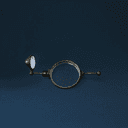
Fritz Lang wore a monocle fixed over his right eye, which had become his visual signature and a symbol of his authority on set. A hallmark of the early twentieth-century European bourgeoisie, it reinforced his image as a demanding and aloof director.

Lang's early films were recorded on cellulose nitrate stock, a highly flammable medium responsible for numerous cinema fires. The majority of silent films from the Weimar era were lost due to the fragility of this material.

On large-scale productions such as *Metropolis*, where thousands of extras were directed simultaneously, Lang used a megaphone to issue commands across the vast stages of the UFA studios in Babelsberg. The tool embodied his absolute authority over his crews.

Lang was renowned for the obsessive precision of his preparation. His hand-drawn scripts and shot breakdowns detailed every frame before filming began — a working method rooted in his original training as an architect and painter.

The posters for Lang's films, drawn in the German Expressionist style with angular lines, stark contrasts, and distorted perspectives, were works of art in their own right. Those for *Metropolis* are today among the most iconic images of the twentieth century.
School Curriculum
Vocabulary & Tags
Key Vocabulary
Tags
Daily Life
Morning
During his Berlin years, Lang began his days at dawn to be the first to arrive on the sets of the UFA studios in Babelsberg. He spent the early hours reviewing his shot breakdowns and preparing his technical crews, sometimes painting set details himself to achieve the exact effect he had in mind.
Afternoon
Afternoons were devoted to the shoot itself, often grueling for everyone involved. Lang could demand twenty, thirty, or even fifty takes of the same scene, stopping to correct the position of a shadow or the movement of an extra. His monocle fixed in his eye, he examined every frame with an architect's precision.
Evening
In the evenings, Lang frequented the cabarets and intellectual cafés of Berlin — the Romanisches Café, where artists and writers of the Weimar Republic gathered. These outings fed his vision of a modern society in crisis, which he channeled into his films. He also worked through the night on his screenplays.
Food
Like many Viennese bourgeois of his generation, Lang had a taste for classic Austrian and German cuisine — *Wiener Schnitzel*, *Kaffee und Kuchen*. In the United States, he adapted to Hollywood meals taken in studio commissaries or at the homes of fellow German émigrés who recreated around their tables a fragment of the Europe they had lost.
Clothing
Lang cultivated his appearance with a European elegance that stood in sharp contrast to Hollywood casualness. Tailored suits, crisp ties, and his ever-present monocle formed an instantly recognizable silhouette on set, one that contributed to the aura of authority he consciously projected.
Housing
In Berlin, Lang lived in a comfortable villa in an upscale neighborhood, surrounded by contemporary works of art. After his exile, he settled in Beverly Hills in a house he refashioned to his taste, keeping on its walls Expressionist paintings and works by fellow artists who had also fled Europe.