Imaginary dialogue between Chiron and Achilles
by Charactorium · Achilles · Mythology · 5 min read
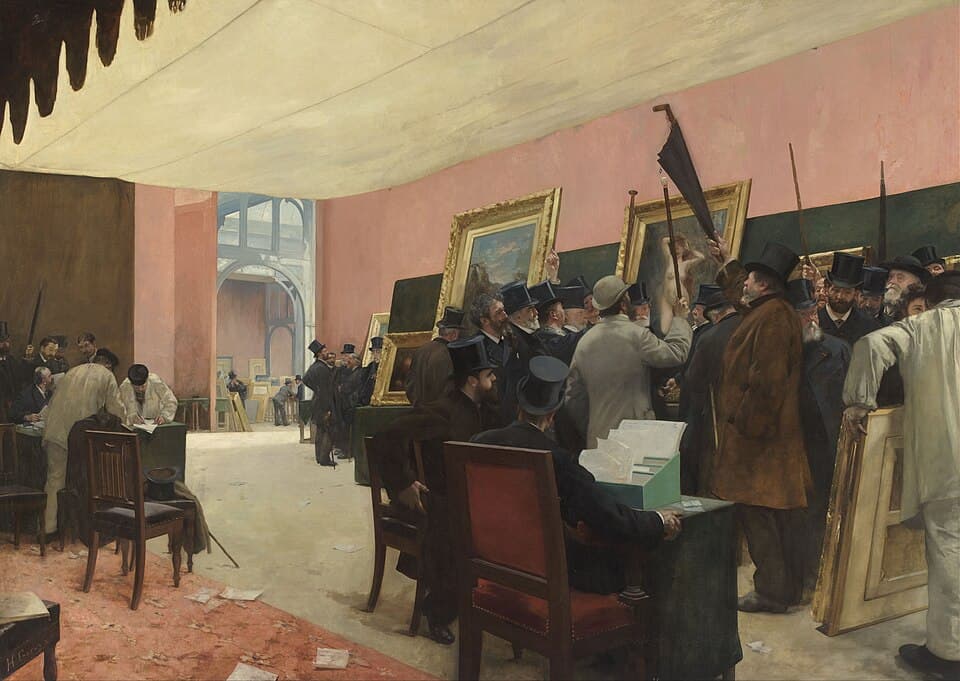
It is on the wind-beaten shore, in front of the Achaean camp, that the old centaur Chiron finds the one he raised. The sea roars behind the black hulls drawn up on the sand, and the smell of campfires mingles with that of salt. The master who once fed the child lion's marrow on Mount Pelion comes to see the man that war has forged. He sits near the tent, leaning on his haunches, and looks long at Achilles before speaking.
—My child, when I took you in on Mount Pelion and fed you lion's marrow, did you suspect the man you would become?
You who carried me on your back through the forests, you know better than anyone where I come from. You taught me to run until I outran the deer, the lyre to soothe the heart, and the art of closing a wound as well as opening one. I thought only of pleasing you back then, of bringing back the finest catch of the day. But you mixed into every lesson a demand: that strength serve moderation, that the hand that strikes also be the one that heals. I do not know if I have kept that promise, Chiron. War does not love moderation. Yet when I pluck a lyre string in my tent at night, it is your voice I still hear, clearer than the day's din.
You mixed into every lesson a demand: that the hand that strikes also be the one that heals.
—I see on you weapons that no mortal forge has beaten. Tell me, what is it like to bear the work of a god?
My mother Thetis obtained them from Hephaestus himself. The cuirass weighs like a second skin, the greaves bite into bronze without cutting the flesh, and my spear, the ash Xanthos, I am the only one in the camp who can lift it. But it is the shield that troubles me. The lame god engraved a whole world on it: cities at peace and cities at war, farmers, dances, the river and the sea that surrounds it. When I embrace it in battle, I carry on my arm the entire life of men — the life I am about to destroy. You taught me to respect well-made works, Chiron. No mortal hand will ever make one equal to this.
On my shield, the god engraved the entire life of men — the life I am about to destroy.
—I am told that a captive, Briseis, made you lay down your arms. Is this how you use the mastery I taught you?
Do not judge too quickly, you who taught me what a man's honor is. Agamemnon took Briseis from me, my share of the spoils, the public pledge of my worth. It is not a woman they tore from me, but my timè, my due before the whole army. If the king of kings can humiliate his foremost warrior and revel in it, then no fight is worth anything anymore. I withdrew my spear not out of softness, but because a dishonored man who continues to serve is nothing but a slave. You taught me that moderation means knowing what can be borne and what cannot. That, I could not bear.
It is not a woman they tore from me, but my honor before the whole army.
—And while you sulked under your tent, your comrades died by the hundreds against the walls. Was your wrath worth that price?
You touch where the wound is raw. Yes, the Achaeans were retreating, yes, the flames were already licking our ships, and I remained still, listening to the cries from the shore. I waited for them to come and beg me, for the wrong to be washed away. I wanted everyone to measure, by my absence, what I was worth. It was my right — and perhaps my fault. For the timè defended too fiercely ends up devouring those we love. You had warned me, on Pelion, that pride is a horse you never tame once and for all. I understood too late, when death had struck where I least expected it.
—You speak of death striking your comrades. Patroclus, your dearest companion — what became of him beneath the walls?
Do not speak his name without my heart breaking, Chiron. Patroclus, seeing our men yield, begged me to lend him my armor to frighten the Trojans. I gave in, I let him go in my place — and Hector struck him down, took my arms from him, left him naked in the dust. When the news was brought to me, I rolled in the ashes, I screamed until my mother rose from the waves. My wrath against Agamemnon suddenly weighed nothing. Another rose, black, bottomless. I knew in that instant that I would return to battle, not for glory nor for kings, but for Hector and for him alone.
My wrath against Agamemnon suddenly weighed nothing. Another rose, black, bottomless.
—So you finally faced Hector. Tell me how that combat was joined before the gates of Troy.
I chased him three times around the walls, under the eyes of his father and his people. At last he stopped, turned to face me — he was brave, I will not deny it. Our spears flew. Mine found his throat, at the gap in the armor he had stolen from me and wore like a trophy. He fell, begging me to give his body back to his people. I refused. I tied his corpse to my chariot and dragged it around the city, again and again. You would disapprove, I know — you taught me respect for the dead. But grief for Patroclus had made me a beast. The moderation you cherished, I lost that day.
—It is whispered that your mother dipped you in the waters of the Styx. Have you ever felt, beneath your skin, the part she could not bathe?
Thetis never spoke of it openly, but I guessed. In battle, points glance off me, arrows bounce, swords blunt against my limbs as against rock. No wound holds. Yet there is a place in me I show no one — the heel, where her hand held me when she plunged me into the river of the dead. A mother who wants to save her son must hold him somewhere. It is strange, Chiron: to be almost invulnerable is to live knowing that there is always a single point through which death can enter. I do not fear a thousand spears. I fear the one that will find that passage.
—Child, I told you the oracle: brilliant glory and short, or long obscure life at home. Did you choose without regret?
So you remember what you revealed to me. I had the choice between growing old peacefully in Phthia, forgotten by men, and dying young here, but with my name echoing through the ages on the lips of bards. I chose. I prefer klèos to old age. Better to burn bright than to glow long under the ashes. Yet I confess to you alone: since Patroclus is gone, that choice weighs on me. What use is glory that dead friends do not share? I will go to the end, because one does not take back one's word given to fate. But do not think, my master, that I advance without trembling toward what awaits me.
Better to burn bright than to glow long under the ashes.
—This whole war seems to have been born from a wrath, yours. Do you measure what a single man's passion has unleashed in misfortunes?
That is where my story should begin, indeed: with my wrath. It has cost the lives of countless Achaeans, hurled so many valiant souls to Hades, left so many bodies for dogs and birds. I know it. A leader's wrath is a wound that opens across an entire army. You taught me to tame my humors like one tames a restive horse, and I let mine gallop without a bridle. If I could do it over? I do not know. A man's honor and a people's misfortune sometimes hang on the same thread. But do not ask a warrior to regret wanting to be respected. Ask kings instead not to humiliate him.
—Before I take the road back to Mount Pelion, tell me: of all I passed on to you, what have you kept in your heart through the battles?
Stay a while longer, old master; your coming has done me good like no truce. You gave me the lyre and the spear, the remedy and the wound, the race and the song. Men will remember only the spear — the furious one, the slayer of Hector. But you know you shaped something else: a being torn between the fury and the gentleness you sowed. When I dress my comrades' wounds with the herbs you named for me, it is you acting through my hands. That is what I keep: not glory, but your voice reminding me that I was, once, a child being taught in a cave, far from blood.
Men will remember only the spear. You know you shaped something else.
This imaginary interview was generated by artificial intelligence from sources documented in Achilles's profile. It dramatises what the figure might have said based on what we know about them, but does not constitute attested historical testimony. For primary sources and factual documentation, refer to the full profile.