Kids interview Achilles
by Charactorium · Achilles · Mythology · 4 min read
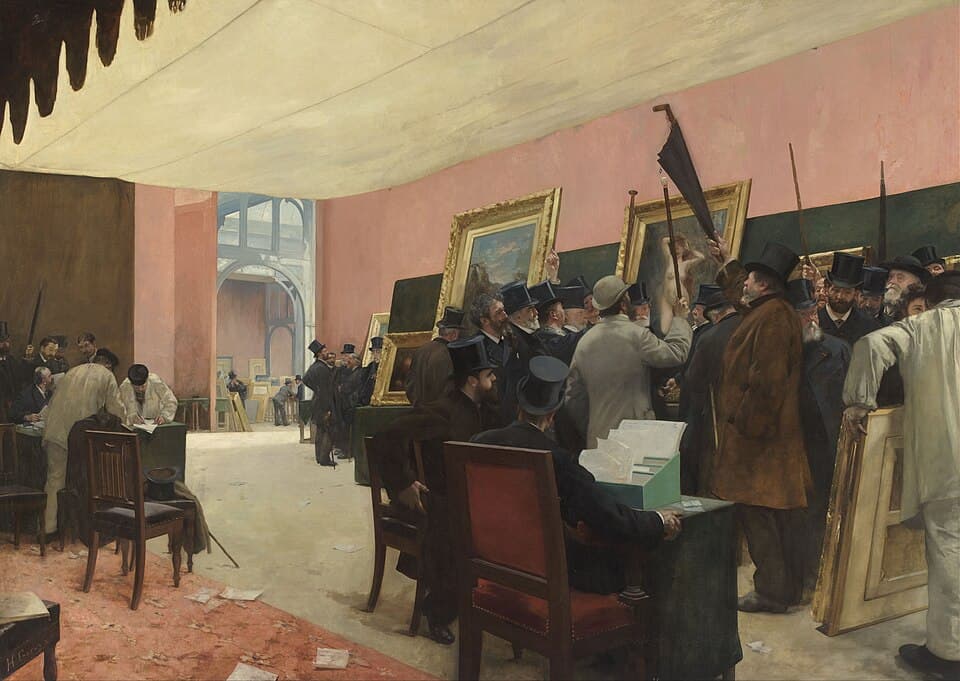
Two twelve-year-old students, on a school field trip, stepped through a strange door that led them into the Greek camp, before the walls of Troy. Under a large tent, a warrior with burning eyes awaits them. It is Achilles, and he agrees to answer all their questions.
—Who was your teacher when you were little? What did he teach you?
Ah, my child, my teacher was no ordinary man. He was Chiron, a centaur: imagine a being half-man, half-horse, wise as any king. He lived in the mountains of Thessaly, where I was born. He taught me to run faster than the wind, to throw the spear, to heal a wound as well. But he taught me something else, more precious: that a warrior is nothing without honor. In the morning, I hunted. In the evening, he told me stories of heroes before me. He forged the man you see.
A warrior is nothing without honor.
—Is it true that your mother hid you so you wouldn't go to war?
Yes, it's true, and it moves me that you know it. My mother, Thetis, was a Nereid, a sea goddess. She knew, through a gift, that the war would kill me. So she hid me on the island of Skyros, far from everything. Imagine a child in disguise, living in secret to escape his fate. But you know what? You never escape your fate, never. I left anyway, with my warriors, the Myrmidons. A mother wants to protect her son. A hero, though, chooses glory, even if brief.
You never escape your fate, never.
—Did you have special armor? Where did it come from?
Special armor? The most beautiful that ever existed, my child! It was forged by Hephaestus himself, the god of fire and blacksmiths. Imagine a bronze shield that shines like the sun, covered with tiny scenes: cities, harvests, dances, engraved by a divine hand. My helmet, my breastplate, my greaves, everything was made for a god as much as for a man. In the evening, under my tent, I cleaned each piece with care. A weapon is like a friend: you take care of it, and it keeps you alive.
A weapon is like a friend: you take care of it, and it keeps you alive.
—What did you fight with? Did you have a favorite weapon?
I had a long spear, my favorite, called Xanthos. A sturdy wooden shaft with a sharp bronze point. None of my companions could even lift it, you know! I also kept a short sword at my side, for close combat, body to body. In my time, we fought with bronze, not with the iron you know later. In the morning, before battle, I trained with my friend Patroclus. Sweat, the clang of weapons, dust: that was my true world.
—Why did you refuse to fight? Who were you angry at?
Ah, my wrath... That is even how my whole story begins! King Agamemnon, our leader, took from me a captive, Briseis, who had been given to me for my courage. Do you find that unjust? I did too. Among us, we called it timè, honor: the respect a warrior deserves. Taking her from me was spitting on my worth. So I did a terrible thing: I withdrew to my tent, and I let the Greeks lose battle after battle. My pride cost dearly. Sometimes, my child, pride wounds more than the enemy.
Sometimes, pride wounds more than the enemy.
—What did glory mean to you? Why was it so important?
You ask the real question, the one that decides everything! We Greek heroes lived for klèos: eternal glory, the memory that never dies. Imagine: a warrior always dies in the end, but his name can cross thousands of years. Proof, my child: you know my name today, though I fell so long ago. I had the choice between a long, peaceful life, forgotten, or a short, glorious one. I chose glory. And here we are, talking together.
A warrior dies, but his name can cross thousands of years.
—Who was Patroclus? They say you were very close.
Patroclus... You touch my greatest wound, my child. He was my dearest companion, almost a brother. We grew up side by side, we shared everything. While I sulked under my tent, he went to fight in my place, wearing my armor to frighten the Trojans. And he fell, killed by Hector, their greatest warrior. When they told me, something broke inside me. I wept in the dust. The anger at Agamemnon suddenly didn't matter. Only my pain mattered.
When they told me of his death, something broke inside me.
—What did you do after his death? Did you want revenge?
Yes, I had only one thought: to avenge Patroclus. I returned to battle, mad with grief and rage. I sought Hector before the walls of Troy, and I faced him in single combat, one on one. It was the greatest fight of my life. I defeated him. But my grief was so great that I did a cruel thing: I dragged his body around the city. You know, my child, grief can make a man unjust, even a hero. Revenge did not bring Patroclus back.
Grief can make a man unjust, even a hero.
—Is it true that you were invincible? How did that happen?
Almost invincible, my child! When I was a baby, my mother Thetis wanted to protect me forever. So she dipped me in the waters of the river Styx, a magical river of the Underworld that made skin hard as bronze. Imagine a mother holding her infant by the foot, dipping him entirely into the black water. No weapon could wound me... except in one place: the heel, precisely, where her hand held me. The water had not touched it. A tiny spot, as big as your thumb. And that tiny spot was enough.
A tiny spot, as big as your thumb. And it was enough.
—And that heel killed you? That's scary, just one weak spot.
Yes... That is the whole mystery, my child. The greatest Greek warrior, the one no one could touch, fell because of a spot as small as nothing. It was Paris, the Trojan prince, who shot the arrow. He was not a great fighter, you know. But the god Apollo guided his arrow, straight to my heel. Thus goes fate: one can be nearly perfect, and fall by one's only weakness. Even today, people say “Achilles' heel” to speak of someone's weak spot. My name became a lesson.
One can be nearly perfect, and fall by one's only weakness.
This imaginary interview was generated by artificial intelligence from sources documented in Achilles's profile. It dramatises what the figure might have said based on what we know about them, but does not constitute attested historical testimony. For primary sources and factual documentation, refer to the full profile.