Imaginary dialogue between Ibn Rushd (Averroès) and Al-Ghazali
by Charactorium · Al-Ghazali (1056 — 1111) · Literature · Philosophy · 6 min read
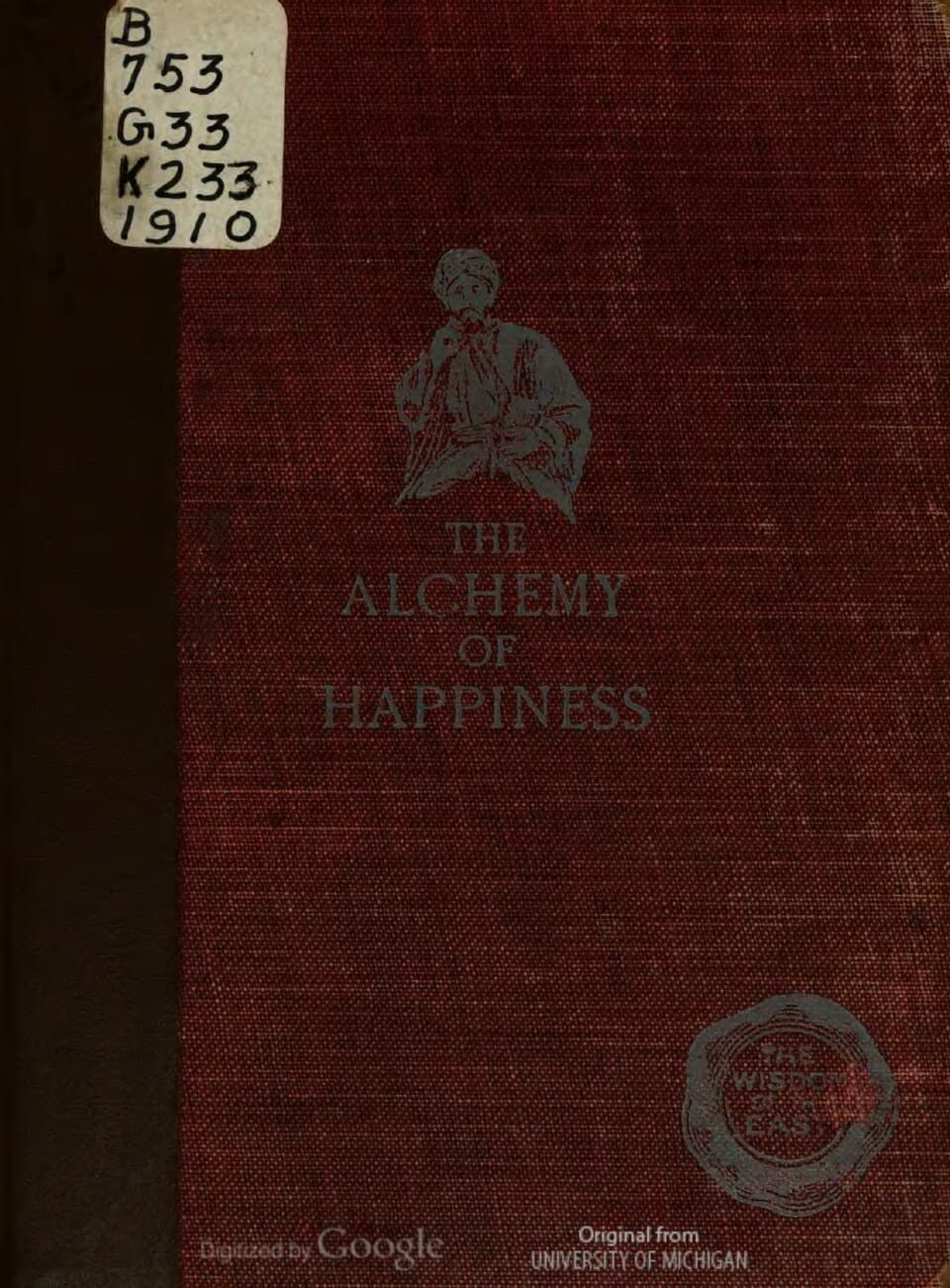
It is in Tus, in Khorasan, around 1110, that a young philosopher from Cordoba finally crosses the threshold of the modest dwelling of Abu Hamid al-Ghazali, who has returned to die in the land of his childhood. An olive oil lamp illuminates the piled manuscripts, and the old master, wrapped in his rough wool khirqa, still holds the reed pen. Ibn Rushd knows: this man had the philosophy of his teachers burned even in the squares of al-Andalus. He comes, with as much admiration as firmness, to call to account the one who dared to write The Incoherence of the Philosophers.
—Abu Hamid, they say even in al-Andalus that at the height of your glory, at the Nizamiyya of Baghdad, your voice failed you at the pulpit. What did you feel?
I will tell you plainly, since you are a man who understands the language of the soul. I was teaching before three hundred students, I was the first doctor of the empire, and then one morning my tongue was tied: not a word could cross my lips. The physicians saw only a bodily ailment, but I knew. It was my heart refusing to continue selling a knowledge that I did not live by. I taught others the path of salvation while I myself walked toward the abyss, swollen with pride and appetite for rank. That silence was my first true word. God had taken away my voice so that I might finally hear my own.
That silence was my first true word. God had taken away my voice so that I might finally hear my own.
—You who handle logic as well as we do, did you truly doubt everything, even your own senses and reason?
Yes, and it was the most terrible passage of my life. For nearly two months, I was like a sick man whom nothing could cure. I first suspected the senses: that stick which appears straight in water and broken outside it taught me that they lie. So I turned to reason, believing I would find rock there. But who guarantees that reason itself does not deceive me, as the dreamer believes the images of his dream are true? I was suspended over the void, unable to affirm or deny. No argument pulled me out — for the argument itself was precisely ill. It was a light cast by God into my breast that restored certainty to me. You, philosopher, will want a demonstration; I have no other to offer you.
—Then let us speak frankly: why heap incoherence upon Ibn Sina and al-Farabi, our masters all? Do you not betray reason by turning it against itself?
Do not attribute to me what I have not done. I never condemned logic or mathematics: in those fields, the philosophers are right, and whoever fights them there makes himself ridiculous and harms religion. It is their metaphysics that I attacked, and only on a small number of points. When Ibn Sina claims that the world is eternal, without beginning, he contradicts demonstration as much as faith. When he denies that bodies will be resurrected, he speaks of what no man can prove. I fought them with their own weapon, logic, not with the authority of dogma. You see, my young friend, I do not reproach philosophers for reasoning: I reproach them for ceasing to reason as soon as they leave calculation for God.
I do not reproach philosophers for reasoning: I reproach them for ceasing to reason as soon as they leave calculation for God.
—Yet before refuting them, you wrote a faithful account of their doctrine, the Maqasid. Why first build what you then wished to tear down?
Because one does not refute what one does not understand. I have seen too many theologians attack philosophers by caricaturing their theses, and fall under the laughter of scholars like a man striking a shadow. So I forced myself to expound Ibn Sina's thought with such accuracy that none of his disciples would find fault with it — until the reader thought me one of them. Only then, having shown that I held their system better than they themselves, could I reveal its flaws. I am told that these Maqasid now travel to your lands without their critical sequel, and that some take me for a pure philosopher! Such is the irony: to have passed myself off as Ibn Sina in order to better confound him.
—You wear the woolen khirqa and live here as a pauper. How could the first doctor of Baghdad exchange the court robe for this coarse cloak?
The day I left Baghdad, I distributed my goods, kept only enough to feed my children, and put on this wool. For ten years, I walked incognito, from Damascus to Jerusalem, from the holy places of Mecca to Medina. In Damascus I shut myself in the minaret of the great mosque, climbing alone, pulling the ladder up behind me. My bread was barley, a few dates, water. Believe me, this stripping was not a sad penance: never have I been richer. The silk qaftan weighed on me like a golden chain; this wool weighs nothing. One knows the weight of the world only once one has set it down.
One knows the weight of the world only once one has set it down.
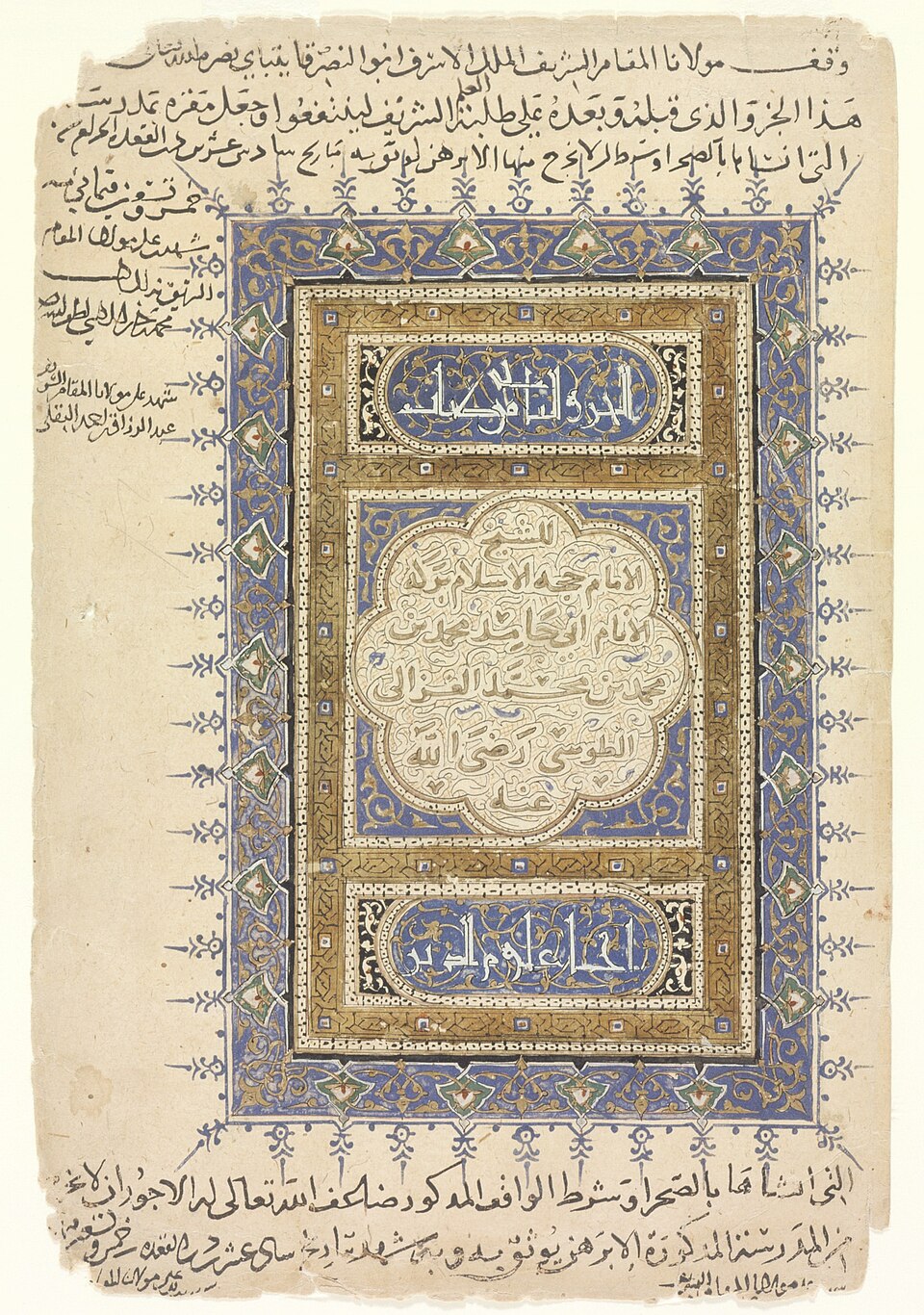
—I come from Cordoba, where your Ihya was delivered to the flames by Almoravid order, as in Marrakech. What do you say to those who burn you?
So you have burned it in your land as well... I knew about Marrakech, not Cordoba. What can I tell you? A book is never burned for what it says, but for the fear it inspires. The jurists of your lands saw in the Revivification only the place I give to Sufism, and they smelled a threat to their authority. But I taught nothing that contradicts the law: I only wanted to give it back its soul. One day, these same men who kindle the pyre will study this book with their sons. Fire proves nothing against a book — except that those who light it have not known how to answer it with words.
—You write that the science of the state of the heart is the highest obligation. Does this not belittle the knowledge of jurists and philosophers?
No, it completes it. There is a science of practice — how to pray, how to judge, how to sell — and it is an obligation. But there is another, higher: the science of what goes on in the heart, the extirpation of its vices, the adornment of its virtues. What use is knowing a thousand rules of fiqh if pride, envy, and love of rank govern the soul that recites them? I have seen so many scholars stuffed with knowledge and empty of the fear of God. The healing of the heart is the foundation of all religion; the rest is only its surface. That is why I placed dhikr, the invocation of the Name, higher than the joust of arguments — for it changes a man, while argument changes only an opinion.
I have seen so many scholars stuffed with knowledge and empty of the fear of God.
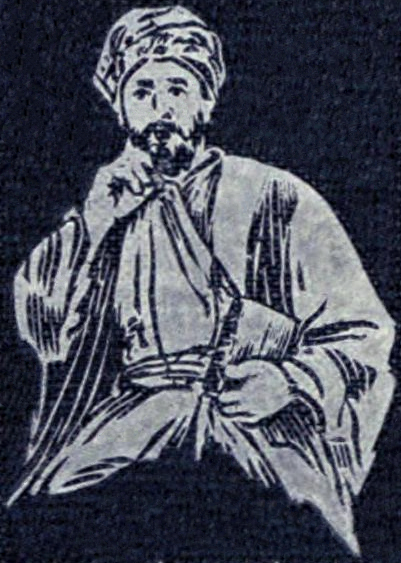
—They say you left Baghdad in secret, letting it be thought a pilgrimage. Why this disguised flight, unworthy, some will say, of a man of your rank?
Because they would not have let me go. I was held back by my protectors, by the prestige of the chair, by a hundred invisible ties. Had I announced my resolution, the great would have protested, the students would have begged, and my will, still weak, would have shattered under their prayers. So I let it be known that I was leaving for the hajj, and I took the road to Damascus. It was not cowardice, but a ruse against myself: I had to cut my bridges before my soul, which so loved honors, called me back. The hardest thing is not to leave the world — it is to disarm the part of oneself that wants to stay.
—You speak of a light that restored certainty to you. But a light is not a proof. How can a man of reason be content with it?
You ask the real question, and I will not deceive you. The certainty I sought is that in which a thing is unveiled without any doubt being possible, where neither error nor supposition can accompany it. Now reason alone did not give it to me, since it was reason itself that was in question. What cured me was not a syllogism, but a state that God cast into my breast, and on which most knowledge rests. Consider: the child first holds true the testimony of the senses, then reason shows him their falsehood. Who tells you that beyond reason there does not open another eye, which in turn reveals its limits? I saw it open. I do not ask you to believe me — I ask you not to deny what you have not experienced.
—One day, Abu Hamid, a philosopher will answer your Tahafut point by point. Do you fear being refuted in your turn?
I hope it rather than fear it. I wrote to be answered, not to close the debate. If a man from your schools takes up my twenty points and shows that I was mistaken on any of them by true arguments, he will have served the truth, and I will rejoice in my grave. What I dread is not refutation: it is being answered by authority, insult, or pyre, as the weak do. You who are young and love these philosophers I have fought, perhaps you are that one. So raise their theses where they stand, abandon them where they yield, and do not be cowardly enough to defend everything. Truth does not fear being questioned — only lies demand silence.
I wrote to be answered, not to close the debate.
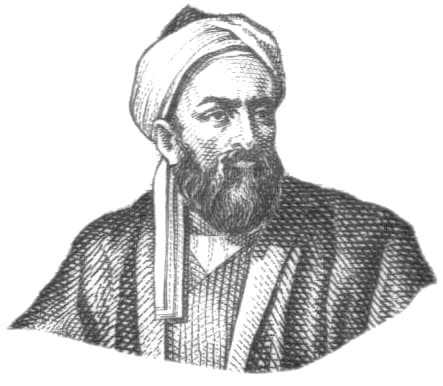
This imaginary interview was generated by artificial intelligence from sources documented in Al-Ghazali's profile. It dramatises what the figure might have said based on what we know about them, but does not constitute attested historical testimony. For primary sources and factual documentation, refer to the full profile.