Imaginary interview with Al-Ghazali
by Charactorium · Al-Ghazali (1056 — 1111) · Literature · Philosophy · 6 min read
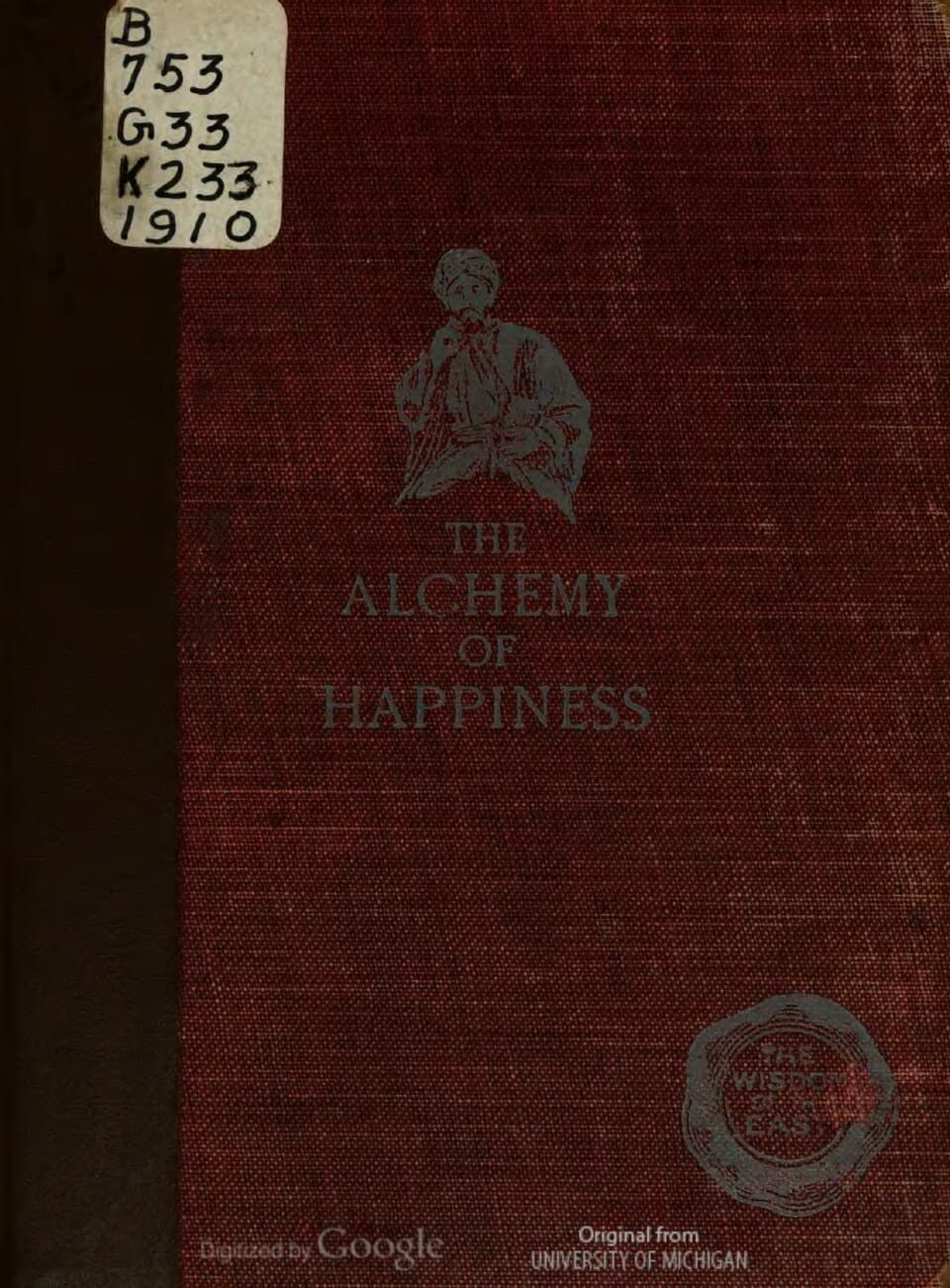
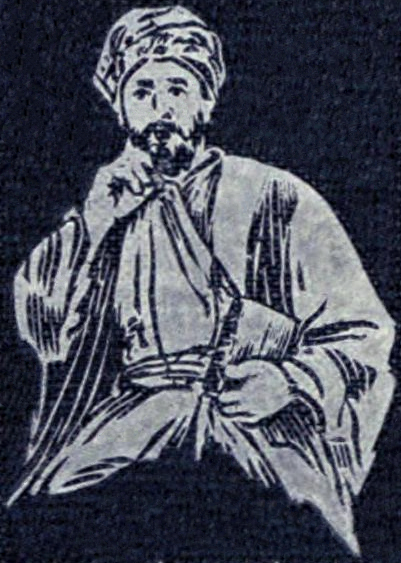
We are in Tus, in Khorasan, in this year 1110. An old man in a coarse woolen cloak receives us in a bare room where only an oil lamp burns; on the rug, a reed pen and a few folios. Al-Ghazali, who was the glory of Baghdad before disappearing for ten years, agrees to look back on the path that led him from the summit of the madrasas to the silence of the minarets.
—Do you remember the day your voice died before your students?
It was at the Nizamiyya of Baghdad, around 1095. I was sitting on the platform of the majlis, three hundred faces turned toward me, the reed pen ready to note my words — and suddenly my tongue was tied. Not from forgetfulness: the words were there, but God forbade me to speak them. Three hundred scholars awaited a lesson in fiqh, and their master remained mute as stone. I understood that day that my knowledge was nothing but a court ornament, a silk robe over a sick heart. The body followed the soul: I could no longer swallow a bite, my strength left me. The physicians spoke of an ailment; I knew it was a higher hand pulling me by the collar out of my gilded chair.
Three hundred scholars awaited a lesson, and their master remained mute as stone.
—How did you leave Baghdad, at the height of your fame?
By ruse, I admit, for one does not let go a professor whom the vizier Nizam al-Mulk himself had installed. I announced that I was leaving for the pilgrimage to Mecca — which was half true, for my heart truly desired to flee. I distributed my goods, kept enough to feed my children, and left behind the comfortable apartments adjacent to the madrasa. My brothers in science thought me devout; my patrons thought me loyal. No one guessed that I would not return to sit on that platform. Leaving glory, you see, is harder than conquering it: the first requires talent, the second requires dying a little to oneself. I took the road to Damascus like a man escaping his own prison.
Leaving glory is harder than conquering it.
—What drove you to doubt even the reliability of your own senses?
A thirst, only one: to find a knowledge that does not tremble. I looked at my certainties like a man who shakes a wall to see if it holds, and the wall collapsed. First my senses: the stick appears broken in water, the star appears as small as a coin though it surpasses the earth. Then reason itself — for if my senses deceive me, who tells me that a higher judge will not mock my reason as reason mocks the senses? For two months I was as if paralyzed, unable to affirm anything, sick not in body but in understanding. I write in my Deliverance from Error that I first had to know the truth of knowledge itself. No proof cured me: a light that God cast into my breast, that was my only remedy.
I looked at my certainties like a man who shakes a wall to see if it holds.
—What then do you call truly certain knowledge?
Listen how I formulated it in the Al-Munqidh min al-Dalal: “Certain knowledge is that in which the thing known reveals itself without any doubt being possible, without error or supposition accompanying it.” That is the standard. Kalam, that learned theology I mastered better than anyone, gave me only arguments against the adversary — clever, yes, but they did not touch the heart. The falsafa of the philosophers thought to demonstrate God as one demonstrates a theorem: arrogance. No, the certainty I speak of is not caught by disputation, it is tasted, just as the sweetness of honey is not known by reading a treatise on sugar. One must have a purified tongue. That is what the masters of the path call dhawq, the taste — and this taste, only the Sufi path gave it back to me.
The sweetness of honey is not known by reading a treatise on sugar.
—Why did you attack the great philosophers with such vigor?
Let me be understood: I did not attack logic or mathematics, where the Ancients are right, and denying them only dishonors religion. I first spent years faithfully expounding their thought — my Maqasid al-Falasifa summarizes Ibn Sina so loyally that it was believed, in Latin lands they say, written by a philosopher! But that exposition was only the blade I sharpened before striking. In the Tahafut al-Falasifa, I showed that in metaphysics these masters — Ibn Sina, al-Farabi — stumble on twenty points: they dare say the world is eternal, without beginning, as if they did away with the Creator; they deny that bodies are resurrected. There, it is no longer science, it is presumption disguised as demonstration. I wanted to strip this pretension before the simple people who admired them without understanding them.
That exposition was only the blade I sharpened before striking.
—What do you reply to those who judge your critique unjust toward reason?
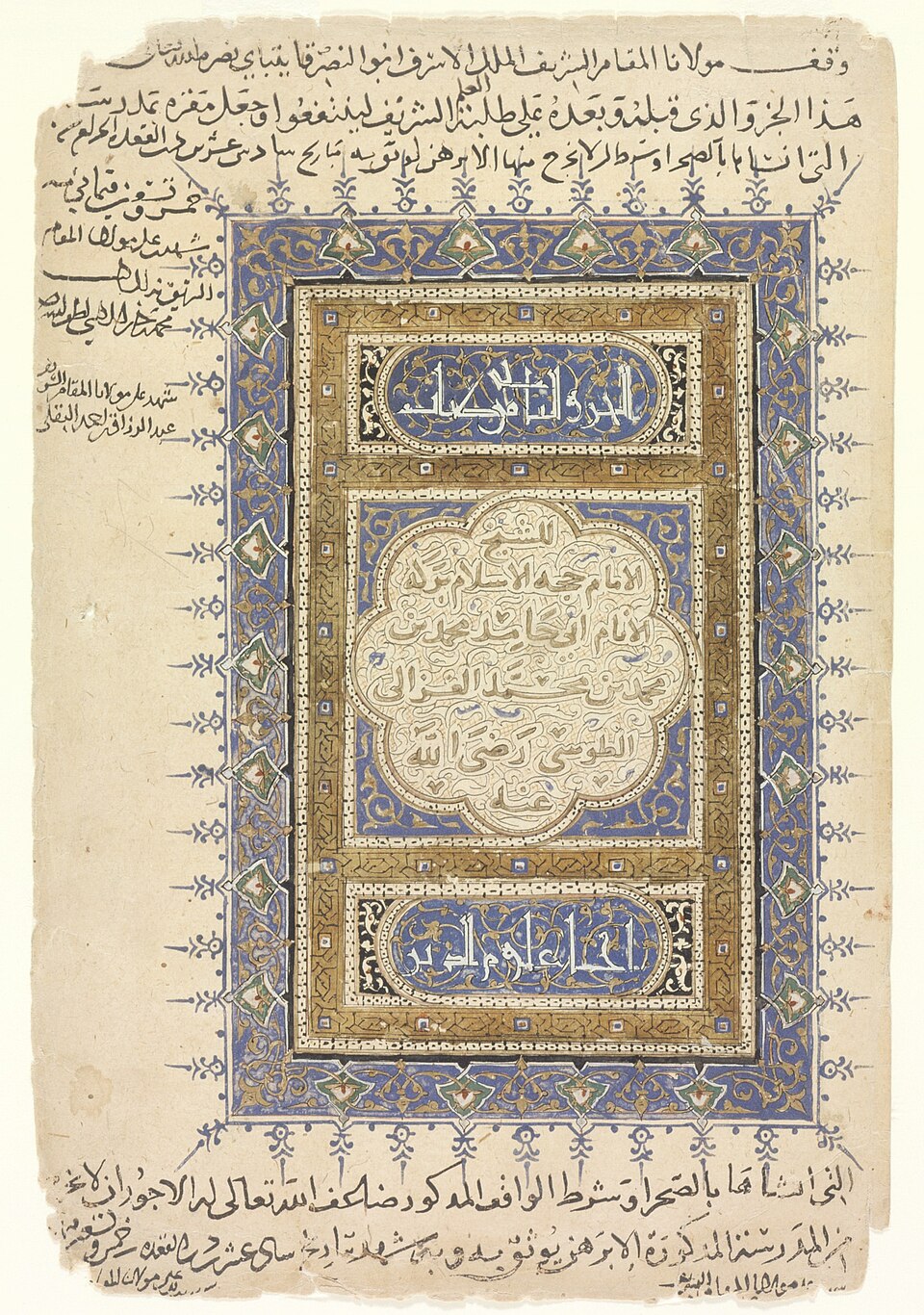
Let them read before judging. I never told man to extinguish his reason — I carried it myself to the limits where it admits its insufficiency. In the preface to my Tahafut, I note that the philosophers boast of their opinions on mathematics and logic, and simple people admire them; but their metaphysics swarms with manifest contradictions. That is my whole point: each tool in its proper place. Reason measures the stars and governs the syllogism; but does it presume to enclose God in its categories? It burns itself, like the moth in the oil lamp. I know that one day perhaps a scholar from the Maghreb will reply point by point to my book — and good for him, for debate honors truth. But let him not make me say what I did not write: reason is a torch, not the sun.
Reason is a torch, not the sun.
—How would you describe your existence during those years of retreat in Damascus?
Stripped, and never was I richer. I had traded the fine cotton qaftan and white turban of the court professor for the khirqa, that cloak of rough wool that scratches the skin and reminds one at every moment that one is nothing. I climbed into the minaret of the great mosque of Damascus, closed the door of the cell — the khalwa — and remained alone with my prayer beads, the masbaha with ninety-nine beads, reciting the names of God in dhikr until the tongue fell silent and only the heart spoke. A barley loaf, a few dates, water: a light belly makes a clear mind. I learned there what no madrasa teaches — that knowledge without practice is madness, and practice without knowledge, vanity.
I had traded the professor's robe for a cloak that reminds one that one is nothing.
—What did you write during those long nights of vigil?
My great work, the Ihya 'Ulum al-Din, the Revival of the Religious Sciences. Forty books, begun in Damascus by lamplight, in which I sought to unite what men separate: jurisprudence and the heart, ritual and intention, external law and inner taste. For I had seen so many jurists learned in fiqh and empty of the fear of God! I say in the first book: the science of the state of the heart, the extirpation of its vices and the adornment of its virtues, that is the foundation of all religion. Later, for the humble who do not read scholarly Arabic, I drew from it a version in Persian, my Kimiya-yi Sa'adat, the Alchemy of Happiness — for what good is a remedy the sick cannot swallow? I wrote at night, prayed fajr, and began again.
I had seen so many jurists learned in the law and empty of the fear of God.
—It is said that your masterpiece was condemned to the fire. How do you receive this?
It was reported to me, yes: over there, in the Maghreb, in Cordoba and Marrakech, they supposedly built pyres for my Ihya, on the order of the Almoravid sultan Ali ibn Yusuf, because I had given too much place to the Sufi path. What do you want me to say? Fire bites only parchment, not meaning. Those jurists at the ends of the earth fear tasawwuf like a child fears shadows, without knowing that the mysticism I speak of is the very marrow of Sunni faith, not its enemy. I spent my life showing that kalam, fiqh, and the path of the heart do not fight but complement each other. Let them burn my book in Cordoba; it troubles me little: a living text is copied faster than a tyrant can burn it. The bound codex travels through a thousand hands.
Fire bites only parchment, not meaning.
—In this troubled century of Seljuks and Crusaders, what place remains for a man of your path?
A harsh century, truly. I saw the Seljuk Turks hold Baghdad and protect the caliph; I saw my benefactor Nizam al-Mulk fall under the Assassins' dagger in 1092; and while I withdrew to Damascus, I was told that Frankish warriors crossed Anatolia and took Jerusalem, that holy city I had visited shortly before. What can a man in a woolen cloak do against armies? Nothing, with the sword. But everything, perhaps, with the pen and the heart. Kingdoms quarrel over walls; I quarreled with souls over their forgetfulness of God. When sultans have killed each other and fortresses are dust, there may remain a young man, somewhere, opening my Ayyuha al-Walad to learn that knowledge without action is madness. That is my only crusade.
Kingdoms quarrel over walls; I quarreled with souls over their forgetfulness of God.
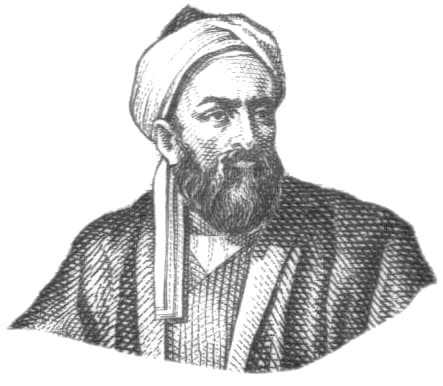
This imaginary interview was generated by artificial intelligence from sources documented in Al-Ghazali's profile. It dramatises what the figure might have said based on what we know about them, but does not constitute attested historical testimony. For primary sources and factual documentation, refer to the full profile.