Imaginary dialogue between Aphur Yongden and Alexandra David-Néel
by Charactorium · Alexandra David-Néel (1868 — 1969) · Exploration · 6 min read
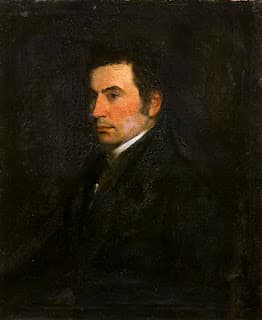
It is at Samten Dzong, her meditation fortress in Digne-les-Bains, that Aphur Yongden finds the one he calls his mother, on this winter morning in 1953. The stove roars, the air smells of butter tea and the paper of manuscripts piled up to the frosted windows. They have walked together thousands of leagues, slept under the same icy tent, shared hunger and the secret of disguise; today the son wants to question the woman behind the legend. Outside, the Alps remind him of other mountains, now closed.
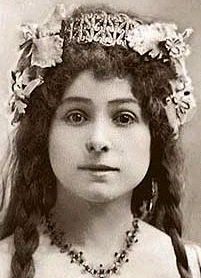
—Mother, before Tibet, before our long marches, they say you sang at the opera. How did you leave that life?
It's true, and you who have known me stubborn against any cage, you can guess what it cost me. I sang on stages, as far as Tunis, and I earned my bread as a free woman sees fit. But an opera house, you see, is only a larger salon, and I was suffocating in salons. Very young, I already campaigned for women to have control over themselves, to stop marrying them off like arranging furniture. Marriage, the bourgeois order, arranged visits: all that seemed like a slow, tepid death. I preferred the vivid death of travel. When you have felt, even once, the call of a road opening towards the Orient, you never quite return home.
An opera house is only a larger salon, and I was suffocating in salons.
—In 1911 you left everything for Asia. For a married woman of that time, it was almost a scandal. What made you decide?
I didn't decide all at once, my son; I yielded to an old hunger. My husband was a good man, but our life together weighed on me like a closed door. In 1911, I left for what I believed was a study trip of a few months. Fourteen years passed before I saw Europe again. Think of the audacity required then: a woman alone, without escort, among languages she did not yet possess. They thought me mad, or worse. But I knew something the wise did not know: the fear of leaving is always greater than the dangers of the road. I chose the unknown over boredom, and I never regretted that bargain.
The fear of leaving is always greater than the dangers of the road.
—Do you remember, Mother, Sikkim, where I saw you discuss with the lamas in their own language? They say you know thirteen languages — how did you learn them?
I remember all the better because it was there, in those monasteries, that I met you. Thirteen languages, yes, Tibetan, Sanskrit, Chinese among them, and it's not a gift from heaven: it's patience, entire nights bent over texts, and the humility to listen before speaking. Most European orientalists study Asia in libraries in Paris or London, without ever hearing a living voice. I wanted to read the Mystiques et Magiciens du Tibet from the very mouth of the hermits, receive their teachings without intermediary. Language, you see, is not a tool: it is a door. Without it, you remain on the threshold and take the walls for the sanctuary.
Language is not a tool: it is a door.
—You always wore your mala of one hundred and eight beads. Did you study Buddhism as a scholar, or did you practice it like the monks we frequented?
Both, and I don't believe they can be separated. You don't understand a meditation by describing it from the outside, like a naturalist pinning a butterfly. I wanted to sit where the hermits sit, fast where they fast, feel in my own body what the texts affirm. This mala you saw me finger was not an explorer's ornament: it was a working tool, just like my notebook. When I wrote Le Bouddhisme du Bouddha, I did not set down armchair theories, but what years of observation had taught me. Scholarship without experience is dry; experience without scholarship is blind. I tried to hold both together, all my life.
—Let's talk about Lhasa. The British forbade the city to Westerners. Why insist on a city you were forbidden to reach?
Because I was forbidden it, precisely. As long as a door is open, you don't rush to it; it is the prohibition that kindles desire. The British had made Tibet a private hunting ground and turned back anyone approaching the holy city. In my eyes, this ban was not a law of heaven, but the arrogance of an empire. Lhasa, I carried it within me for years like a dream ripened and patiently prepared. You don't cross the Himalayas on a whim: it took winters of study, reconnaissance, renunciations. But once the resolve was taken, it became unshakeable. Whatever obstacles were placed before me, I knew I would go. It was no longer a project: it had become my very destiny.
As long as a door is open, you don't rush to it; it is the prohibition that kindles desire.
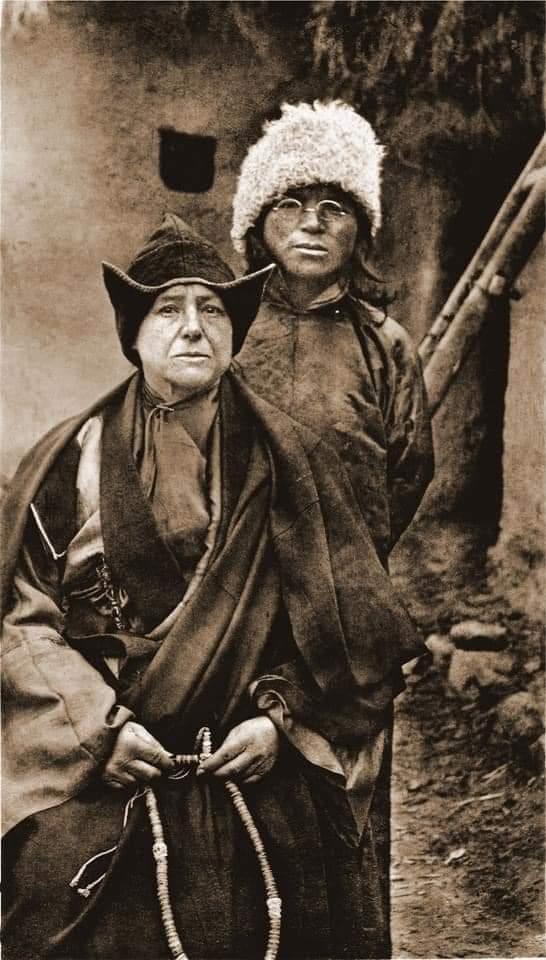
—Do you remember, Mother, how we disguised ourselves as mendicant pilgrims? You, the Parisian, blackened with soot and draped in rags. Were you afraid of being unmasked?
How could I forget it, my son, you who yourself rubbed the soot on my face and taught me to stretch out my hand like a true dokpa? Fear, yes, it was our companion every hour. A word of French slipped out, a gesture too proud, skin too pale, and it was prison or expulsion. I had dyed my hair with Indian ink, blackened my face, learned to beg for my food and sleep in the filth of caravanserais. The hardest was not the cold or hunger: it was to make myself small, to silence the pride of the European. We advanced reciting prayers, two pilgrims among thousands. Our disguise was not a trick: it was a discipline of every moment.
The hardest was not the cold or hunger: it was to make myself small.
—More than two thousand kilometers on foot, through icy passes where we nearly died of cold. What kept you going, at your already advanced age?
Your presence, first of all, don't think I forget it. Alone, I might have weakened; with two, you are ashamed to give up. Remember that night when we had no fire left, when I had to warm my hands by the sole force of the mind, as the hermits had taught me. What the lamas call toumo, that inner heat, saved me more than once. But above all, it is the will that carries the body when the body would sit down and die in the snow. I had sworn to reach Lhasa; that oath walked in my place. People think it is the legs that cross mountains. It is the resolutions of the soul. The rest follows, grumbling, but it follows.
—And when at last we saw the Potala rise in 1924, what did you feel, you the first Western woman to set foot in the forbidden city?
A joy so grave it resembled silence. I did not cry victory, you see; I looked long at the golden roofs of the Potala in the light, and I measured the journey traveled. Years of dreaming, fourteen years of Asia, months of walking: all that was held in that instant. And then I had to guard against pride, for we were still hunted beggars in the heart of the city. I mingled with the pilgrims of the great pilgrimage, I entered the temples as an anonymous devotee. No one around me knew that a Parisian was praying at their side. That secret, I kept it like a treasure. Later, I made it into Voyage d'une Parisienne à Lhassa, but the book will never tell all that that morning contained.
—Mother, since 1950 the Chinese armies hold Tibet. Those valleys we crossed together are closing. How do you live with this news?
As a mourning, I won't hide it from you, you who knew those free valleys. The Tibet we traveled, that world of monasteries and caravans, of lamas and hermits, is disappearing before our eyes. They close the roads I opened at the cost of so many hardships; today's pilgrims will no longer walk as we walked. There is a sadness there that the young do not measure: they have not seen what they have lost. And yet, I console myself with one thing. What I wrote remains; the texts I translated remain. Armies take cities, but they do not take memory. That is why one must write, again and again, as long as there is ink.
Armies take cities, but they do not take memory.
—You still work every day, at an age when others rest. Admit it: you still dream of going back there, don't you?
You know me too well for me to lie. Yes, I keep my passport up to date, and don't smile, for I am serious. The body protests, the legs are not what they once were, but the desire to leave has not aged a day. As long as I breathe, I want to learn still, walk still, see a road open before me. I believe one does not die of being old, but of having ceased to desire. Here, in Digne, among my manuscripts and memories, I continue to write, and each book is a way to leave without moving. But if tomorrow the passes reopened, I think I would pack my bag again. Adventure, my son, is not an age: it is a way of standing upright until the last breath.
One does not die of being old, but of having ceased to desire.
This imaginary interview was generated by artificial intelligence from sources documented in Alexandra David-Néel's profile. It dramatises what the figure might have said based on what we know about them, but does not constitute attested historical testimony. For primary sources and factual documentation, refer to the full profile.