Imaginary interview with Alexandra David-Néel
by Charactorium · Alexandra David-Néel (1868 — 1969) · Exploration · 5 min read
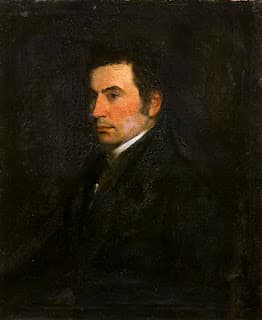
Digne-les-Bains, a winter morning in the 1950s. In the house she named Samten Dzong, the "fortress of meditation," a tiny old woman receives visitors amid piles of Tibetan manuscripts and trunks still marked by Himalayan passes. The tea steams; she speaks softly, but every word falls like a stone in a torrent.
—Before the deserts of Asia, there was the opera stage. How does one go from the footlights to the trails of Tibet?
People took me for a singer, and indeed I had the voice for it, but I was already singing elsewhere, inside myself. From childhood I escaped; in Brussels, in Paris, I dabbled in feminism, anarchism, everything that smelled of freedom forbidden to women. Marriage, later, offered me a bourgeois salon and a polite boredom, two things I bear poorly. In 1911, I set down my suitcases and bought a ticket to India under the pretext of a scholarly mission. My husband believed in an eighteen-month absence. It turned into fourteen years. I did not flee a man: I fled a cage they called reasonable. That was my first journey, the shortest in kilometers and the longest to accomplish.
I did not flee a man: I fled a cage they called reasonable.
—A woman traveling alone to Asia, in those days: what made this gesture so scandalous?
Consider what was expected of a woman of my generation: a corset, a husband, visits. Traveling alone was already declaring oneself suspect; studying Sanskrit, pretending to reason with lamas, was effrontery. In my early writings, I defended women's right to dispose of themselves as a man disposes of his hat. I was deemed extravagant. But the extravagance was in the era, not in me: they gave a male explorer the admiration they refused me for the same hardships. I took my long Western dresses and traded them, little by little, for trekking clothes. Each garment shed was one less convention. A woman who walks far enough eventually leaves the field of those who want to judge her.
A woman who walks far enough eventually leaves the field of those who want to judge her.
—Let's talk about Lhasa. How does one enter a forbidden city when all borders are closed to you?
One makes oneself poor. The British had locked Tibet; no Western woman had crossed the gates of Lhasa. So I blackened my face, braided my hair with yak hair, put on the worn robe of pilgrim beggars, and took the road with Yongden, my adopted son, pretending to be his old mother. Over two thousand kilometers on foot, through passes where breath freezes in the throat, begging tsampa and butter tea from door to door. In 1924, finally, the golden roofs of the Potala. The ruse was not a comedy: to see the Tibet of the Tibetans, one had to stop being the rich foreigner one greets, and become the humble one no longer notices.
To see the Tibet of the Tibetans, one had to stop being the foreigner one greets.
—Four months of walking, cold, hunger, the risk of being unmasked. What kept you going?
A stubbornness I later confessed in Voyage d'une Parisienne à Lhassa: I had resolved to reach that city, and I would reach it, whatever the obstacles. It was not a whim, but a dream nurtured for years. The real danger was not the precipice; it was a wrong word, a too-polite gesture that would have betrayed the Parisian under the beggar. I slept little, I ate what was thrown to me, I recited prayers I knew better than many pilgrims. Yongden covered me with his filial presence. When the body wanted to stop, pride took over — not the pride of conquering, but that of not giving up before those who had declared this ground forbidden to me.
The real danger was not the precipice; it was a wrong word.
—They say you command thirteen languages. What use is such an arsenal for someone studying Buddhism?
To cross doors that gold does not open. Tibetan, Sanskrit, Chinese: as long as one speaks through an interpreter, one remains on the threshold, receiving the polite version reserved for foreigners. I wanted to enter the very thought of the lamas, read texts that no missionary had deciphered, debate the oral teachings entrusted only to disciples deemed worthy — and those, as I wrote, are not the privilege of monks alone. My mala of one hundred and eight beads was not a tourist ornament: I wore it out reciting. It is through language that I earned, in Mystiques et Magiciens du Tibet, the right to report things not said before the profane.
As long as one speaks through an interpreter, one remains on the threshold.

—Do you distinguish yourself, in this study, from the folklore that the West liked to attribute to Tibet?
The West wanted the marvelous: sorcerers, levitations, bazaar magic. I saw strange things — practices of inner heat, breathing exercises — and I recorded them without complacency or disdain. My job was not to amaze but to understand: to connect these practices to primitive Buddhism, show their lineages, which I tried to do in Le Bouddhisme du Bouddha. I distrusted the credulous traveler as much as the armchair scholar who never breathed the air of monasteries. The Tibetan truth is neither a fairy tale nor a theorem; it is an exacting discipline that I approached with my notebook in one hand and my reason in the other. They thought me a mystic; I was mostly methodical.
They thought me a mystic; I was mostly methodical.
—In Digne, in this house full of trunks, what do your writing days look like?
My days belong to paper. I get up before dawn, a tea, then the travel notebooks that I reopen like one reopens a happy wound: everything is there, the smells of rancid butter, the names of passes, the words of a hermit. The evening especially is mine: I write, I answer correspondence that arrives from around the world. In Digne-les-Bains, where I settled from 1927, I transformed these notes taken while walking into more than thirty books. Westerners, who will never go there, read over my shoulder. It is a curious destiny: to have walked so much to end up sitting, transcribing, in a house in Provence that I baptized with the name of a fortress of meditation.
I walked so much to end up sitting, transcribing my notebooks.
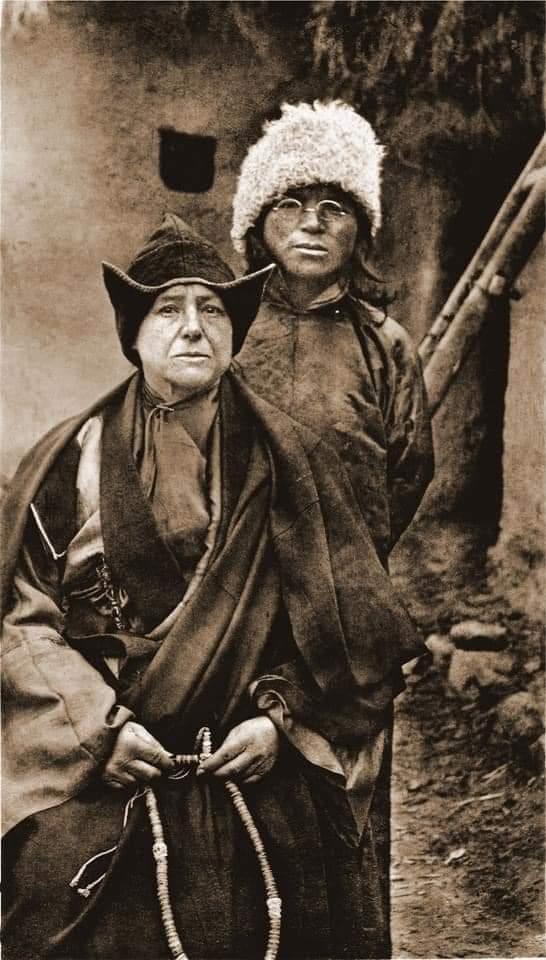
—Your accounts became successes all over Europe. What, in your opinion, should a travel book convey?
Not another map. Geographers will make maps; I want to make one feel. A good account should bring the reader under the tent, put butter tea in their mouth and the fatigue of heights in their legs. If Voyage d'une Parisienne à Lhassa touched so many people who will never leave their armchair, it is because I did not serve them a lesson in Orientalism, but a presence. I wrote as I walked: without cheating on the hardship. I was sometimes reproached for being too lively for a scholar. I take that as a compliment. A book that is not cold with its author will warm no one.
A book that is not cold with its author will warm no one.
—The Tibet you knew has closed. What does one feel when the country of a lifetime becomes inaccessible?
A dry pain, like a door heard slamming in the distance. In 1950, the Chinese army entered Tibet, and the country I had crossed disguised closed in another way, more definitive than the British prohibitions of my youth. I had met the Dalai Lama in exile as early as 1906; I knew this land fragile under its harshness. Now the monasteries where I had slept, the paths where I had begged, exist only in my notebooks and my memory. It is the strange privilege of the traveler who lives long: to become the archive of a world. I did not weep; I wrote more. As long as I set this Tibet down on paper, it is not entirely lost.
It is the strange privilege of the traveler who lives long: to become the archive of a world.
—You are approaching a hundred years old, and they still credit you with plans to leave. Where does this unbroken flame come from?
People are surprised that I renew my passport; I would be surprised not to. The body is an old worn-out yak, so be it, but curiosity does not age. I have worn out seven pairs of legs and I would leave again tomorrow if they gave me back my passes. To learn another language, decipher one more text, retrace those now-closed roads of Asia — that is what keeps me alive far more than doctors' caution. I have always thought that one truly dies only on the day one stops wanting to leave. So I keep my trunks near the door, in Digne, as much out of defiance as hope. Travel has no retirement; it has only stopovers.
One truly dies only on the day one stops wanting to leave.
This imaginary interview was generated by artificial intelligence from sources documented in Alexandra David-Néel's profile. It dramatises what the figure might have said based on what we know about them, but does not constitute attested historical testimony. For primary sources and factual documentation, refer to the full profile.