Imaginary dialogue between Mahbub ul Haq and Amartya Sen
by Charactorium · Amartya Sen (1933 — ?) · Economics · 6 min read
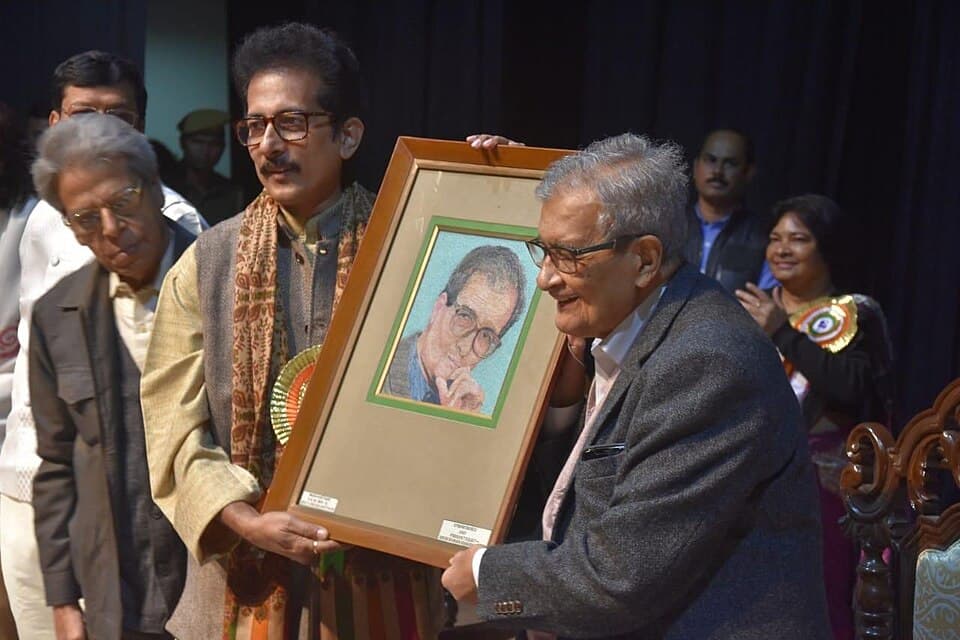
It is in an office at UNDP, in New York, one winter morning in 1991, that Mahbub ul Haq meets his old friend Amartya Sen. On the table, the proofs of the second Human Development Report sit alongside cups of cold tea and columns of hand-annotated figures. The two men have known each other since Cambridge, where they were students in the 1950s, and Mahbub — the man of striking indices — has come to question the one he calls his theoretical conscience, to trace the source of their shared ideas.
—Amartya, before we talk about indices and theories, take me back to 1943. You, the nine-year-old child — what did you see that summer in Bengal?
You know, Mahbub, I was nine years old, at Santiniketan. One morning, skeletal men began crossing our region, walking toward Calcutta where they hoped to find food. They were dying by the thousands on the roads. What haunted me, and still haunts me, is that the markets were overflowing with rice — I saw it with my own child's eyes. The granaries were not empty. Simply, the day laborers, the fishermen, the barbers had lost all means to buy: prices were rising, their wages were not. Two, three million deaths in the midst of abundance. A child does not understand economic theory, but he understands injustice. I have spent my adult life putting words to what I saw at age nine.
A child does not understand economic theory, but he understands injustice.
—And it is from that childhood vision that your Poverty and Famines was born, years later? Explain to me what your figures revealed.
That is exactly what I wanted to demonstrate, with data to support it. For years, I examined the harvests, prices, and wages of Bengal in 1943, but also of more recent famines in Africa and Asia. And everywhere the same finding: food production had often not fallen. What collapses in a famine is what I call entitlements — the set of things a person can legally obtain through their labor, property, exchanges. A worker whose pay does not keep up with soaring prices loses access to food even if silos are overflowing. That changes everything for public action, Mahbub: it is not just about producing more, but about guaranteeing everyone the real means to acquire what they need to live.
—I am often asked where your first name, Amartya, comes from. Tell me about Tagore, and that strange school where you grew up.
Ah, my first name! It was Rabindranath Tagore himself who chose it — he was close to my family. Amartya means “immortal” in Sanskrit; quite a burden for a newborn, you will agree. I grew up in his school at Santiniketan, and that shaped everything else. We studied outdoors, under the trees, without grades or rigid exams. Tagore thought that curiosity dies as soon as it is caged. We were encouraged to discuss, to challenge, to choose our readings. I believe my taste for argument — the conviction that reason is forged in debate and not in authority — I owe to those Bengali mornings. A school without fear, in short. It is rare, and it forms free minds.
—Back when we were both at Cambridge, you went through an ordeal you rarely spoke about. Will you tell me more about it today?
You are one of the few who knew about it, Mahbub. Around age eighteen, I was diagnosed with mouth cancer. The doctors were unsure about the treatment. I did what no patient my age dared to do then: I asked for the survival statistics, studied them, and chose a very heavy radiotherapy myself. I understood that one can, and must, decide with full knowledge of what affects one's own life. I have lasting effects — you have seen me eat carefully, avoid certain dishes. But this ordeal taught me something that theory alone would never have given me: health is not a luxury that comes after development; it is the first of real freedoms. Without it, everything else remains abstract.
—We constantly use the word “capabilities” in our reports. You who coined it, how would you define it simply for our readers?
Take two people with the same income, Mahbub. One is healthy, can read, lives in a society that allows her to speak; the other is sick, illiterate, silenced. Do they have the same life? Obviously not. What matters is not what one possesses, but what one is actually able to be and do: to feed oneself, to learn, to move about, to take part in community life. I call that capabilities. Income is only a means; the true wealth of a life is the range of real choices it opens. A woman who is forbidden from school is poor in a way that no GDP figure will ever capture. That is why we must look at lives, not just wallets.
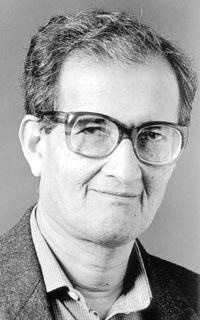
—Do you remember our arguments when I was building the first Report at UNDP? You doubted my single index — what convinced you?
I remember very well — I resisted, yes. You, Mahbub, wanted a single striking number, capable of competing with GDP in the newspapers. I, the cautious economist, replied that you cannot reduce the richness of a human life to a single number without betraying its complexity. You countered, with your political flair that I never had, that without a simple number no one would listen, and that popularization was worth a small theoretical concession. You were right. The Human Development Index combines life expectancy, education, and income. The index is imperfect, but it shifted the world’s gaze — your victory as much as mine. Without your stubbornness in 1989, I would have stayed polishing equations while people continued to count only money.
The index is imperfect, but it shifted the world’s gaze — your victory as much as mine.
—Our critics at the Bank keep saying that per capita income is enough to measure a nation’s progress. What do you tell them, Amartya?
I answer them with a question, Mahbub: what is wealth for? GDP measures what a country produces in a year, and that is useful. But a country can see its GDP rise while its children die for lack of clinics, its girls remain without school, its peasants no longer dare to speak. Growth is not an end; it is a means to serve lives that people have reason to value. Look at some Indian states, like Kerala: poorer in income, but where people live longer and can read, because they invested in health and education. Income matters, I do not deny it. But making it the ultimate measure of progress is confusing fuel with the journey.
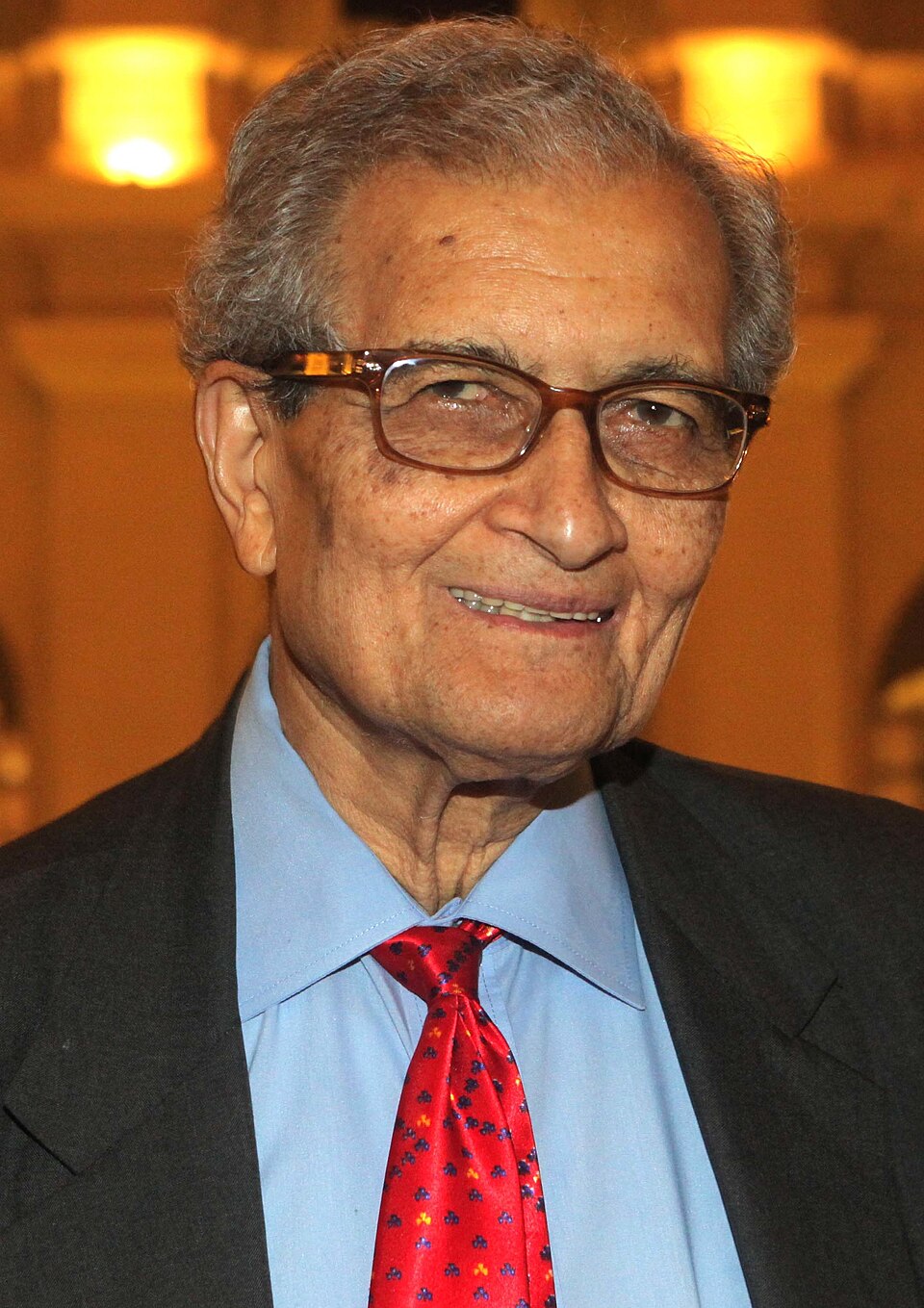
—You told me the other evening that philosophers seek the perfect city too much. Where do you want to lead them instead?
It is a conviction growing in me, Mahbub, and I hope one day to make a real book of it. Since Rousseau, so many thinkers have labored to describe the institutions of an ideal, perfectly just society. But what use is that to the child who is hungry today? What rightly revolts us is not that the world is not perfect — none of us expects that — but that there exist around us injustices that we could remove, and that we do not remove. Avoidable hunger, avoidable illiteracy, avoidable death. I prefer a theory that helps us compare two real situations and choose the less unjust one, rather than a dream of the absolute that never tells us what to do on Monday morning. Justice is judged by its effects on lives, not by the beauty of its principles.
There exist around us injustices that we could remove, and that we do not remove.
—You claim that a true democracy never experiences a great famine. Isn’t that too good to be true, coming from the child of Bengal?
Precisely, it is the child of Bengal who tells you this, Mahbub. The famine of 1943 occurred under colonial rule, without a free Indian press, without elections to answer for it. Observe: no large-scale famine has ever occurred in a country with a free press and voting opposition. Why? Because a government that can be overthrown, that a press can denounce, cannot afford to let its people die without reacting. Public debate is not a luxury for intellectuals; it is an early warning and protection system. Reasoned discussion among citizens is as much a means of development as a harvest. That is why I never separate political freedom from the fight against poverty: take away people’s voice, and you take away their bread as well.
—We are growing old, Amartya. If all this work had to be summed up in a single idea to leave to young economists, which would you choose?
A single one? Then it would be this: look at people, not just aggregates. Behind every growth curve, there are lives — a little girl who is let into or shut out of school, a day laborer who eats or does not. Economics is not the science of money; it is, or should be, the science of what human beings can become. When I was nine, at Santiniketan, I saw what happens when that is forgotten. You and I, Mahbub, have spent our lives trying to put the human back at the center of the calculation. We are not finished — there are so many remediable injustices left. But if our reports, our indices, our books push even one minister to ask “and the people, in all this?”, we will not have worked in vain.

This imaginary interview was generated by artificial intelligence from sources documented in Amartya Sen's profile. It dramatises what the figure might have said based on what we know about them, but does not constitute attested historical testimony. For primary sources and factual documentation, refer to the full profile.